Why Aren’t You Playing: Bullet Run


Whenever I hear about free to play shooter MMOs I think of one thing: over-extensive cash shops. I think about time-limited cash shop weapons and upgrades, with the option of spending a very long time grinding through kills in order to nab that better weapon. For myself, and a number of others, such titles start out fun but quickly lose their edge as the slow grind to achieve new weapons becomes longer and what might normally be random, mindless violence is now less enjoyable than slogging through quests in a fantasy MMO. Thankfully, Bullet Run is not that title.

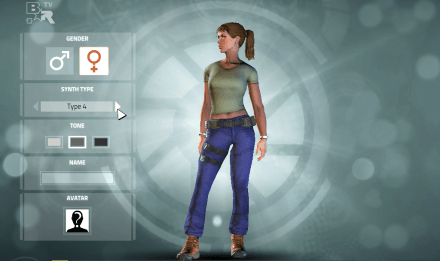
First things first, before you can start shooting people you must create an avatar capable of holding an automatic weapon. Character customization at creation is virtually nonexistent. Apart from a type, tone, and gender, there isn’t much you are able to alter about your avatar. All characters start with the same basic submachine gun. The in-game marketplace is used to purchase additional cosmetic gear as well as new weapons and attachments, both of which can be purchased with either Station Cash or currency acquired through regular play.

Talking about Bullet Run’s gameplay aspects almost seems redundant, because if you’ve played any other recent first person shooter, you already know what to expect. There are two game modes present, Team Deathmatch and Dominion. The former features two teams of players sparring over a set of maps to see who can rack up the highest score in the time allotted. Dominion, on the other hand, has one team attacking a set of nodes as the other team attempts to defend the map. Dominion is played in two halves, allowing each team a chance to attack and defend. As you complete matches and kill other players, you gain experience and currency which are used to level up and purchase additional weapons and attachments. Abilities are docked and slowly build up a charge over the course of the match as you kill enemies and gain points, and encompass everything from mobile turrets to massive chainguns.

As far as cash shop titles go, Bullet Run scores a few points with its durability system. In many other free to play shooters, items offered on the marketplace are limited by time, often times not allowing the player to purchase a permanent version with in-game currency (assuming one exists at all). Once the time limit has passed, your purchased weapon is useless. In Bullet Run, weapons operate on a durability system  where the weapon must be repaired with either Station Cash or currency. The advantage of the system, however, is that even if you allow the durability to run out, the weapon can still be used at a 10% loss in damage. And considering the fast paced nature of Bullet Run, a 10% drop in your gun’s effectiveness isn’t going to lose you any battles.
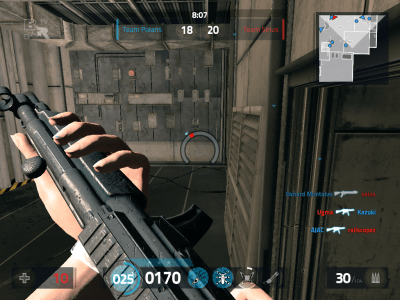
Playing Bullet Run isn’t all run and gun, however. One feature added to give an advantage to players who can keep their cool under stress is a sliding bar when you reload. If you have decent reflexes, you can easily receive a speedier reload and some point bonuses as well. On the other hand, you can let the reload take its course, or risk jamming the gun and leaving yourself open to attack. When you find someone in a tight corridor and both of you empty your clips, the reload bonus can mean the difference between life and death.

Where Bullet Run falls short is content, the game lacks variety in almost every sector possible. Most important: There are only two modes to choose from, Team Deathmatch and Dominion. And while the marketplace plays host to a wide assortment of guns, the cosmetic clothing and hairstyles offered are few. Even the commentary by the characters in-game is lacking, with the same phrases being repeated over and over. The end result is that Bullet Run feels incomplete, as if the game had launched as soon as there was a stable product to show, rather than waiting until more content could be added. This isn’t to say that Bullet Run is a bad game by any means, it functions as intended, is fun to play, and the cash shop is much more player-friendly than similar titles.
With further development, and assuming Sony doesn’t cut the game short like a certain other developer, Bullet Run will enjoy a loyal following of shooter fans.

Pros:

  1. Generous cash shop: Weapons/Attachments can reasonably be purchased with in-game currency.
  2. Functional: I didn’t come across any notable bugs, and the servers even managed to stay stable on launch night.
  3. Stable: Lag was not a problem in any of the matches I played.

Cons:

  1. The game lacks content.

Why Aren't You Playing: Bullet Run


Whenever I hear about free to play shooter MMOs I think of one thing: over-extensive cash shops. I think about time-limited cash shop weapons and upgrades, with the option of spending a very long time grinding through kills in order to nab that better weapon. For myself, and a number of others, such titles start out fun but quickly lose their edge as the slow grind to achieve new weapons becomes longer and what might normally be random, mindless violence is now less enjoyable than slogging through quests in a fantasy MMO. Thankfully, Bullet Run is not that title.

First things first, before you can start shooting people you must create an avatar capable of holding an automatic weapon. Character customization at creation is virtually nonexistent. Apart from a type, tone, and gender, there isn’t much you are able to alter about your avatar. All characters start with the same basic submachine gun. The in-game marketplace is used to purchase additional cosmetic gear as well as new weapons and attachments, both of which can be purchased with either Station Cash or currency acquired through regular play.

Talking about Bullet Run’s gameplay aspects almost seems redundant, because if you’ve played any other recent first person shooter, you already know what to expect. There are two game modes present, Team Deathmatch and Dominion. The former features two teams of players sparring over a set of maps to see who can rack up the highest score in the time allotted. Dominion, on the other hand, has one team attacking a set of nodes as the other team attempts to defend the map. Dominion is played in two halves, allowing each team a chance to attack and defend. As you complete matches and kill other players, you gain experience and currency which are used to level up and purchase additional weapons and attachments. Abilities are docked and slowly build up a charge over the course of the match as you kill enemies and gain points, and encompass everything from mobile turrets to massive chainguns.

As far as cash shop titles go, Bullet Run scores a few points with its durability system. In many other free to play shooters, items offered on the marketplace are limited by time, often times not allowing the player to purchase a permanent version with in-game currency (assuming one exists at all). Once the time limit has passed, your purchased weapon is useless. In Bullet Run, weapons operate on a durability system  where the weapon must be repaired with either Station Cash or currency. The advantage of the system, however, is that even if you allow the durability to run out, the weapon can still be used at a 10% loss in damage. And considering the fast paced nature of Bullet Run, a 10% drop in your gun’s effectiveness isn’t going to lose you any battles.

Playing Bullet Run isn’t all run and gun, however. One feature added to give an advantage to players who can keep their cool under stress is a sliding bar when you reload. If you have decent reflexes, you can easily receive a speedier reload and some point bonuses as well. On the other hand, you can let the reload take its course, or risk jamming the gun and leaving yourself open to attack. When you find someone in a tight corridor and both of you empty your clips, the reload bonus can mean the difference between life and death.

Where Bullet Run falls short is content, the game lacks variety in almost every sector possible. Most important: There are only two modes to choose from, Team Deathmatch and Dominion. And while the marketplace plays host to a wide assortment of guns, the cosmetic clothing and hairstyles offered are few. Even the commentary by the characters in-game is lacking, with the same phrases being repeated over and over. The end result is that Bullet Run feels incomplete, as if the game had launched as soon as there was a stable product to show, rather than waiting until more content could be added. This isn’t to say that Bullet Run is a bad game by any means, it functions as intended, is fun to play, and the cash shop is much more player-friendly than similar titles.

With further development, and assuming Sony doesn’t cut the game short like a certain other developer, Bullet Run will enjoy a loyal following of shooter fans.

Pros:

  1. Generous cash shop: Weapons/Attachments can reasonably be purchased with in-game currency.
  2. Functional: I didn’t come across any notable bugs, and the servers even managed to stay stable on launch night.
  3. Stable: Lag was not a problem in any of the matches I played.

Cons:

  1. The game lacks content.

More Details About Survarium Revealed


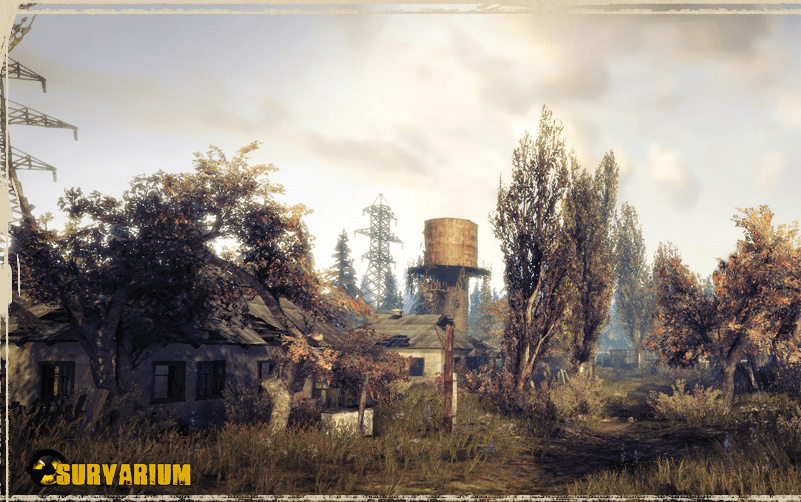
Survarium is not S.T.A.L.K.E.R, let’s get that straight. It is, however, being developed by Vostok Games, a team made up of ex-S.T.A.L.K.E.R creators. Survarium is an upcoming free to play MMO shooter set in a world that has been taken over by flora. In an effort to combat the growing forest, a powerful herbicide is deployed and, you guessed it, kills the vast majority of the world’s population. As in S.T.A.L.K.E.R the world has become filled with anomalies, and players will find themselves taking on missions for one of several factions, shooting it out in this session-based multiplayer game.

So the game is closer to Crimecraft than it is Planetside, but the developers at Vostok want to make this as unique as possible. Team combat is not what you’d expect: rival teams work against one another to scavenge parts and build a device to protect themselves from a massive storm, and both teams can fail at this objective. Cooperative missions delve into the world’s artifacts. Finally, of the three modes revealed recently, free play drops players in a massive map with 30 other players to move and do as they please.

You can view the entirety of the latest developer diary below. Survarium does not yet have a release date.

Crafting Crime With Crime Craft: A 1 Year Look


A long time ago...

Crimecraft launched in August 2009 to not-so-huge fanfaire over the persistent-lobby-based-shooter-on-the-Unreal-3-Engine. A modest title by any means, Vogster quickly moved the game from a subscription base to a free to play cash shop system, not unlike the Turbine model, and since then the game has been trucking along with a healthy population, healthy enough to ensure that the game will stay afloat for a good long time, at least.

Looking into my archives, I haven’t written a non-sales article on Crimecraft since September 2009, so I was quite surprised when I received an email in my inbox regarding Crimecraft. Apparently at least one of the guys over at Vogster Entertainment is a big fan of the MMO Fallout, and noted my prior interest in the title and a lack of news-stuffs since then. The email contained a promo-code with a leveling boost to incite me back into the game, and incite it did.

I’ve clocked in several hours on Crimecraft in the past week, and I am thoroughly enjoying the new changes. My biggest gripe from the launch was that the A.I in the PVE matches was a combination of too unpredictable, and too stupid. All too often it was easy to sneak up on an NPC and kill them without their AI even activating, but this time around I found NPCs moving around and actively seeking cover. If you start a shootout, other NPCs in the area may come to investgiate. The system isn’t perfect, but it is a far cry from the figures who just stood around and waited for you to shoot at them.

Luckily he only grazed my medulla oblongata.

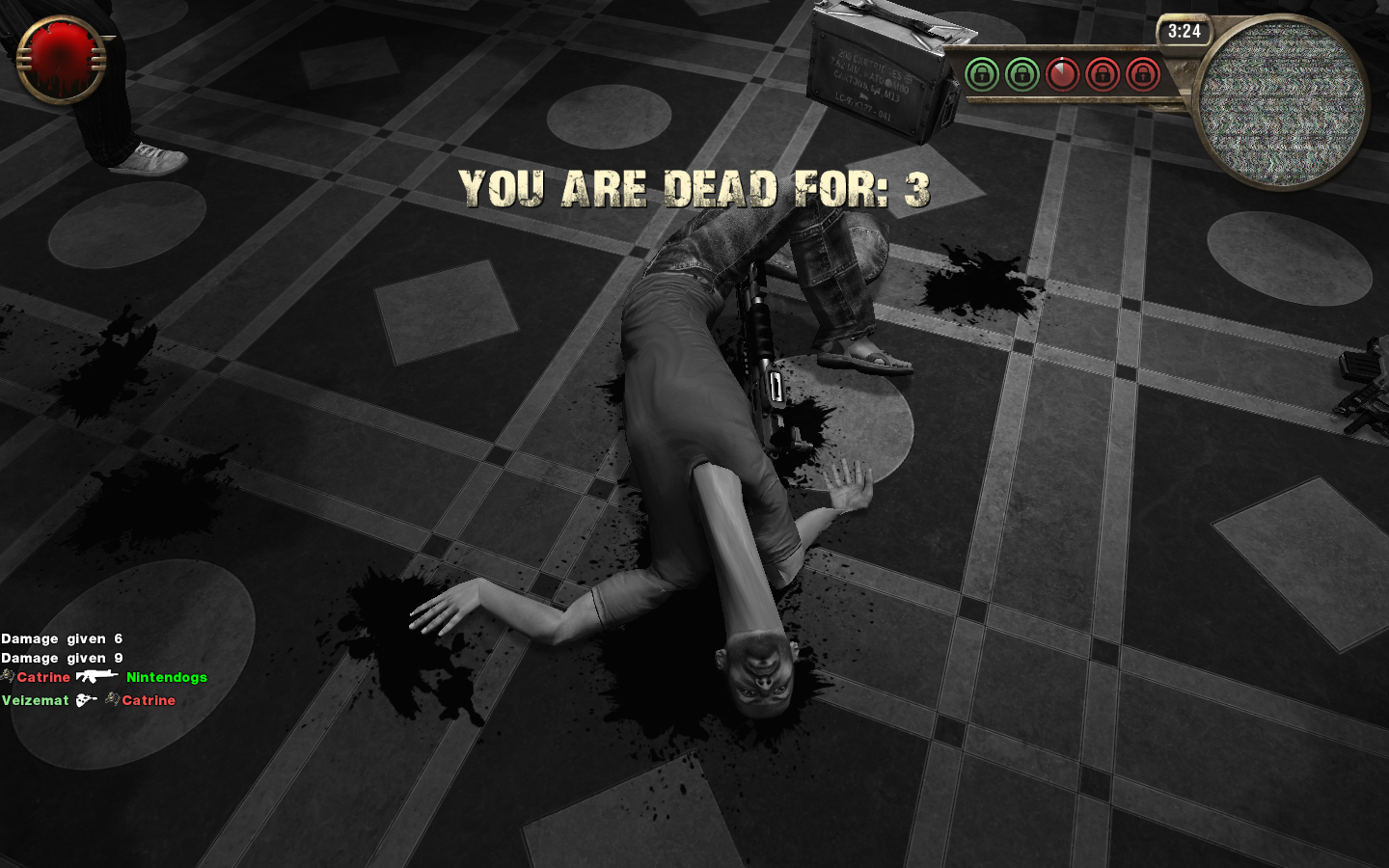
Another great addition I noticed is the ease in obtaining weaponry. Within a few PVP matches, I had looted a decent shotgun and an assault rifle that gave me a fighting chance over my 3-shot burst SMG. Vogster wasn’t lying about the gibbing/gore mode either, as my character regularly found himself decapitated by close shotgun shells to the face.

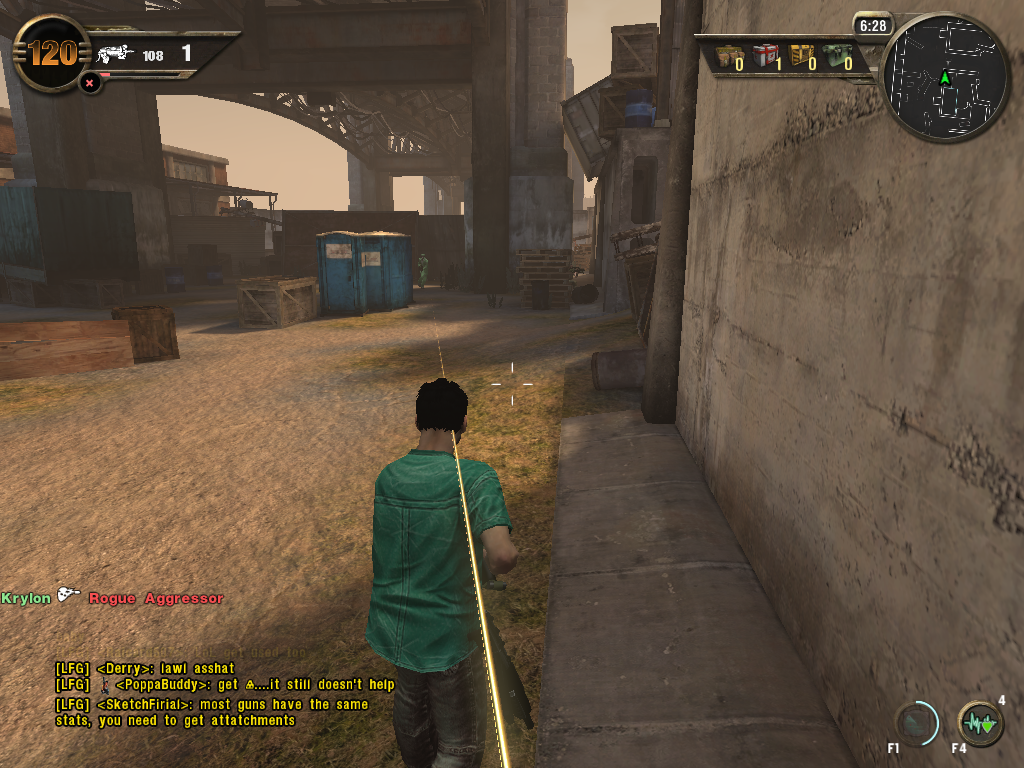
I quickly obtained a few boosts in the form of a heart monitor that displays enemy positions on the mini-map, and a few healing drugs that can be consumed in-game. The missions, which will comprise much of your experience, are still pretty basic, not that I’m asking for more depth. You’ll find a myriad of what you would expect, each containing several tiers:

  • Kill _ with smg/rifle/pistol/etc.
  • Do ___ damage with smg/rifle/pistol/etc.
  • Kill ___ of ___ type NPC.
  • Kill ___ players carrying smg/rifle/pistol/etc.
  • Win __ matches of ___.

The more traditional missions involve going from person to person in the main lobbies, with a story centered around the protection of the city from the unruly gangs and scum that inhabit the surrounding areas, and generally involves heading into PVE instances to complete one of the above mission types.

Stockpile PVE is still all about collecting crates containing everything from weapons to drugs to crafting materials. I also had the chance to try out Safeguard, a PVE mode where players are tasked with protecting a weapons cache from wave after wave of bots, which I particularly enjoyed as the opportunities to become overwhelmed by the sheer number of bots added to the difficulty if you didn’t clear them out fast enough before the next wave spawned. Headhunter is a test of patience, although killing the prerequisite number of bots to incite the boss to appear isn’t a particularly difficult task.

Ammunition and health are much more prevalent now than at launch, with players and bots dropping both much more often. Aside from the AI, one of my biggest issues was running out of ammunition and forcing myself to die in a PVE match in order to obtain more. Now, with the expected amount of ammunition conservation, I find myself running out of ammo much less.

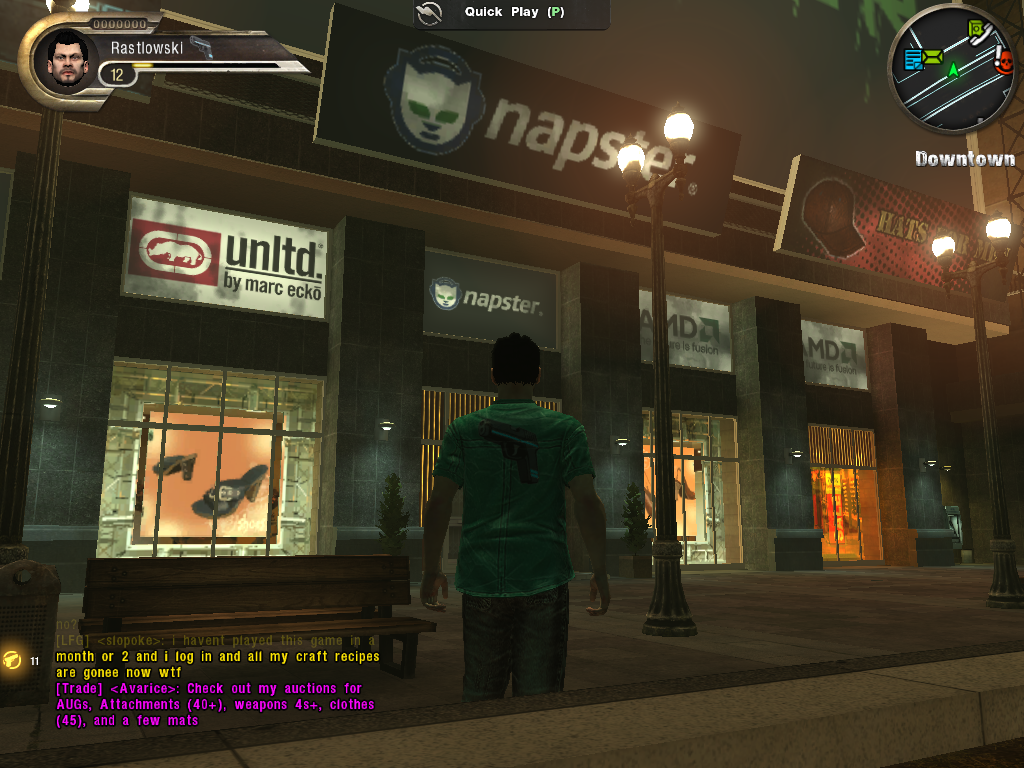
Oh, and in case I didn’t mention it before, the Crimecraftian in-game advertising is still present, as seen below, and still raising the penetrating question: People still use Napster?

Jokes aside, Crimecraft is still a great game worthy of a look, even if you don’t plan on forking up any cash. The game can be downloaded from the website for free, or if you really want you can pluck down ten bucks on a digital copy and get the extra perks that come with it.

Me? I think I’ll continue sporting my OG (original gangster) title, and Tommy Vercetti lookalike outfit. Crimecraft is a great game, and you might even catch me logged in now and then! My character’s name is Rastlowski, if you didn’t pick it up from the screenshots.

More on Crimecraft as it appears.