The MMO That Wasn't: The Agency


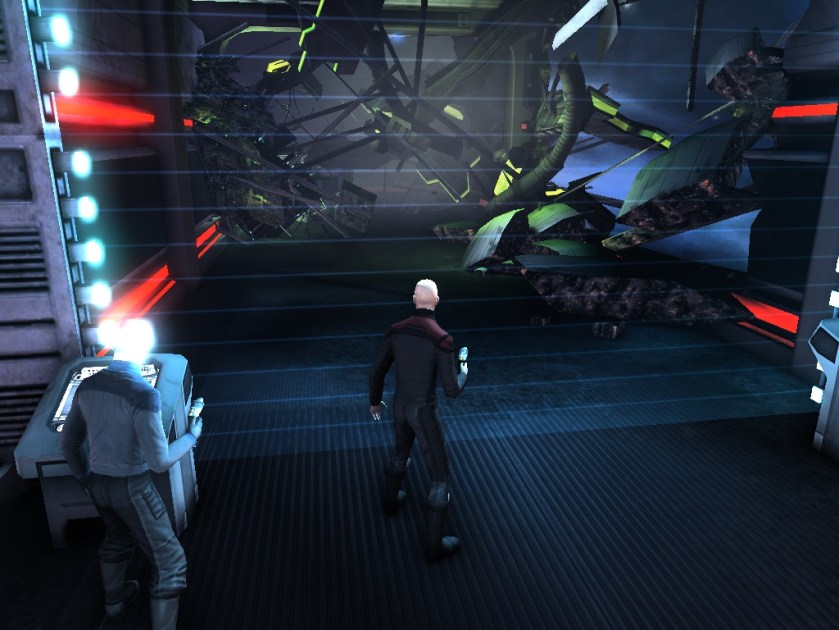
Looking at the success of games like CrimeCraft and the sales Tribes: Ascend during its continued beta period, I can’t help but feel that The Agency got the very short end of the stick when Sony cancelled it earlier this year. Perhaps if Sony had licensed an IP, say James Bond, the game would have gathered the internal enthusiasm to be thrown in the chopping block over, say, existing costs that show little promise. While Sony never made an official statement at the time, given their desire to release DC Universe as free to play in early 2011, it might be safe to say that The Agency would also have been released under a similar model. Instanced shooters are great, but historically have not proven to be viable subscription titles.

In the grand scheme of things, The Agency was likely a side project that Sony was working on alongside their other more serious projects, and when the company hit hard financial times and had to lay off a massive amount of people, it was the first project to get the boot. Perhaps at some point in the future, The Agency will be revived and Sony will continue where they left off.

But I’m an optimistic person.

The MMO That Wasn’t: The Agency


Looking at the success of games like CrimeCraft and the sales Tribes: Ascend during its continued beta period, I can’t help but feel that The Agency got the very short end of the stick when Sony cancelled it earlier this year. Perhaps if Sony had licensed an IP, say James Bond, the game would have gathered the internal enthusiasm to be thrown in the chopping block over, say, existing costs that show little promise. While Sony never made an official statement at the time, given their desire to release DC Universe as free to play in early 2011, it might be safe to say that The Agency would also have been released under a similar model. Instanced shooters are great, but historically have not proven to be viable subscription titles.

In the grand scheme of things, The Agency was likely a side project that Sony was working on alongside their other more serious projects, and when the company hit hard financial times and had to lay off a massive amount of people, it was the first project to get the boot. Perhaps at some point in the future, The Agency will be revived and Sony will continue where they left off.

But I’m an optimistic person.

Predictions for 2012: 2011 Edition


Make that one burger, big and juicy.

  1. Free To Play: do I need to say? We already know of Star Trek Online and more titles will no doubt follow in its footsteps. Sony Online Entertainment has shifted its development direction to free to play, CCP has DUST 514 coming on to the Playstation 3 and Vita as a free to play (with mandatory deposit?) and more we haven’t heard from yet. Aion is going free to play in Europe and possibly North America. Chalk this one up as guaranteed.
  2. WAR Will Die Like Galaxies: When Star Wars Galaxies shut down, John Smedley noted that the closure was a deal between Sony and Lucas Arts to not renew the license after it expired, coinciding with the release of The Old Republic (coincidentally). I have a feeling that the same will happen between Mythic and Games Workshop whenever the WAR license expires. I’m not saying that it will happen in 2012, but I have a feeling that Warhammer Online shutting down will coincide with Warhammer 40k releasing.
  3. Mists of Pandaria Sells Millions, Trashed: World of Warcraft’s expansion will hit the top seller list for months after launch, but given the recent trend of gamers trolling metacritic, the expansion’s ratings will take a plunge as players rate the game zero because Blizzard are worse than Stalin and their game is easier than Cooking Mama.
  4. Neverwinter Will Sell A Lot of Lifetime Subscriptions: And most of those will be sold to jaded Champions Online and Star Trek Online account holders who will shamelessly trash the game and Cryptic for forcing them at gunpoint to preorder the most expensive package despite them not enjoying Cryptic’s two past titles. One of them will send me his account details so I can enjoy Neverwinter for free.
  5. I’m Going to Get Sued: Call this one a hunch, and something I really hope I’m wrong about.
  6. The Number of MMOs Shutting Down Will Spike: 2010 was a major year of MMOs shutting down, and I have the feeling 2012 will be similar in quantity.
  7. TERA Will Have A Similar Launch in the West: Overseas, TERA is being heavily criticized for a myriad of issues, including lacking end-game content. My optimistic side says that many of the issues will be fixed by the time the game hits state-side/Europe-side. The part of me that has played every MMO released in Asia years before the West says otherwise. I’m expecting heavy server mergers in TERA’s forecast.
  8. Guild Wars 2 Will Not Be The Messiah: Sorry Guild Wars fans! The game is going to do great, don’t get me wrong, and will be no doubt be operating for years to come with plenty of expansion packs. That being said, it isn’t going to change the industry any more than Guild Wars did, and it certainly won’t be NCSoft’s top performer, nor will it kill The Old Republic, drop a deuce on Bill Roper’s lawn, or punch Richard Garriot right in the Ultimas.
  9. Planetside 2 Will Not Spur Competition: Planetside 2 doesn’t have much competition when it releases hopefully in 2012. Tribes Universe is still in no man’s land of development, and World War 2 Online isn’t competing with anyone. I don’t count MAG as competition because the titles operate on two separate consoles. We all thought when Planetside got old that other companies would pick up the slack. They didn’t, and probably still won’t. And finally…
  10. Action MMOs Will Be Slammed As Clickfests: I’m specifically referring to games like TERA, because the people who complain about MMOs relying on hotbars seem to be the same people trashing companies that take a more action-based approach for being dumbed down and button mashers as well.

Most Controversial of 2011: Everyone Is Getting Hacked!


As if all of us didn’t have enough problems in our lives, 2011 was the year that we all kept dutiful watch on our bank accounts, and why not? One by one, companies appear to be falling to malicious hackers breaking in and making off with databases of passwords, user names, addresses, and encrypted credit cards. Hard to believe only six months ago we thought this was just an issue with Sony’s security, but as the year progressed the developers dropped like dominoes.

I think I might just switch to game time cards for any MMO that utilizes it, I can’t say I feel safe anymore allowing MMO developers to have my credit card details, regardless of if the data is encrypted or not. Call me paranoid, but considering the whole system of identity theft works on the idea of “it just takes one time,” I’m not willing to risk it.

But the dominoes have not finished falling, and I think 2012 will show us that where there is a will, there is a way. And where there is a way, there is a guy with a sledgehammer willing to tear it all down. And if this inspires developers to beef up their security, more power to them. Me? I’ll be over here with my tinfoil hat, money stuffed in the mattress, and shotgun loaded and pointed at the e-statement on my computer monitor.

Least Surprising of 2011: Free To Play Makes Money


If you know someone who thinks that free to play games are not a successful venture, point their head towards Lord of the Rings Online and Dungeons and Dragons Online. And Lineage II, and Age of Conan, and Champions Online, and DC Universe, and City of Heroes, and Alganon, and Everquest II, and Pirates of the Burning Sea, and more. Sony, Turbine, NCSoft, and Funcom, and any other developer in between will gladly show you how much better their games performed after taking the big leap and changing monetary systems.

Free to play works by removing major roadblocks. Client price and subscription. The subscription sets precedent where the player then feels that they need to play $15 worth of the game every month, however that adds up is subjective. With free to play, the pay-as-you-go model allows for random breaks or momentary distractions when a new game comes out, without the moment of “well my account just got charged for another month.”

Like anything, free to play has its downsides, foremost the introduction of what I like to refer to as the professional (or perpetual, as I’ve also called them) freeloaders. These players make up the bulk of the posters you see demanding all content in a game be available for free, and clamoring that buy to play is the future of MMOs despite, as I’ve also pointed in the past, their only example being Guild Wars, NCSoft’s lowest income generator. Having a low commitment means bringing in a lot of people who are just as unwilling to commit. After all, the only thing the person stands to lose is the time they spent downloading the client.

The low barrier to entry also lays way for throwaway accounts, by gold farmers and griefers. Gold farmers register accounts in massive numbers to gather resources and spam the chat channels with their advertising, while griefers load up account after account to exploit bugs and harass players with no actual threat of punishment because they have no connection to the game to begin with. Children who have no method of obtaining money are also prime for free to play games, raising the odds of encountering a rather immature player (as seen above).

But if anything didn’t need reminding this year, it was that free to play brings in more players and revenue for the games that determined it the more favorable path to go down. Here’s to another year of things we already knew.

Final Fantasy XIV Finally Available Via Digital Download


Obtaining Final Fantasy XIV has been a test of finding a store still stocking it, and nowadays those numbers are a bit slimmer than launch (none at all, if you live by me). Strangely, up until now Square Enix has opted out of utilizing any digital distribution systems for reasons that could be chalked up to releasing 2.0 before utilizing Steam or Direct2Drive.

For now, those looking to get Final Fantasy on the cheap can pick up FFXIV on the Square Enix website, as a digital download. The cost is $20 USD, or $13.39 if you purchase in the next few days. Check it out at Square Enix’s website.

Review: Runescape: Betrayal at Falador


Runescape: Betrayal at Falador is the first novel by T.S Church set in the world of Gielinor, envisioned by Jagex, more specifically the city of Falador and the White approximate king place approximately five years before the events of the game (the quest storyline), we find the world entering into chaos.  As the White Knights work to retrieve the demolished statue of a famous knight, a mysterious woman appears out of nowhere and near death. To the north, the evil Kinshra (black knights) under the leadership of Lord Sulla plot to sack Falador and conquer the region. Closer to home, a mysterious creature is murdering travelers, and the White Knights suspect a traitor is among them.

Betrayal at Falador is a treasure trove of Runescape lore, featuring everyone you would expect in the area around Falador: white knights, black knights, the dwarves, the Humans Against Monsters cult, as well as plenty of known names. Going into the book, my initial fear was that the characters in TS Church’s mind wound contradict the personalities presented in the game. Instead, Church goes to great lengths to preserve the quirks and details of each personality, reinforcing that this is in fact a Runescape book rather than a fantasy novel with some two-dimensional representations slapped on.

Betrayal at Falador follows an enormous cast of major and minor characters, and tends to jump around quickly between them often times offering not much more than a quick scene. In fact, a majority of the book’s chapters are only two or three pages long, with a couple single pagers thrown in. Oddly enough, this works to the book’s credit. Church manages to keep an appropriate pace throughout, shortening and lengthening each character’s part as needed without fluffing or needlessly slashing any details.

The story is tense, and the characters are fleshed out enough that you actually care when one of them dies, even if they play a relatively minor role in the story. That being said, Church employs one of my most hated methods of storytelling, the convenient obscurity. I can better explain by giving an example: one character is hunting another character, but does not refer to him by name. Only after a convenient reveal is the character referred to by name, both in the narrative and in dialog (internal and external). A small complaint, but I find it obnoxious when one character refers to his prey as his prey for several chapters, but once the person is revealed in another chapter in another location entirely, all of a sudden he feels comfortable referencing by name.

Church installs some interesting takes on the Runescape lore. The mysterious woman appears by way of a Ring of Life, a magical artifact which teleports someone near death to Falador. The ring is described as rare and powerful, and only fifty existing in the world, while in the game itself the ring of life is the product of a rather low level magical spell. The wizards are able to do far more with the runes of magic than players. Additionally, Church sets out a world large enough to remind us that what we play in the game is really just a miniaturized version of the full deal. Falador, housing less than a hundred NPCs in game, plays home to hundreds if not thousands of citizens. A trip to Taverly, mere minutes in the virtual world, is a multiple day trip for our heroes.

Runescape: Betrayal at Falador suffers from what I call Skywalker Syndrome, which plagues any story where the prequel releases years after the sequel. If you’ve played Runescape, you already have a good idea who is going to die. After all, if the person is present in the game, they lived. If they are prominent and do not appear in the game, they probably die. Overall the story is still suspenseful and engaging enough to keep the reader engaged, and Church was smart enough to cast the lead role as a character whose fate is left uncertain.

Runescape: Betrayal at Falador cost me over $40 USD when I bought it in 2009, because I ordered the hardcover copy at Jagex’s website and paid twice the cost of the book in shipping from the UK. Still, the book is worth every penny, even though you will spend considerably less than I did by buying the paperback at your local boom store. Likewise, you can purchase it in ebook format and save more money and trees. The book is about 400 pages.

The sequel, Return to Canifis, I will review when I have an opportunity to read it.

Most Surprising Act of 2011: Runescape Nukes Cheaters


Ever since Jagex’s inception, their fight against bots has been rather reactionary and ineffective. From 2001 with CAPTCHA codes and fatigue, to the random event system that probably claimed more players who had left the keyboard or lost connection than their intended targets, and so on. From 2005 onward, Jagex continued updates on an escalating basis to combat gold farmers who, despite massive bans and the shut down of Runescape classic to all but a few, continued growing at an even larger scale. In 2007, Jagex restricted trade to small imbalances, implemented the anonymous trading of the Grand Exchange. For over three years, Jagex implemented updates to soften those restrictions, and in 2011 all of that work went to waste when Jagex released the restrictions on trade and the gold farmers came back in an even greater force than they had four years prior.

So when Jagex launched the bot nuke and knocked the servers offline for the better part of the day, I joined a few other MMO journalists in awaiting the results, and were we ever surprised. Even after waiting for a couple of days, the bots hadn’t come back. The chatter on the cheat websites was of panic, and despite the attempt to keep their customers, the bot writers only seemed to be able to make big announcements of further upcoming announcements.

Bots still exist, don’t get confused, but those that continue on have nowhere near the complexity of their deceased brethren. Writing a bot that can click on specific sections of the screen in a specific order is easier to defeat than a bot that can fight dragons more efficiently than I can. So after years of telling myself that Jagex would never get rid of the bots due to a combination of incompetence and apathy, I can say that this year Jagex not only made me eat my shoe, but made me eat it dry.

Kudos to you, Jagex.

Video of the Year: Ascend A Friend, Rift


Sure, it may be a blatant parody of the Old Spice guy, but does the Old Spice guy fight invading aliens with a Corgi? I didn’t think so.

Runner Up: Your Mom’s Video Blog, Age of Empires Online

I’ve had a corn sandwich.

Final Fantasy XIV Server Mergers Coming After Billing Begins


Now that I can shut up about services being hacked…I think it goes without saying that Final Fantasy XIV is long due for a server merge, and that the sparse population on many servers is only going to get worse when the billing starts and only those willing to remain monthly remain. FFXIV 2.0 is a long way away, and for now Square needs to focus on their current customers. Naoki Yoshida has posted that the server merger will be discussed in more detail once Square has a better idea of how many are sticking around once billing begins.

We will first analyze the number of players in the game after the billing service begins.
Based on that analysis, we will be running a simulation where the maximum concurrent access during the peak hours will become somewhere around 1500 to 2000 per World.
* The above number is provisional and not a finalized number.

More information is expected around mid to late January.