Divergence Online Ultimatum: No More Free Keys


bnhvhk9vxc6dlspm3jab

Divergence Online is an upcoming hardcore sandbox MMO by developer Stained Glass Llama, dubbed a spiritual successor to pre-CU Galaxies and set to hit Steam as soon as Valve hits the launch button. SGL hopes to bring Divergence back to the glory days of sandbox games, one that predates Youtubers and streamers using their alleged popularity in order to bully developers into giving them free stuff.

In a recent blog post, Ethan Casner makes an ultimatum against what he calls ‘Gaming Yelp Reviewers:’ No game keys will be given to people offering good reviews in exchange. Furthermore, any requests of the like will go into a list to be dispensed at a time of their own choosing. The number of people making such requests is high enough that, in Casner’s own words, “if everyone who has asked for a free key in the last two weeks had contributed to our IndieGoGo, not only would it have not failed but the game would be substantially more complete right now.”

Therefore, and furthermore, any requests made to Stained Glass Llama for the intention of getting free keys will be summarily ignored. Any “repeat” requests, threats, or offers from so-called “reputable” reviewers, streamers, whoemever, offering a favorable review in exchange for free stuff will go on a nice little list that I’m building up of “sources you trust for reviews which offered to give me a blanket good one in exchange for free stuff,” to be dispensed to your own community if and when I feel like it, assholes.

You can read the rest of the blog post at the link below, in which Casner doesn’t hold much back when referring to said Youtubers.

(Source: Divergence Blog)

Community: Another Indie Dev Meltdown


header

(Editor’s note: minor language)

When it comes to indie development, I consider myself to be a big fan of the genre. After all, gaming would look monumentally different if the small, poorly funded developers of the early days, and even those of the modern days, didn’t throw caution into the wind and give ideas a shot that the AAA developers had tossed aside, like sandbox and horror games. Still, being a section of the gaming industry that literally anyone can get into, indie gaming today has become something of a Big Brother household. A few people with talent fighting for attention with a whole lot of egotistical nuts who either don’t have the abilities to find a job in game development, or are unhirable due to their unprofessional conduct.

Recently, Jim Sterling over at The Escapist posted a let’s play video of The Slaughtering Grounds, and his impressions of the game were not good. In response, a Youtube account called “Review the Reviewers” popped up with a copy of Jim Sterling’s video with a text overlay going point by point and making childish remarks about the video (it starts with “I’m Jim Sterling and I’m a fucking idiot). The video appears to have been created by the developer since it was posted as an announcement on the game’s Steam page, and the developer now uses the Steam username “JimFnSterlingSon” in the game’s community hub.

The video response posted by the developer is one of the most childish meltdowns I have ever seen here at MMO Fallout, and fits in easily next to Mike Maulbeck’s rant on Twitter and Phil Fish’s regular diatribes leading up to his eventual self-termination from the industry, in the realm of witnessing occupational suicide in action. How did the game get on Steam? Simple, the developer promised free keys to anyone who voted for the game through Greenlight. It’s amazing how many people you can rope in by offering free stuff, even if what you’re giving away isn’t worth what little effort you had to do to get it. Evidently this didn’t translate into much traffic, because Steam Charts shows an all-time peak of 3 players.

The internet, in its infinite capacity for a Sherlock Holmes level of investigatory prowess, quickly discovered that Slaughtering Grounds isn’t just a bad game by a developer who censors the forums and likely creates fake reviews, but a game filled with stock blood splatter images sourced from Google, stock assets from the UNITY store,  and stolen art used in advertising, which the developer has since blamed on a third party and removed from the store page after at least one poster claimed to contact the original artist.

The developer has decided to try and embrace the hate, so to speak, by changing his username to JimFnSterlingSon and posting a contest thread asking people to leave a comment on why they hate the game and then promote that comment elsewhere on the internet, in return for a free copy of said game.

Just remember, Valve wants to decrease curation by phasing out Greenlight altogether and allow anyone to put their games on Steam. When that happens, you can expect many more stories like this to pop up.

Less Massive: Afterfall Insanity Is Free, And Still Costs Too Much


2014-10-15_00001

If you follow MMO Fallout on Twitter, or even if you don’t and simply catch my tweets on the sidebar of this website, you might have followed a link yesterday to redeem a free copy of Afterfall Insanity. Well, after putting about six hours into the game, I can honestly say that I got out of this exactly what I paid in: Absolutely nothing. The simple fact that I knew what the twist ending was going to be not even five minutes into the story should have been the first sign, and probably the only one I needed.

Afterfall Insanity is a third person game from Intoxicate Studios. The game takes place in a fictional timeline where nuclear war breaks out and most of the world is destroyed. Thankfully, a small portion of humanity managed to survive by living in underground Fallout© shelters. You play as Albert Tokaj, a psychiatrist specializing in confinement syndrome who notices that the mental and physical status of those in his shelter is growing increasingly unstable. Is everyone going insane around Tokaj, or is he the one who is truly crazy? Spoiler: It’s him.

2014-10-16_00001

In the world of “survival horror” games, Afterfall Insanity is on the level of Syfy original movie. Like many other low-budget horror flicks before it, Afterfall Insanity sets out to tell a serious story and, in the process, unintentionally creates something so schlocky that the horror element is replaced by bad comedy. Tokaj flips from “I’m a doctor, I have to help these people” to beating insane people to death so fast, the player is bound to get whiplash from the experience. There is less than a minute between Tokaj punching his guard for abusing an insane person and him wielding a fire axe and chopping off limbs.

It’s hard to get motivated for the horror aspect of Afterfall when the voice actor playing Albert has the emotional range of stale roadkill. Just about all of the voice actors provide the kind of enthusiasm you’d expect from a high school student being picked to read a passage from Shakespeare. It’s the kind of voice acting that makes you suddenly appreciate the works of Tommy Wiseau, or the dramatic chops of Nicolas Cage. Throw that voice acting in with copious amounts of broken cutscenes that clip through actors and the environment, and shake in some mediocre animation, and you have a recipe for gaming’s Asylum Film company with none of the self-awareness.

I have to assume that Intoxicate Games developed Afterfall by looking at popular survival and horror games and plucking concepts to use, albeit half-cocked and unfinished. The melee combat system, by which you’ll find all sorts of pipes and axes lying around, is clearly taken from Condemned, minus the unique feel of each weapon that set Condemned apart. Melee combat in Afterfall is clunky, Albert will often take another swing or two after you’ve stopped clicking. Enemies get in cheap shots often, hit detection is poor at best, and blocking seems mostly useless since it doesn’t do much to mitigate damage.

2014-10-17_00003

Afterfall grabs fear aspects from various other titles, and implements them in a manner that is just as woody and inauthentic as the acting. Albert will get spooked when scary things happen around him, leading to the picture going fuzzy and aiming a gun becomes difficult, effectively meaningless if you’re using the melee weapons. There are puzzles in the game, most of which consist of repeatedly hitting the same button, or hitting the directional arrows in a random order based on trial and error.

Which isn’t to say that the game falls completely flat. Afterfall is at its best when the developers aren’t trying as much. During the first half of the game, when your biggest adversary is the darkness and your limited flashlight, the game genuinely gets creepy. It is blatantly obvious from the beginning how the game is going to end, anyone who has played Spec Ops: The Line knows this tale back to front, but in that time where Albert loses his two bodyguards and must travel through the dark and creepy passageways alone, that is where the game hits its high points. Parts like silhouette children dancing in a circle are not scary.

There are so many better horror games on the market, and a lot of them come from indie developers like the Penumbra games and Amnesia: The Dark Descent. Instead of going for a game that picks random elements from other games, why not just play those games directly? Amnesia, Dead Space, Eternal Darkness, etc.

Embers Of Caerus And Volunteer Projects


blackmesa-021

I love our indie friends, in fact I went as far as to devote space here at MMO Fallout to promoting the City of Titans Kickstarter effort not to mention multiple others. And even though I added the widget to the side-bar, I never went as far as directly telling people to pledge their money. It isn’t because I don’t trust Missing Worlds Media, but because I’ve been part of enough volunteer projects to know that even with all of the best intentions, they have a tendency to die at a moments notice. Usually this happens when the most talented and dedicated of the group realize that they could do the same thing but get paid for it at a real company. With that in mind, I wrote an editorial about how the next step in City of Titans was to ditch the volunteer bit now that players had a monetary stake in the game.

As far as risk goes, a project whose employees are entirely made up of volunteers is about as high as you can go, barring an office comprised entirely of corgis working on computers built out of beef jerky. Take a moment and look in from an investor’s point of view, here you have a project of questionable direction being built by volunteers of varying degrees of loyalty, skill, and reliability, all under the leadership of an “ideas guy” powered by hopes and dreams rather than experience or knowledge. People who have little or no incentive to stay on board, especially when during times where things go sour, which they certainly will. I’m talking about Embers of Caerus, in case you’ve forgotten the headline.

Embers of Caerus is an MMO being developed by Forsaken Studios, a team of volunteers. As is usually the case, development has hit the proverbial brick wall thanks to a lack of direction, unity, and leadership, and the game has lost not only the support of many of its volunteers, but also of its potential investors. CEO Rob Steele posted on the forums to let everyone know that the game is being taken in a new direction, shifting focus to game and system design with the hopes of partnering with another studio to get the ball rolling.

As you all know, several months ago a decision was made to move to Unity to prototype our systems and provide proof of concept to community members, supporters, and potential investors alike. This transition was not seamless in terms of how it was handled internally, and mistakes were made in regards to how we released the information to the public. Those mistakes unfortunately cost us a great deal of support from one particular individual who was on the verge of providing start up funds for our office and overhead costs – enough for at least a couple of years to be sure. At the same time, this put a lot of pressure on our development team to bang out modules and updates to our demo in a timely fashion. With a purely volunteer group, it is extremely difficult to have enough man hours available, from the appropriate part of the team, to set and hit benchmarks that we have – whether set internally by us, or by others.

Business is difficult, especially for those who don’t have any experience. And this isn’t just video game companies, either, so don’t think I’m picking on them. There is generally a 40-55% percent chance that a business will go under in the first four years after opening, no matter what industry you are in, and 46% of those cases are due to “incompetence,” or lack of knowledge and experience. That statistic comes from this website, by the way.

I apologize if I sound like a jerk or that I’m picking Embers of Caerus out and ignoring other examples. I’m talking about Embers of Caerus because its redirection prompted this article, and I didn’t include other examples to keep it focused and avoid rambling. As far as being a jerk about the whole ordeal, that is business. I have said time and time again that this is an incredibly high risk, high price, saturated market. There is also great potential for success, but the path to success is littered with failure. A lot of authors said that.

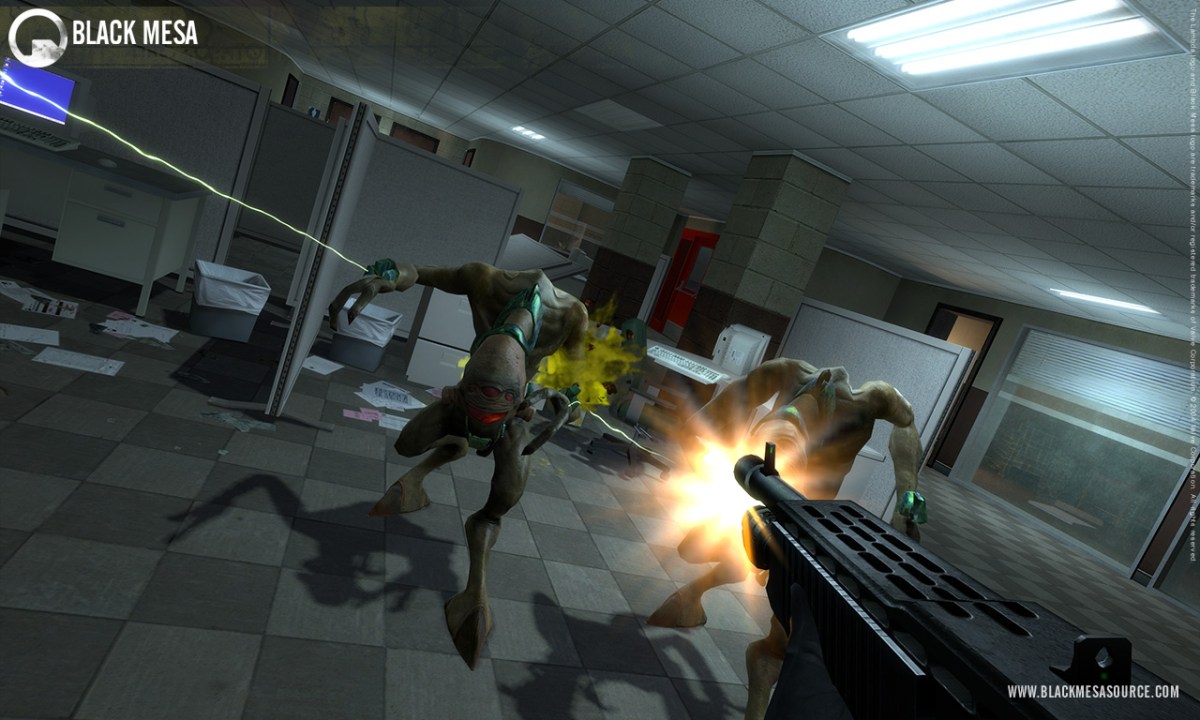
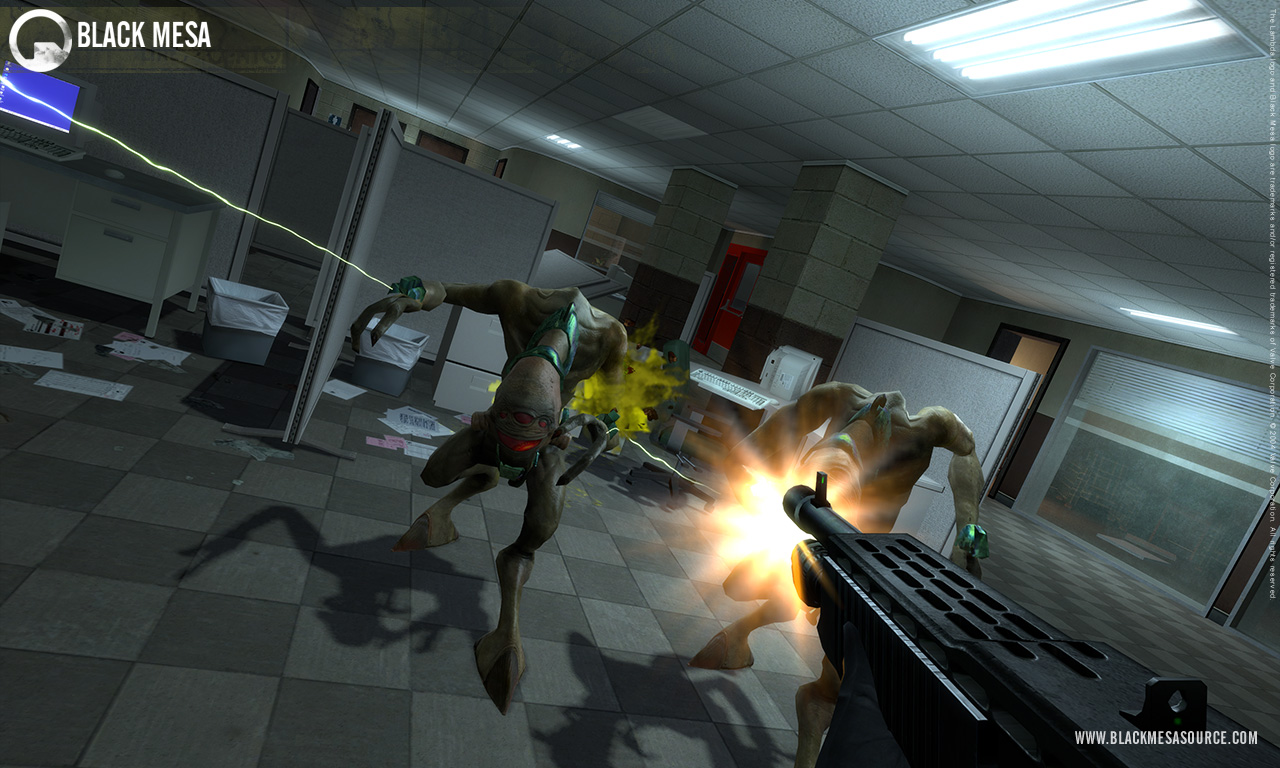
In case you also noticed, I used a screenshot from Black Mesa Source to show an example of a volunteer project that became something great, so it is absolutely possible.

(Source: Embers of Caerus)

City of Steam Is A Chilling Lesson For Indies


cityofsteam3

City of Steam is a heavy contender for the most disappointing MMO of 2013, and even if the upcoming relaunch and branding as Arkadia goes well, the story of the folks at Mechanist Games will no doubt find its way into the nightmares of indie gamers everywhere. Much like how we use viruses and bacteria to observe evolution in its quickest form, City of Steam has proven itself an excellent example of a developer going from beloved to dismissed in zero seconds flat. Where some MMOs take years for publisher or investor pressure to simplify their gameplay and treat customers not as long term friends to be treated with respect but as open wallets ready for the bilking, City of Steam managed it under R2Games in the simple cycle from closed to open beta.

I hate to say I told you so, so I won’t. That honor goes to the community who spent countless hours explaining why a partnership with R2Games was a bad idea and warning that when time came that City of Steam was gutted for parts and everything had a price tag on it, that they wouldn’t be there to help pick up the pieces. And they weren’t. When City of Steam launched into open beta and everyone’s fears of a partnership with R2 Games were realized, they simply threw their hands up and departed. There was no big hubbub, no boycotts like with City of Heroes, not the kind of angry outburst you’d expect, people simply left. Anything that could be said had already been discussed over the previous months, and by this point there was nothing left to say.

The good news in all of this is that Mechanist Games always had a kill switch, an option that very few indie developers have once they partner with an outside publisher, and it’s obvious by the lack of updates since open beta that they pulled it pretty quickly. As a gamer, I can only hope that Mechanist Games realized the problem before their customers started leaving in massive numbers, and not after. I can dream that every single request by R2Games to remove features, monetize, increase failure rates, and make the game more cash shop reliant were fought tooth and nail every step of the way, and I can picture that when Mechanist Games bought back their publishing rights, it was done with a generous helping of profanity.

City of Steam has what many other games will never get, a second chance. An opportunity to right their wrongs and gain back the goodwill of their audience, one that appears to be more than willing to forgive them of their trespasses. I hope they make use of it.

But that’s just my opinion.

I Don’t Think Divergence Is A Serious Game


86924825_640

Divergence Online is the next up and coming hardcore indie sandbox, and you can go ahead and stop reading there if you are as tired of that sentence as I am. Maybe it is the four years of writing MMO Fallout that has made me jaded, but when I hear about an indie hardcore sandbox MMO, I no longer have the reaction of a child on Christmas morning. I have the reaction of his friend down the street who knows exactly what his day is going to involve: hand-me-down socks wrapped in a hand-me-down shirt, and Uncle Rob will get drunk and pass out on my bed so I’ll be sleeping on the floor again. I’ve learned a lot from throwing money at projects like Mortal Online, and the lesson is never invest in the guy who advertises his project as being great because it’s kind of like that Ultima Online game back before EA watered it down for the stupid masses.

So Divergence Online came to my attention in the way that games in this genre usually do: The fans start being obnoxious, I get emails accusing me of being a corporate sellout and asking why I opt to cover “crappy themepark games” designed for “children” by “scam artists,” and how the game they sunk three figures into at an Indiegogo or Kickstarter campaign is going to rock because the developer is an old school guy who played Ultima Online and that the hardcore sandbox is really what the majority of players crave, but are just too stupid/apathetic to see the truth. The same players who months after the game’s launch will be emailing me asking why I bothered to support said game, noting that the more hardcore sandbox genre is viable but that the developer was not the person to bring it into the new era. And they would be correct. The hardcore sandbox is viable, you could look at early Ultima Online and current Eve Online to see that, and yes the problem is that the torch continues to be carried by those not strong enough to lift it over their heads and those strong enough are not willing to throw into the fight.

That said, I don’t believe Divergence Online is a serious game. Not in the sense that I’m implying that the whole thing is on the level of a Stargate Worlds ponzi scheme, or that the guys working on it have any goal other than to make a great game and obviously some money in the process, but that the project is likely to follow in the same line as its predecessor: A series of unfulfilled promises held back by a lack of funding built by people who are better suited for smaller projects. In previous editorials, I’ve pointed out that an MMO is probably the worst genre to pick for your startup game, they take the kind of time, planning, personnel, and most importantly funding that indie studios just don’t have access to. I also don’t have much faith in MMOs that change direction and engine multiple times before launch. Once again it shows a lack of planning and concrete direction, one that often kills even big budget titles like Tabula Rasa.

So my lack of faith in Divergence Online has nothing to do with the alleged antics of the creator, the “jerkness” level of a programmer doesn’t matter to me, otherwise you wouldn’t see the multiple interviews with Derek Smart here. I’ll even go further and say that it has nothing to do with some of the more questionable decisions presented in the Kickstarter campaign, like the inclusion of a $20 emote package that offers a “@#$% Yo’ Couch” emote, a scene from The Chapelle Show whose level of being overly quoted is only beaten by “I’m Rick James, bitch,” and it also gives the “slow jerk” emote, with the reminder to avoid eye contact. The other emote pack for $20 promises to recreate the exotic dance from Star Wars Galaxies, a reminder that you can prove your worth as a sandbox mmo by paying reference to previous popular sandbox games. Divergence Online goes further with its borderline crazy promises by offering a never-ending world that continues to procedurally generate as you walk towards its borders, a promise that will no doubt either be nowhere near as exciting as it sounds or will be scrapped or delayed indefinitely.

In the end, Divergence Online is a story we’ve heard of a thousand times before. Some guy wants to create a hardcore sandbox with full loot, free for all pvp, permanent death, and skill-based progression, and in order to sell his project he will jump on the bandwagon of hatred against anything that could be considered mainstream, because achievements, loot, particle effects, and more aren’t real features and they wouldn’t dare add anything in to insult you as a consumer. It’s a level of anti-mainstream thinking that has, perhaps ironically, become mainstream in the indie sphere, and will be defended endlessly until talk turns to walk, and the same people heralding the game as the next coming of Ultima Christ drop their support with that simple message “this just wasn’t the game to do it.”

On the other hand, I can always hope that Divergence Online breaks any expectations and becomes the next big sandbox title, in which case Ethan Casner may come over to my house and hit me with a folding chair WWE-style. The big sandbox games from Ultima Online and Eve Online all started out as small projects with low prospects and tiny budgets, and while the former became the largest subscription MMO of its time, the latter now holds its place as one of the most popular subscription MMOs ever. So it obviously can work.

But as far as Kickstarter/Indiegogo goes, I’m spent.

I Don't Think Divergence Is A Serious Game


86924825_640

Divergence Online is the next up and coming hardcore indie sandbox, and you can go ahead and stop reading there if you are as tired of that sentence as I am. Maybe it is the four years of writing MMO Fallout that has made me jaded, but when I hear about an indie hardcore sandbox MMO, I no longer have the reaction of a child on Christmas morning. I have the reaction of his friend down the street who knows exactly what his day is going to involve: hand-me-down socks wrapped in a hand-me-down shirt, and Uncle Rob will get drunk and pass out on my bed so I’ll be sleeping on the floor again. I’ve learned a lot from throwing money at projects like Mortal Online, and the lesson is never invest in the guy who advertises his project as being great because it’s kind of like that Ultima Online game back before EA watered it down for the stupid masses.

So Divergence Online came to my attention in the way that games in this genre usually do: The fans start being obnoxious, I get emails accusing me of being a corporate sellout and asking why I opt to cover “crappy themepark games” designed for “children” by “scam artists,” and how the game they sunk three figures into at an Indiegogo or Kickstarter campaign is going to rock because the developer is an old school guy who played Ultima Online and that the hardcore sandbox is really what the majority of players crave, but are just too stupid/apathetic to see the truth. The same players who months after the game’s launch will be emailing me asking why I bothered to support said game, noting that the more hardcore sandbox genre is viable but that the developer was not the person to bring it into the new era. And they would be correct. The hardcore sandbox is viable, you could look at early Ultima Online and current Eve Online to see that, and yes the problem is that the torch continues to be carried by those not strong enough to lift it over their heads and those strong enough are not willing to throw into the fight.

That said, I don’t believe Divergence Online is a serious game. Not in the sense that I’m implying that the whole thing is on the level of a Stargate Worlds ponzi scheme, or that the guys working on it have any goal other than to make a great game and obviously some money in the process, but that the project is likely to follow in the same line as its predecessor: A series of unfulfilled promises held back by a lack of funding built by people who are better suited for smaller projects. In previous editorials, I’ve pointed out that an MMO is probably the worst genre to pick for your startup game, they take the kind of time, planning, personnel, and most importantly funding that indie studios just don’t have access to. I also don’t have much faith in MMOs that change direction and engine multiple times before launch. Once again it shows a lack of planning and concrete direction, one that often kills even big budget titles like Tabula Rasa.

So my lack of faith in Divergence Online has nothing to do with the alleged antics of the creator, the “jerkness” level of a programmer doesn’t matter to me, otherwise you wouldn’t see the multiple interviews with Derek Smart here. I’ll even go further and say that it has nothing to do with some of the more questionable decisions presented in the Kickstarter campaign, like the inclusion of a $20 emote package that offers a “@#$% Yo’ Couch” emote, a scene from The Chapelle Show whose level of being overly quoted is only beaten by “I’m Rick James, bitch,” and it also gives the “slow jerk” emote, with the reminder to avoid eye contact. The other emote pack for $20 promises to recreate the exotic dance from Star Wars Galaxies, a reminder that you can prove your worth as a sandbox mmo by paying reference to previous popular sandbox games. Divergence Online goes further with its borderline crazy promises by offering a never-ending world that continues to procedurally generate as you walk towards its borders, a promise that will no doubt either be nowhere near as exciting as it sounds or will be scrapped or delayed indefinitely.

In the end, Divergence Online is a story we’ve heard of a thousand times before. Some guy wants to create a hardcore sandbox with full loot, free for all pvp, permanent death, and skill-based progression, and in order to sell his project he will jump on the bandwagon of hatred against anything that could be considered mainstream, because achievements, loot, particle effects, and more aren’t real features and they wouldn’t dare add anything in to insult you as a consumer. It’s a level of anti-mainstream thinking that has, perhaps ironically, become mainstream in the indie sphere, and will be defended endlessly until talk turns to walk, and the same people heralding the game as the next coming of Ultima Christ drop their support with that simple message “this just wasn’t the game to do it.”

On the other hand, I can always hope that Divergence Online breaks any expectations and becomes the next big sandbox title, in which case Ethan Casner may come over to my house and hit me with a folding chair WWE-style. The big sandbox games from Ultima Online and Eve Online all started out as small projects with low prospects and tiny budgets, and while the former became the largest subscription MMO of its time, the latter now holds its place as one of the most popular subscription MMOs ever. So it obviously can work.

But as far as Kickstarter/Indiegogo goes, I’m spent.

Mortal Online Shows Higher Resolution Textures


character-quality-small

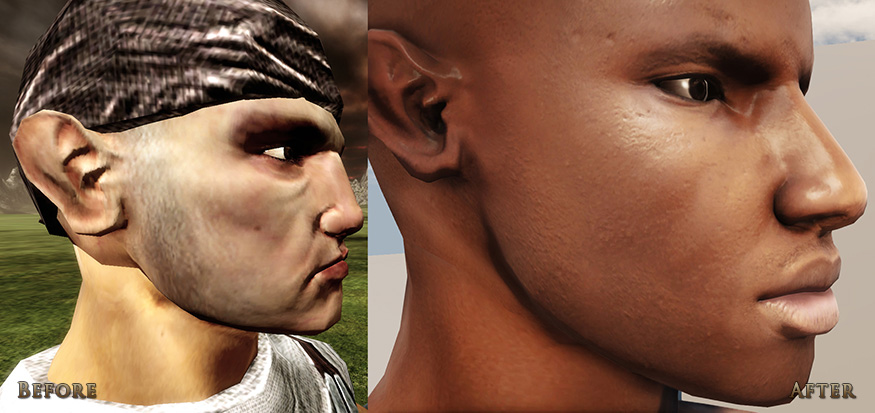
There is no denying that the citizens of Nave have faces only a mother could love, and in many cases a body of hair that even Robin Williams would be impressed by. Not too long ago, Star Vault set up a donation system where players are able to throw a little extra into the coffers. The idea, of course, is that while Star Vault does not receive 100% of revenue from subscriptions (I’m guessing much of it goes to licensing), they are able to keep 100% of the donations, which they put toward extra development goals.

The latest goal to be announced comes in the form of $6,000 toward the “character build” update, aiming to bring a brand new look to Nave’s player folk, both in the face and armor departments. The update will also allow several other features to be put into place, including general optimizations and a few other graphical improvements. The whole list of improvements is as follows:

  • Much better looking player characters (rebuild of all races and genders).
  • Better looking character face customization; more support for scars, tattoos etc.
  • Rebuild of all armor meshes/materials/shaders parts making them look much better.
  • Allowing us to add more and new armor parts in the game.
  • Almost all resource material gets its real and unique look.
  • Much better control over the dye system.
  • Better performance on player characters, no more 1-2s freeze lags when loading a bunch of players.
  • Removal of the texture merges system which means a big memory optimization on the client and better overall performance.
  • More players on the screen will not add cost on the client as it did in the old system.
  • A full new armor set will be included in this package; new types will arrive in the future now since the new system will allow it.

The donation system has drawn some controversy, although from outside the Mortal Online community rather than inside of it. The concept may seem surprising to players outside of the game, but the community hasn’t just embraced the donation system, they are the ones who demanded it be put in place to begin with.

(Source: Mortal Online)

Questing On The Side With Side Quest


When we last saw Side Quest and Fractal Entertainment, the fledgling browser MMO was busy licking its wounds from a low turnout in its recent Kickstarter campaign. Of the ten thousand desired by Fractal Entertainment, the Kickstarter funding managed to bring in only two. However, not willing to give up, the folks at Fractal have released a playable version of Side Quest on the main website with the obvious hope that potential players put off by the “investor” phase will give the game a try and see its real potential. So over the past couple of weeks, I have dived into Side Quest, and I think it is about time to give my impressions on the game as a point of concept, not necessarily dealing with bugs (this is nowhere near completion, after all) and what not.

Jumping In…

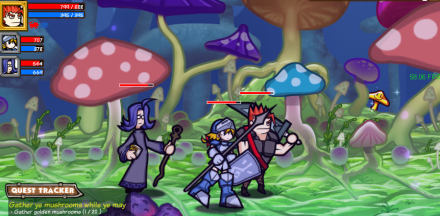
Side Quest is a goofy, self-parodying side scroller with an equally ridiculous crew that makes me pine for the days of Dungeon Runners and gathering quests at Pwnston so I can take my +2 hammer of seal clubbing and just beat the crap out of a bunch of mobs. Making good on its Kickstarter advertising, Side Quest features a whole lot of single player, from the random fields that you will run through to gather gold and experience, and the quest story line that actually gives a bit of diversity and challenge. At the beginning of the game, following a short tutorial, you will have to choose one of five characters as your “main” character. This person is directly controlled and cannot be removed from the party at any point. The other four can be mixed and matched to your pleasure, and fall into the RPG archetypes.

Side Quest is controlled Patapon style: Your party of three moves through the level on its own, attacking enemies as you see them. While your two NPCs will do their jobs by themselves, your main character is the one that levels up and gains new abilities and stats. If you want the game to be easier, I suggest taking Krug (the tank) as your main role. If you want the game to be incredibly difficult, take on the role of healer. Then understand why your healer curses you out in World of Warcraft. Abilities and potions are lined up in the hotbar and activated with the number keys.

The loot system derives from some Facebook games. Each level contains a progress bar that fills as you complete the level over and over again, unlocking new difficulty levels as you go. When an enemy mob dies, it explodes in a shower of gold and experience that must be picked up with a simple hovering of the mouse. Chests drop additional experience and gold and are activated with a simple click of the mouse. While there are plenty of “filler” levels that are good for gold and experience and equipment boosts, the actual story quests are where Fractal Entertainment are showing off their creativity.

There is one quest, for example, that has you traveling down a river with your party. You must steer away from hazards while simultaneously beating away the tentacles of a large octopus attacking your raft. Steering is easy as clicking on the correct button, but you must manage between beating back the tentacles, steering, and repairing damage. On another quest, you are tasked with moving forward in a mess of bushes. Whenever you attack the bushes, creatures come from behind and you must turn around in order to fight them (which slows your progress). This one took me a couple of times to beat, as your healer (who is normally in the back) is constantly exposed to danger. You have to balance forward movement with keeping yourself from being overwhelmed from behind.

There are plenty of other activities already in Side Quest. You can head over to the arena (pictured in the first shot) and battle other player’s crews for ranking and arena points which can be used on potions and equipment. There are a number of daily quests available as you travel around and gain access to new areas and quest hubs. Fractal has promised that more cooperative and competitive multiplayer features will be coming at some point, but for right now the arena square you off against another player’s team controlled by AI. The other player is not actually at the computer. You can also play a game of Card Slayers, an interesting card mini-game.

The problem that Side Quest has is that the very early portion of the game is hand holding to its greatest extent. In other games, players exaggerate by saying that the game can be played on auto-pilot mode. In Side Quest, apart from picking up loot and experience that drops on the ground, the very early levels actually are on auto-pilot. The characters move themselves, attack by themselves (until you start getting special abilities), and heal by themselves. And the initial areas are so easy that all I had to do for the first hour or so was to click to enter the level and wave the mouse around to pick up loot. It’s easy to misinterpret this as representative of the rest of the game and lose interest.

In short: Side Quest isn’t a half-assed indie World of Warcraft clone, nor is it an open world sandbox MMO. In fact it isn’t really much of an MMO at this juncture. But what Side Quest has shown is already becoming a fun, unique experience, and the development team is very passionate about their game. You can play Side Quest at http://www.side-quest.com/