

Yeah this column has been gone for too long.
Tag: MMOs
Hotcakes: Yeah, Your Game Needs Bots
[Rant] Double Standards And The Scrubbed Starting Line

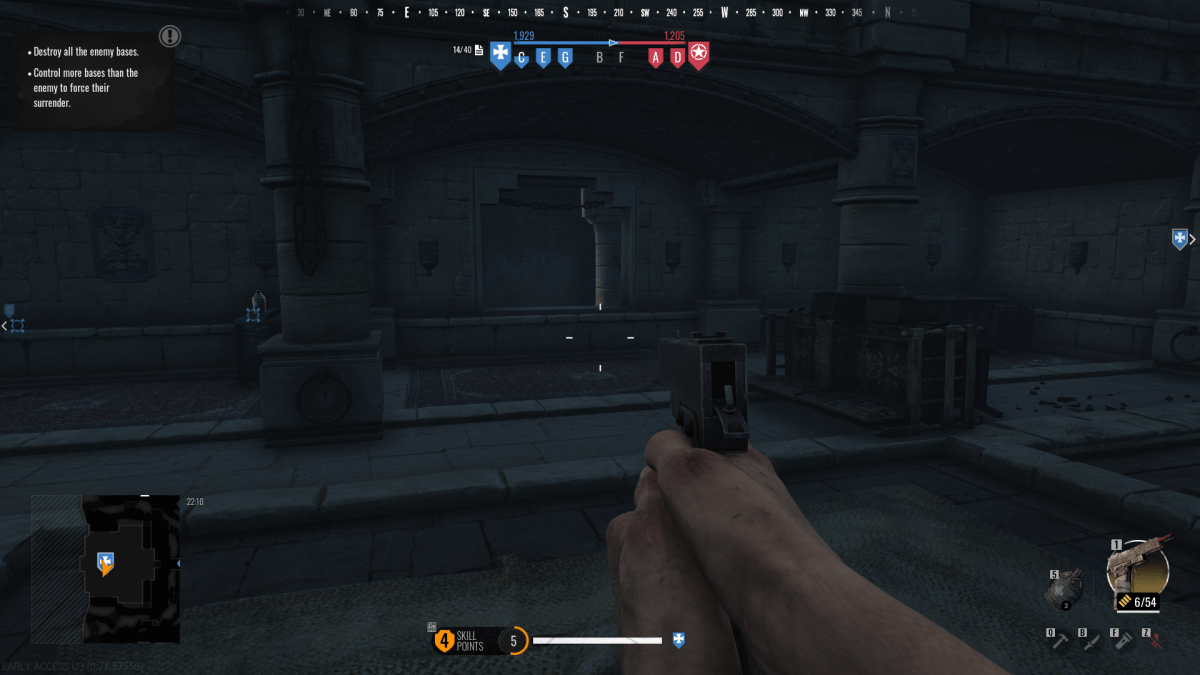
I dove into this topic in my piece about Infinite Crisis last week, but the line between beta and launch has become so blurred in the MMO industry that the whole concept has lost its meaning and many of us in gaming journalism are thoroughly sick of it. Go to virtually any website that reviews MMOs and you’ll likely see the same policy: We start judging when they start charging. I’m paraphrasing, but the point is the same regardless.
In earlier years, I defended the practice of selling beta access as a perk for pre-ordering because it was the best a customer could do to get a “demo” on an MMO. Granted, these were the days when 90% of western titles had subscriptions and wouldn’t see free trials until at least six months post launch, if at all. Furthermore, it was relatively low risk for the consumer. All you normally had to do was throw down the $5 minimum at Gamestop (or your local equivalent), a refundable/transferable five bucks I should add, and you’d get a beta key on your receipt. Apart from some know-how of the game and maybe a participation item, people in the beta didn’t get any advantage because characters were reset before launch.
But then free to play became dominant and the goal posts got moved time and time again. Developers stopped wiping beta characters, began opening up the cash shop in beta and in some cases even alpha. It’s important to read into the motives because the general consensus is that once you start charging for the use of a product, you agree that it is worth selling and therefore worth critiquing.
The launchification of beta, or early access as the industry has started calling it, has presented a remarkable double standard in game developers who want the freedom to treat the game as effectively launched in the sense that the servers won’t be wiped, the cash shop is open, and anyone can create an account and start playing, but keep up their shield against criticism whenever someone like myself posts a preview saying “this isn’t worth buying right now.” I have several times been the recipient of an email conveying disappointment or offering corrections, calling my criticism unfair because the product wasn’t considered launched yet.
What we’ve learned from the industry these past few years is that certain devs have no problem blurring the lines between beta and launch so long as it conveniences them and, when pushed on it, rubbing it out and flat out denying that it exists. When pushed on refunds, Turbine turned around and said no to founders because they’ve been playing for two years and, by Turbine’s opinion, they got their money’s worth regardless of if the game launched. When players struck back and pointed out that at least a decent portion of the time was spent dealing with outages, extended maintenance, game breaking bugs, and missing or incomplete features, Turbine’s CM simply denied the concept of launch altogether.
Because, in their logic, what does launch really mean when the game will continue to receive updates, bug fixes, and new heroes in the coming years? It makes sense, yes, but going by this line of thought, when are reviewers allowed to critique your product? Because if it’s unfair to criticize a game before it is finished, and a game like Infinite Crisis is in your explanation never finished, are you trying to say that it is never fair to criticize the game?
Or does the whole narrative eventually collapse and we go back to where we started?
With games increasingly shutting down mid-beta or very shortly after and then refusing to compensate customers, the need for tough scrutiny is higher than ever. The days of beta being a low risk, fun thing we did to get some game time in, help squash some bugs while stress testing, and ease the pain of waiting for launch are long over, and in its place is the high risk, predatory game of early access that carries no customer protection, no guarantee of ever receiving a final product, and no out once you’re in.
Otherwise I have no opinion on the matter.
Weekend Wrapup: Iron Man MK3 Edition

Another week has come to an end, and that means it’s time to look at the news you may have missed or forgotten. Weekend Wrapup goes over the highlights of the previous week, not all of which were covered by MMO Fallout.
For Marvel Heroes players, today (Saturday the 2nd) is the only day to grab Iron Man’s MK3 armor.
- Perfect World Entertainment is going privately owned. No more investors, no more shareholder meetings, no more quarterly earnings for me to dive through.
- Daybreak Game Company shows its support for Project 99. The developers can rest easy without the worry of overzealous lawyers.
- Goblinworks CEO Ryan Dacey isn’t happy with player recruitment, perhaps showing unrealistic expectations for an MMO that is already charging a subscription fee for early access.
- Alganon is still receiving support and will launch on Steam in May.
- The Secret World’s cinematic director is going on to different projects.
Necessary Security Features


Security is a constant back and forth on the internet, a never ending battle between business, thieves, and customers, and while customers have an obligation to do more to secure their accounts, the onus also falls on businesses to keep their back end safe. Securing accounts has become more and more of a legal issue in this day and age, with businesses facing heavy ramifications in the form of civil lawsuits and criminal penalties for not keeping their customer’s data safe. With that in mind, we’ve compiled a list of security features that should be utilized by all services, but for some reason may not be.
- Lockout timers: Brute force attacks should be the easiest method of account theft to deter, but for some reason is still an issue. Many games that carry lockout timers on their website do not offer the same protection inside the game client, and if you can figure out someone’s password by brute forcing a client then the entire feature is pointless.
- Notification: This goes hand in hand with the lockout timer. If someone tries to get into my account and fails, I want to know. If someone logs in with the correct password but can’t get past the two factor authentication, I want to know because it means someone has my password and there might be a virus on my computer. Businesses have the ability to detect suspicious activity, and they have an obligation to inform the user if something strange is going on.
- Case sensitive passwords: I shouldn’t even have to add this to the list, but here it is. In 2014, RuneScape still does not use case-sensitive passwords. Blizzard apparently does not use case-sensitive passwords on their website. Couple this with #1 and you make brute forcing an account a very time-consuming endeavor.
- Two-factor authentication: There are so many ways that two-factor authentication can be utilized that it isn’t funny. By text, by phone call, smartphone apps, tablet apps, point-and-click PIN tools, physical dongles, desktop-based authenticators like Google Auth, and more. There are no more excuses as to why developers would not have some form of two-factor authentication.
- One-click purchases: RuneScape will not allow me to buy/sell anything in-game if I don’t enter my pin first, nor will they allow me to use the Grand Exchange on the companion app if I don’t have two-factor authentication enabled on my account. I won’t deny businesses the power of impulse-buying that one-click purchases allows for, but you should not afford your customers this pleasure unless they have two-factor authentication enabled. Cleaning out an account is one thing, those items can be restored by customer support, but allowing someone to go hog-wild and start racking up credit card charges? You’re asking for a lawsuit, and you deserve one.
And of course, our list for consumers:
- Passwords: Never use the same password twice, and especially don’t use passwords on fan sites that could be compromised and not even know it. Avoid passwords.
- Make it up: One way people can get into your accounts is by figuring out your personal details and simply getting it through customer support. Use fake birth dates, addresses, and the like and keep them written down so you don’t forget. Remember back in the day when you’d use a fake birth date to get into websites? Same concept, different reason.
- Updates: Keep your computer up to date, and that means all of your software. Plugins like Java regularly update to patch security holes, do not allow yourself to fall behind.
- Anti-virus: Have an anti-virus, a good one. Norton and Mcafee are not good anti-virus programs, utilize tools like Avast and Windows Defender. Recognize that this isn’t 100% foolproof.
- Operating System: Don’t use a pirated copy of Windows, for crying out loud. I know you don’t want to pay the cost of the OS, but these are very often filled with backdoors at an OS level that even anti-virus programs won’t detect.
- Take Security Seriously: Keep up to date on security news.
It will likely never be possible to 100% secure an account, it is impossible, but we can do a hell of a lot more to protect customer data.
Playstation Plus Not Required For F2P/MMOs


So not everyone is all too thrilled that Playstation Plus is going to require an online subscription starting with the PS4. There is good news in all of this, however. Dual Shockers has discovered an interview with Sony’s Shuhei Yoshida, Sony Worldwide Studio President, where Yoshida confirms that there are special cases where games like free to play titles and MMOs will not require PS+ in order to play online.
You will need it to enjoy online multiplayer. This will also depend on the judgement by the publishers, and there will be some free to play titles that you’ll be able to play without needing a PS Plus subscription, like PlanetSide 2 and DC Universe Online.
Purchasing Playstation Plus on the PS4 will continue offering the same perks gamers receive on the PS3 and Vita now, including beta access, a laundry list of free titles updated each month, heavy discounts in the store, and more. Yoshida also notes in the interview that asynchronous gameplay may also be available to non-PS+ users, depending on what the publisher wants.
(Source: Dual Shockers)
Community Concerns: How Should Security Be Rated?

In case you hadn’t noticed, Week in Review (much like Month in Review before it) is going the way of the dodo. I’d rather utilize my Sundays to discuss more meaningful topics to MMO Fallout than the metaphorical digging from the trash bin I did in past months. I always have something in the works to make MMO Fallout less of a news source and more of an information database, to make my articles less time-based (less likely to be outdated) while at the same time staying relevant and interesting.
My current project is to discuss and rate the security on a company by company basis, which I will be doing hopefully in each Sunday’s editorial. I can guarantee an editorial every Sunday, but not that it will be on security, because some of the questions I will be asking need direct information from customer support, and we all know how fast they generally respond.
If I don’t bring this up now, someone will point it out: Yes, I am including actual security breaches in the analysis.
1. Prevention
How well do publishers prevent an account from being broken into in the first place?
- Authenticators (either dongle or app form)
- On-screen PIN (clicked with mouse, sends encrypted message, not through keyboard)
- Computer recognition (Only recognized computers may log in)
- IP recognition (If an account suddenly logs in from another country, it is locked)
2. Recovery
Once the account is stolen, how is the process?
- How long does it take an account to lock down?
- What damage can be done while the active account is moving about?
- Can the thief plant information to later use to steal back the account?
- etc.
3. Cleanup
Once the account is returned to its rightful owner.
- Compensation (does the company return lost items/characters)
This isn’t the entire list of questions I’ll be taking into account, but it is rather comprehensive. Hopefully I can get some of these developers to get on board and help me out.
Let’s Talk Free To Play “Customers”

Today I wanted to talk free to play, primarily the base that makes up the players and customers, two terms I want to keep separated for the purpose of this article. Let’s take Lord of the Rings Online as an example. A player is someone who downloads the game for free, accumulates Turbine points using in-game rewards and not buying them, and makes it as far as he can before running out of free points, getting bored, and quitting. A customer is someone who pays, be it in any amount of Turbine points, or through the VIP system.
I used Lord of the Rings and not Runescape because Runescape free players are, in a way, customers. Although they don’t pay any money out of pocket, they view advertisements which, according to Jagex’s financial reports, made somewhere around 7% of their revenue in 2009, and have likely remained about the same since. Getting in free players is a financial incentive in itself to Jagex.
For the rest of you, however, I’m going to use the drug analogy. Your first hit is always free, because the goal is to get you hooked and going back for more. Going back to Lord of the Rings Online, my readings are sporadic, but from my understanding a player can get around level 30 buying quest packs (many of which are rather cheap) using only the Turbine points given as task rewards. By that point, your next inclination is likely “well that Turbine point card at Target is only ten bucks. Might as well buy one.” Of course you know where the addiction goes from there.
But the companies that make free to play games aren’t sinister drug dealers who want you hooked, they recognize that the players who pay will be footing the bill for the players who do not, so they offer incentives to dole up some money. Turbine offers free points for VIP members, others offer extra bag space, better loot, and higher experience for subscribing.
Like drug dealers, you have to learn to avoid the bad ones. There is a very fine line between incentives for subscribers and punishing free players. Years back I had a chance to talk to an ex-customer service rep (not here on MMO Fallout) for a Korean MMO whose player (not subscriber) numbers rivaled World of Warcraft’s. What I found most interesting was the company’s policy on free vs paying members. A lot of the time, paying members were allowed to cheat, farm gold, use bots, etc, while free players would be routinely banned for minor offences. The internal policy was that the people were paying, so why not let them do whatever they wanted? As for the free players, “screw em.” There would be many more to take their place.
Harsh, but I’ve been called rather unsympathetic for indifference towards a group I’ve referred to as “permanent freeloaders” in the past so not at all surprising. What you need to understand when entering a game with full resolve that you will never pay a dime, is that the company has minimal interest in your presence. Sure you might bring friends into the game and they might pay for some stuff, but your demands will be met with a deaf ear.
On games like Runescape, Champions Online, etc, I often hear the permanent freeloaders complain about being treated like wallets waiting to be opened, but why would you expect anything else? A grocery store doesn’t offer free samples because you look famished and they’d like to feed you, and a developer doesn’t offer up their game for free because they hope less people will pay and more will simply enjoy the game. At the end of the day, the company has to pay its employees, and they’ve found a way to do that but far more efficiently with the free to play system. Like I said with Dungeons and Dragons Online, going free pays off more.
One of MMO Fallout’s core principles runs around MMOs as like a relationship between the developer and player, and free to play just goes to further the analogy. Developers have realized over time that a great majority of customers need to see what they’re getting into before they want to saddle up and cash in, and this system is just the way to do that. To go even further, a good cash shop game is like a gorgeous person you meet at a public place. You talk, have some things in common, and decide to have dinner. Slowly, but surely, you get to know each other better and the relationship becomes solid and loving. Next thing you know, you’re buying your love that brand new 2011 Kia to go in the garage of the house you just bought together. This is the best way to form a long-lasting relationship.
Then you have folks like Astrum Nival (Allods Online) who approach you in a bar, drunk, and just start dry humping you and spilling martini all over your good clothing. When you push them away, they get angry and violent, and start shouting about how you should be privileged to even call for their notice, and how anyone else would be throwing themselves at them. Sure, they might get successful with one or two people, but none of the relationships will be long, they will definitely be expensive to those they sucker in, and the ordeal will probably just put their partners off of forming future relationships.
Are we still talking about video games?
Let's Talk Free To Play "Customers"
Today I wanted to talk free to play, primarily the base that makes up the players and customers, two terms I want to keep separated for the purpose of this article. Let’s take Lord of the Rings Online as an example. A player is someone who downloads the game for free, accumulates Turbine points using in-game rewards and not buying them, and makes it as far as he can before running out of free points, getting bored, and quitting. A customer is someone who pays, be it in any amount of Turbine points, or through the VIP system.
I used Lord of the Rings and not Runescape because Runescape free players are, in a way, customers. Although they don’t pay any money out of pocket, they view advertisements which, according to Jagex’s financial reports, made somewhere around 7% of their revenue in 2009, and have likely remained about the same since. Getting in free players is a financial incentive in itself to Jagex.
For the rest of you, however, I’m going to use the drug analogy. Your first hit is always free, because the goal is to get you hooked and going back for more. Going back to Lord of the Rings Online, my readings are sporadic, but from my understanding a player can get around level 30 buying quest packs (many of which are rather cheap) using only the Turbine points given as task rewards. By that point, your next inclination is likely “well that Turbine point card at Target is only ten bucks. Might as well buy one.” Of course you know where the addiction goes from there.
But the companies that make free to play games aren’t sinister drug dealers who want you hooked, they recognize that the players who pay will be footing the bill for the players who do not, so they offer incentives to dole up some money. Turbine offers free points for VIP members, others offer extra bag space, better loot, and higher experience for subscribing.
Like drug dealers, you have to learn to avoid the bad ones. There is a very fine line between incentives for subscribers and punishing free players. Years back I had a chance to talk to an ex-customer service rep (not here on MMO Fallout) for a Korean MMO whose player (not subscriber) numbers rivaled World of Warcraft’s. What I found most interesting was the company’s policy on free vs paying members. A lot of the time, paying members were allowed to cheat, farm gold, use bots, etc, while free players would be routinely banned for minor offences. The internal policy was that the people were paying, so why not let them do whatever they wanted? As for the free players, “screw em.” There would be many more to take their place.
Harsh, but I’ve been called rather unsympathetic for indifference towards a group I’ve referred to as “permanent freeloaders” in the past so not at all surprising. What you need to understand when entering a game with full resolve that you will never pay a dime, is that the company has minimal interest in your presence. Sure you might bring friends into the game and they might pay for some stuff, but your demands will be met with a deaf ear.
On games like Runescape, Champions Online, etc, I often hear the permanent freeloaders complain about being treated like wallets waiting to be opened, but why would you expect anything else? A grocery store doesn’t offer free samples because you look famished and they’d like to feed you, and a developer doesn’t offer up their game for free because they hope less people will pay and more will simply enjoy the game. At the end of the day, the company has to pay its employees, and they’ve found a way to do that but far more efficiently with the free to play system. Like I said with Dungeons and Dragons Online, going free pays off more.
One of MMO Fallout’s core principles runs around MMOs as like a relationship between the developer and player, and free to play just goes to further the analogy. Developers have realized over time that a great majority of customers need to see what they’re getting into before they want to saddle up and cash in, and this system is just the way to do that. To go even further, a good cash shop game is like a gorgeous person you meet at a public place. You talk, have some things in common, and decide to have dinner. Slowly, but surely, you get to know each other better and the relationship becomes solid and loving. Next thing you know, you’re buying your love that brand new 2011 Kia to go in the garage of the house you just bought together. This is the best way to form a long-lasting relationship.
Then you have folks like Astrum Nival (Allods Online) who approach you in a bar, drunk, and just start dry humping you and spilling martini all over your good clothing. When you push them away, they get angry and violent, and start shouting about how you should be privileged to even call for their notice, and how anyone else would be throwing themselves at them. Sure, they might get successful with one or two people, but none of the relationships will be long, they will definitely be expensive to those they sucker in, and the ordeal will probably just put their partners off of forming future relationships.
Are we still talking about video games?
The Era Of Riding Initial Sales Is Over
[Update 6/29/10] With the overwhelming response this article has received, both here and on other websites, I’ve posted a followup below the original article.
Mortal Online is part of a major turning point in the massively multiplayer online industry, but in a way that has little to do with the content of the game itself. I’m not talking about the engines that MMOs run on, or the way that players interact in the growing worlds, or even the size and scope of the world itself. I speak of the way these titles are run, and the communities who pay for them, the promises that are kept, and the breaking point of patience and willpower. Continue to read and you will understand why the era of false promises, infinite delays, and broken dreams is over, but more importantly, why some MMOs will die because of it (not necessarily Mortal Online).
Up to a year ago or so, the typical mantra for buying a game was if you bought a console game and you didn’t like it or it was broken, you could always sell it used for a small payback on the cost of the game. For PC games, up until around 2004, it was possible to just transfer your cd and the key to another person, like a used game sale, but without the option for turning to Electronics Boutique or a real store to sell it for you. With MMOs, on the other hand, there has never been a legitimate way to sell. You have to transfer your account with the game, which risks the account getting banned if the company detects it, leaving you with no money, and no game.
This should not be taken as a generalization when I say that a lot of MMO developers quickly latched on to this idea, and several of those used it to put a choke hold on the player. In recent years, the focus has shifted to giving an MMO enormous amounts of hype prior to release, to pump up the pre-order sales before the closed beta is even done with, the NDA lifted, and the game can be talked about. A few developers walk the same borderline of fraud that you see in commercials, where what they say isn’t technically fraud, but it’s certainly misleading. As an example, many of you have likely mocked the commercials where the advertiser states “prices starting at under twenty five dollars!” only to find that the price starts at $24.99 for a barely working piece of trash and immediately jumps to $100 for the next step up.
Before an MMO launches we are subjected to countless claims of features that are delayed for months on end, if not years, if not scrapped entirely at some point in a secret manner. But these same features are used to advertise and gin up pre-orders, and then the executives sit back and wonder why virtually every subscription MMO in existence has such a low retention rate following its first month. The player is out fifty bucks, and might even convince himself when the developer claims that the feature he wanted that was missing at launch is coming “soon” (read: following two years of delays before it is eventually cut), that he should continue his subscription for a few months just to see how the game turns out.
I am picking on Mortal Online specifically in this article because this is the MMO that really popularized the new fight against the idea that once players pre-ordered, they were at the mercy of the developer no matter how many times/years the game was delayed despite accepting orders, and how many features ended up not being in the game, or being broken, at launch. Players issued charge-backs in large numbers on Mortal Online, so much so that many third party forums relating to MMOs/Mortal Online were regularly filled with information, accounts and advocacy for players to perform said charge-backs.
The moral lesson with Mortal Online is that developers can no longer promise features, and then use initial box sales as a fund to develop those features for actual release some months down the line. After several years, patience and tolerance for this has reached its breaking point, and players are sending a message that these acts that have become so commonplace in the MMO market, are no longer going to work. The legitimate use of a charge back is gaining momentum, and I have no doubt that at this rate it will be powerful enough to utterly destroy an MMO before it even makes it out the door.
As much as I am against resorting to a charge-back, the old “shit happens” excuses just don’t cut it anymore in defending companies that launch unfinished or wholly broken MMOs. In any other video game genre, the kind of stuff developers pull would never be tolerated, and the momentum is moving in such a way that it will no longer be tolerated in MMOs either, especially when companies make the same mistakes over several titles.
Always buy an MMO with a credit card, and never preorder an MMO on Steam (in the event where you issue a charge back, you entire Steam account will be completely disabled). Remember: A charge back is not to be used as an excuse to bum-rush your way into a game without doing any research on it, and is not for buyer’s remorse. It is strictly for cases where what you are promised is not what is delivered. In the case where it is found that you issued an illegal charge back, you can be sued for wire-fraud or theft of merchandise, among other charges, depending on where you live.
[6/29/10]
I wanted to address a few comments I’ve been seeing on various websites in regards to this article, mainly that I was not informative enough with the original article. I was afraid, and apparently rightly so, after I published this that it would gather some notice from the Mortal Online community, on both sides, and it has.
My intention with this article wasn’t to bash any game in particular, but to focus on the broad-spectrum themes that lead up to Mortal Online becoming the scapegoat for a new trend. It has become all too common for developers to start talking far too specifically about a title long before those features are even finalized, or approved in some cases. Interviews about the content of the game now merely run down to throwing out whatever is in the concept stage to get the most ooh’s and aah’s. Although there’s been a few criticisms of my “poor research” in not providing examples for a few arguments, this was by design, as the instant I pointed out a single MMO, or even a selection of MMOs, I would be immediately slammed for “having a grudge” against said game/company. Rather, my goal was to indulge the reader and allow them to fill in the blanks with their own experiences.
One thing I do hold Mortal Online guilty towards, and this stands for a number of other MMOs, is the “here’s a list of features, but not all of them will be in after launch.” Before Warhammer Online launched, Mythic removed most of the capital cities, preferring to have two decent cities at launch rather than all of them in a poor state. The cities, along with the removed classes, would be launched at a later time once the game shipped. Mythic has caught up on classes, but there hasn’t been much as to when, if ever, the capital cities will see release. Given the number of MMOs that have used the undisclosed-future-release plan where the content was silently cut or radically changed, I think it’s safe to say that Star Vault’s lack of specificity was to their detriment.
I have always advertised MMO Fallout as having a focus on the MMO industry as a whole, with insights into the companies, trends, and such, but I often feel that I assume and demand too much out of my readers, by which I mean that I occasionally get ahead of myself and assume that the rest of you have been following my blog since the start (which is why I always try to begin with summaries of what is going on).
The key to this article is that the player will always vote with their wallets in the end, on the issues that really matter, and in this case that issue is the tolerance of players with regards to developers making vague promises with the hopes that the player will continue to stick on until whatever feature it is is released, assuming it is at all.
I stuck Mortal Online in because it is indeed the poster child of the reaction, but not necessarily all factors of the cause considering how newly released it is. Although MMO Fallout didn’t exist at the time, I was closely following the months leading up to the launch of Warhammer Online and Age of Conan. In both of those cases, the populations of the game plummeted following release, especially given that both of these titles broke a record on pre-orders. Although players were disappointed at their purchase, they simply wrote it up as a $50 loss and moved on.
Mortal Online got the short end of the stick because of pre-release fear rather than hype, especially when one staff member talked about their troubles with funding, that caused some players to issue charge backs out of fear that Star Vault was bound to go bankrupt before the game ever launched. Other players saw what they believed to be an irresponsible length of delays, and yes, a great number just rode on the bandwagon with the mantra that “I’ll preorder it, and if I don’t like it I can always do a charge back and troll the forums about how I got my cash back.”
Ultimately I believe Mortal Online became the poster child for this because Star Vault is a tiny company that has seen a lot of stumbles, and people decided that even if they were in the wrong, there was little to no chance of retaliation from a company with pockets so thin that they were selling pre-orders in order to fund the beta.
Here at MMO Fallout I stand up to core principles that I never give a disincentive to trying out a title. The closest you will find to reviews here are the month-in-review articles I do where I give short, one or two sentence thoughts about the MMOs that I am playing at the time. I could increase my hits by a mile by converting MMO Fallout into a website where I plaster ads, talk about why x company wants to rip you off, review MMOs based off of twenty minutes of gameplay, call John Smedley the devil, make funny photoshops of Bill Roper, and generally jump on the troll bandwagon, but I would rather give players the avenue to form their own opinions.
I crack wise-ass jokes about companies and their games, but at the end of the day you will always find me encouraging people to try out the game, no matter what the content of the article, and regularly blast trolls. I recommend people try the game out for themselves, rather than make their decision based off of a review, or something someone wrote on a forum, which is why I regularly post sales, trial information, and more avenues on how to get into MMOs for the lowest price possible. I suggest you read the following, along with the rest of MMO Fallout:
- No You Are Not Entitled A Refund
- Take Notice: Aika Cracks Down On Harassment
- A Downward Spiral Does Not Mean Death
- Rules: Why Do They Need To Be Repeated?
I’m not a man without morals, so I apologize to the Mortal Online community that the original article ended up coming across as a misdirected, poorly sourced flame pit. I rarely follow up articles like this, and hopefully this long-winded response will tie up some loose ends.
 MMO Fallout