


Whenever I hear about free to play shooter MMOs I think of one thing: over-extensive cash shops. I think about time-limited cash shop weapons and upgrades, with the option of spending a very long time grinding through kills in order to nab that better weapon. For myself, and a number of others, such titles start out fun but quickly lose their edge as the slow grind to achieve new weapons becomes longer and what might normally be random, mindless violence is now less enjoyable than slogging through quests in a fantasy MMO. Thankfully, Bullet Run is not that title.
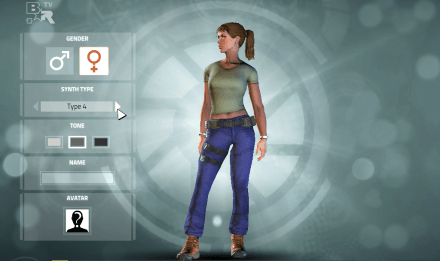
First things first, before you can start shooting people you must create an avatar capable of holding an automatic weapon. Character customization at creation is virtually nonexistent. Apart from a type, tone, and gender, there isn’t much you are able to alter about your avatar. All characters start with the same basic submachine gun. The in-game marketplace is used to purchase additional cosmetic gear as well as new weapons and attachments, both of which can be purchased with either Station Cash or currency acquired through regular play.

Talking about Bullet Run’s gameplay aspects almost seems redundant, because if you’ve played any other recent first person shooter, you already know what to expect. There are two game modes present, Team Deathmatch and Dominion. The former features two teams of players sparring over a set of maps to see who can rack up the highest score in the time allotted. Dominion, on the other hand, has one team attacking a set of nodes as the other team attempts to defend the map. Dominion is played in two halves, allowing each team a chance to attack and defend. As you complete matches and kill other players, you gain experience and currency which are used to level up and purchase additional weapons and attachments. Abilities are docked and slowly build up a charge over the course of the match as you kill enemies and gain points, and encompass everything from mobile turrets to massive chainguns.
As far as cash shop titles go, Bullet Run scores a few points with its durability system. In many other free to play shooters, items offered on the marketplace are limited by time, often times not allowing the player to purchase a permanent version with in-game currency (assuming one exists at all). Once the time limit has passed, your purchased weapon is useless. In Bullet Run, weapons operate on a durability system where the weapon must be repaired with either Station Cash or currency. The advantage of the system, however, is that even if you allow the durability to run out, the weapon can still be used at a 10% loss in damage. And considering the fast paced nature of Bullet Run, a 10% drop in your gun’s effectiveness isn’t going to lose you any battles.
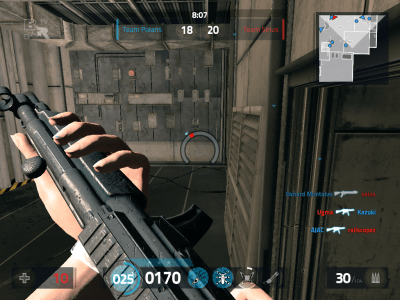
Playing Bullet Run isn’t all run and gun, however. One feature added to give an advantage to players who can keep their cool under stress is a sliding bar when you reload. If you have decent reflexes, you can easily receive a speedier reload and some point bonuses as well. On the other hand, you can let the reload take its course, or risk jamming the gun and leaving yourself open to attack. When you find someone in a tight corridor and both of you empty your clips, the reload bonus can mean the difference between life and death.
Where Bullet Run falls short is content, the game lacks variety in almost every sector possible. Most important: There are only two modes to choose from, Team Deathmatch and Dominion. And while the marketplace plays host to a wide assortment of guns, the cosmetic clothing and hairstyles offered are few. Even the commentary by the characters in-game is lacking, with the same phrases being repeated over and over. The end result is that Bullet Run feels incomplete, as if the game had launched as soon as there was a stable product to show, rather than waiting until more content could be added. This isn’t to say that Bullet Run is a bad game by any means, it functions as intended, is fun to play, and the cash shop is much more player-friendly than similar titles.
With further development, and assuming Sony doesn’t cut the game short like a certain other developer, Bullet Run will enjoy a loyal following of shooter fans.
Pros:
- Generous cash shop: Weapons/Attachments can reasonably be purchased with in-game currency.
- Functional: I didn’t come across any notable bugs, and the servers even managed to stay stable on launch night.
- Stable: Lag was not a problem in any of the matches I played.
Cons:
- The game lacks content.


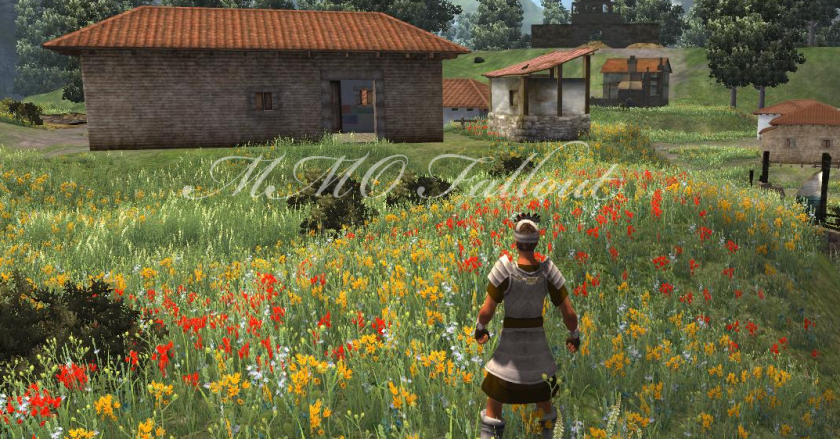
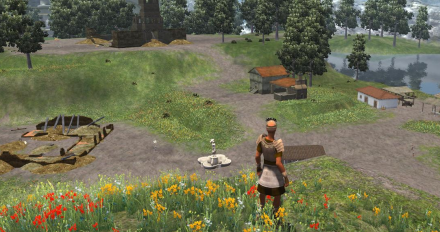 Through my first day in Gods & Heroes, I kept asking myself why the game felt so familiar, and it wasn’t until around level six or seven that enlightenment hit me: Gods & Heroes feels like a game that should have come out years ago. The landscape in many places looks stunning, with impressive detail and variation in the flowers and trees that populate the landscape. The armor shows off the multiple pieces that put it together, and the characters look decent, although a bit shiny and emotionless. The buildings, however, are the sore spot in visual design, with a small amount of structures reused to populate the world.
 The meat of the game is a been-there-done-that fantasy MMO set in ancient Rome. Your main mode of leveling consists of going around and finding quests that task you with killing a number of NPCs, harvesting nodes, or killing NPCs to harvest things off of them. As you level up, you will follow the basic system of taking your trash to the vendor, buying new armor and weapons, setting up your alternate advancement points (feats) and upgrading your minions. The idea of bringing squad mechanics into a solo-oriented game will make your time spent in Rome a little too easy, however.
 MMO Fallout