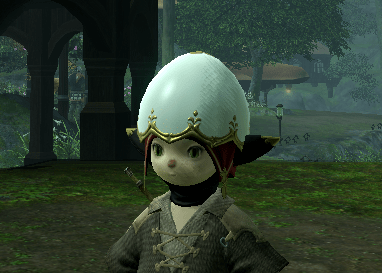
We all knew this time would come eventually, when Square Enix would shake off the training wheels and Final Fantasy XIV would transition back to its intended subscription system. Last month, Square announced that billing would start around the time the much anticipated 2.0 update released, around November or December of this year. Today, in an article on Gamasutra, Square is ready to announce a final date: January 6th. According to Gamasutra, the 2.0 update, billed as a remade version of the game, is set to launch sometime in late 2012.
Until version 2.0 is released, players who opt to continue playing will enjoy reduced subscription rates, starting at $6.99 per month with the cost decreasing for 90 and 180 day subscriptions. The Playstation 3 version is expected in early 2013.
It’s been ten long months since someone at Square Enix restructured the Final Fantasy XIV team with the human resources equivalent of a carpet bomb, and since then the game has arguably come a long way, both in the huge number of updates bringing in new content, much needed content, fixing the old, purging the bad (physical levels?) and a new way of thinking for the FFXIV team. Unfortunately for us, the time we all knew was coming has shown is ugly head: The free period of Final Fantasy XIV will be coming to a close.
In a new lodestone, President Yoichi Wada announced that the transition will come in late November or early December of this year 2012. But hey, anyone who has been with FFXIV since the beginning has had a full year to play for free. Unless you are me, who adopted early and thanks to my already slow leveling process managed to get three skills above level ten. More importantly, as any person who bought the game should question, what about the subscriptions we still had to sign up to when the game started?
Anyone who has played FINAL FANTASY XIV at any time since its release is already in possession of a FINAL FANTASY XIV service account. These accounts are set to renew their subscriptions automatically, barring deactivation by the account holder. Therefore, if we were to begin regular subscription billings for all existing contracts, players who will not see this announcement or who may not currently wish to pay subscription fees would automatically begin to be charged for their accounts. To avoid this, we have decided to first suspend all automated renewals for service accounts. Only account holders who have agreed to reactivate the automated renewal system will be billed.
That’s generous of them. Final Fantasy has had a year of player dropoff, making for a lot of people who stopped playing and probably don’t follow the game anymore. You can read the entire announcement, as well as download a few documents outlining the team’s plans for the future.
I’m sure a lot of people expect me to do the usual poking of fun at Mythic over Warhammer Online, and truth be told I have enough content to fill more than just an introductory and self-parodying paragraph. So for the sake of getting to the point, I will not be referring to Warhammer as “boring crap,” nor will I make a joke about Mythic apparently not seeing the worth in players investing in the MMO, apparently even if that investment is absolutely nothing. And for once, I will stop inciting Mark Jacobs.
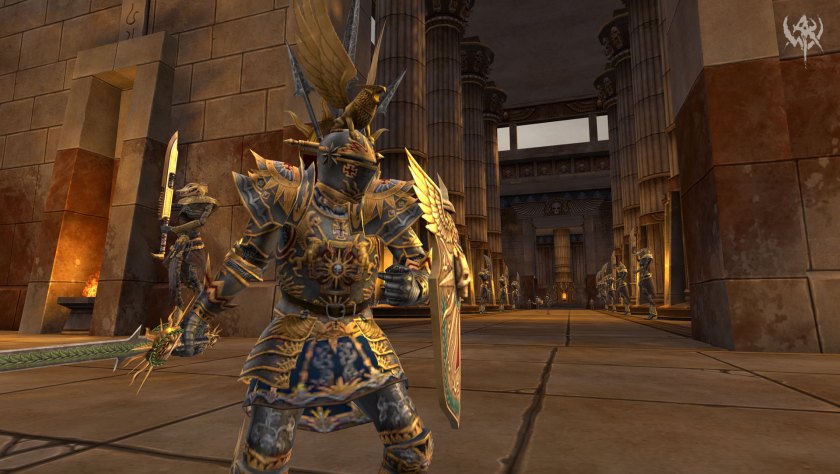
VP Eugene Evans over at Bioware Mythic wants the world to know that Warhammer Online is alive and still fighting for survival, and much like the steak supply in a house full of vegetarians, isn’t going anywhere. Evans stated that subscriptions on Warhammer Online have actually risen since the announcement of the free to play MOBA. That being said, if players want Warhammer for free, they’re going to have to turn to Wrath of Heroes. Warhammer, according to Mythic, has no intention on shutting down, nor does it have any intention on going free.
“We also think this is a better approach. You know, how do you make it more accessible? How do you make it a fun experience out of the door? So we’re really starting almost from the ground-up but having the benefit of being able to draw on everything we’ve learned from producing Warhammer Online.”
Since today has seen some conspiracy theories, let’s take a guess on the intention behind Warhammer never going free to play. It’s a successful business move, and if WAR needs anything it’s a bigger community, so who is behind it? Does the team really think that keeping the subscription is best, or does this have to do with EA’s refusal to move their other MMOs into the free to play realm?
I’m sure a lot of people expect me to do the usual poking of fun at Mythic over Warhammer Online, and truth be told I have enough content to fill more than just an introductory and self-parodying paragraph. So for the sake of getting to the point, I will not be referring to Warhammer as “boring crap,” nor will I make a joke about Mythic apparently not seeing the worth in players investing in the MMO, apparently even if that investment is absolutely nothing. And for once, I will stop inciting Mark Jacobs.
VP Eugene Evans over at Bioware Mythic wants the world to know that Warhammer Online is alive and still fighting for survival, and much like the steak supply in a house full of vegetarians, isn’t going anywhere. Evans stated that subscriptions on Warhammer Online have actually risen since the announcement of the free to play MOBA. That being said, if players want Warhammer for free, they’re going to have to turn to Wrath of Heroes. Warhammer, according to Mythic, has no intention on shutting down, nor does it have any intention on going free.
“We also think this is a better approach. You know, how do you make it more accessible? How do you make it a fun experience out of the door? So we’re really starting almost from the ground-up but having the benefit of being able to draw on everything we’ve learned from producing Warhammer Online.”
Since today has seen some conspiracy theories, let’s take a guess on the intention behind Warhammer never going free to play. It’s a successful business move, and if WAR needs anything it’s a bigger community, so who is behind it? Does the team really think that keeping the subscription is best, or does this have to do with EA’s refusal to move their other MMOs into the free to play realm?
Well, it’s May, and that can only mean Q1 financial are up, and there are many calls to be made. Who better to run through for this article than Blizzard? I mean, they’re name is on the banner image.
First, the bad news. The subscription numbers for World of Warcraft have dropped back to pre-Cataclysm 11.4 million. This has been attributed to the speed at which players are completing Cataclysm’s content, which is much faster than previous (Burning Crusade, Wrath of the Lich King) expansion packs. On the other hand, Blizzard still has 11.4 million paying customers, and that remains pretty impressive.
The drop in players is also likely due to the release of Rift. As in Age of Conan and Warhammer Online, Blizzard has noted in the past that competing MMOs cause a sharp decline in users, followed by a slow trickle as they calmly return with their heads down, hoping you’d forgotten about the time they smashed the floor lamp and walked out the door, claiming they’d never come back again.
On the other hand, World of Warcraft has become more profitable. If the two don’t add up, consider Blizzard’s increasing sale of microtransaction pets and mounts.
This is a tough article for me to write, because it goes against virtually all of my established ethics for MMO Fallout, foremost the ultimate disapproval: Recommending that people not only do not buy, but unsubscribe to a game. Since last week’s Playstation Network outage, I’ve had a number of people emailing me to ask a simple question: Should I cancel my DC Universe subscription (on the PS3)? And after long deliberation, my short answer is…yes.
Sony is rebuilding the Playstation Network, so if your account is about to run out, simply save yourself the money and do not resubscribe until everything is clear. That is, assuming you still trust Sony with your personal information after the news that data, possibly including credit card information, was stolen in the security breach. Sony maintains that data from Sony Online Entertainment was not affected, and only the Playstation Network experience an intrusion.
There is still no concrete date on when the PSN service will be back up, so if you have any subscriptions to DC Universe or Massive Action Game, you’re better off just cancelling now, and resubscribing when the service is back online.
As someone who works in brick’n’mortar store customer service, I’m often presented with the question; “is it seriously a sale when a $10.99 item is put in sale for $10.50?” and the answer is, in a certain sense, yes. The sale may not be particularly good, but given the new price is smaller than the last, it is indeed a sale.
About a week ago, I wrote on the upcoming expansion to Mortal Online, titled “Dawn,” and that the Star Vault team was also working to implement a feature to connect your Mortal Online account to your Facebook. As an extra incentive, the team decided that players would be given a discount to their subscription price if they linked accounts.
Well, Star Vault has unveiled the Facebook connect feature and the discount is, to say the least, negligible. Starting at five friends on your friends list (well that disqualifies me immediately), the savings amount to .25 Euro, or thirty six cents USD. The sales progress up to 750 friends, where the discount reaches 1.25 Euro, or $1.80.
As for wall spam, Star Vault promises the messages to be minimal:
In return for providing you with a discount, Mortal Online will sometimes make small posts to your Facebook wall when major events occur for you as a player; however, these are quite rare as we know nobody wants what could be considered spam!
October here on MMO Fallout is all about free to play (a topic I intend to touch upon this month) vs pay to play, but I wanted to start this month off by giving an analogy between the two systems. By this point, I don’t think anyone takes free to play verbatim, as in not having to pay to play the game. Nowadays, free to play generally means supported by some form of VIP subscription (freemium), cash shop, or combination of the two. There is something to be said about the real meaning behind free to play, but that is a discussion for another day. Today, I want to make the food comparison between free to play and pay to play, to give a better understanding as to why both systems can coexist in a game like Lord of the Rings Online or Everquest II.
When thinking of free to play, the first thing that comes to mind is likely cash shops. A free to play game is more akin to entering a restaurant with a free entrée coupon. You are enticed because you’ve always wanted to try that chicken souvlaki, and this is your perfect opportunity. Now, unless you go the cheap route and ask for a glass of water, odds are you’ll be getting a drink. I hear nothing washes down souvlaki like a good glass of red wine, but some of you might go for a soda, or perhaps a glass of milk (who drinks milk with dinner?). Either way, you’re up to a couple bucks on the table. The cute waitress asks you if you’d like an appetizer, and you are rather hungry thanks to your breakfast/lunch of the leftover lasagna someone left in the fridge, so you opt for the endless soup and salad bar. Finally the waitress gets your souvlaki order, and asks you if you would like to add any side dishes. Before you know it, your free Souvlaki entrée is now a meal consisting of soup, salad, red wine, roasted potatoes, grilled asparagus, that free cup of water, and a nice strawberry mousse for dessert. You walked into the restaurant preparing to be a cheap-ass, and now you’re looking at a $20+ bill. But the souvlaki was free.
That is essentially free to play in a nutshell. If you find a game you truly enjoy, odds are you’ll find yourself spending cash on it faster than you can even keep track. A few dollars here, a few dollars there, and suddenly you’re paying more than subscribers are paying on their pay to play games, only they don’t have the core game to go back to once they stop payment, and you’re having fun while you do it.
Subscription games, on the other hand, are like an all you can eat buffet. You throw the guy at the counter your ten bucks and sit down to four long tables of ever-replenishing food. Sure you would never pay money to eat those tiny octopus that are on the table, but why pass up the chance now? In the mood for chicken? You can have your choice of chicken, honey chicken, sweet and sour chicken, chicken wings, chicken fingers, barbecue chicken, roasted chicken, and that’s just one section of the table. Grab a slice of pizza, then a bowl of soup if you feel like it. Fill up your plate with barbecue ribs and crab legs, then head back for roast beef and potatoes. Just don’t leave anything on your plate, or you’re in for a long talking to about starving children in China. All in all, the buffet may not have your souvlaki and a drink like red wine will cost more than the included soda, but overall you can fill up whether you are among the sampler (try a little of everything) or the “the world is going to end tomorrow, I’d better store some body fat,” kind of person. The only difference is that here the tray of crab legs isn’t bum-rushed and cleared out in two seconds.
Subscription games allow you to try it all without having to pay extra. For the most casual of the bunch, you might be paying more than you are getting out of it, but the choice and availability of options makes paying the extra bit worth it. The hardcore will feel like they are eating like kings for the cost of eating like a peasant, and will clean their plates sucking down each and every bit of content that can fit into their gaping maws.
Neither system is intrinsically better than the other. With the free to play option, you are able to get your core gameplay, and still spend a few bucks on extras tailored to what you want, and can even save money over the monthly costs of a subscription game. On the other hand, subscription games offer you extras you might not have considered on the free to play game, and can open your eyes to features you may have missed out on or brushed off as unnecessary because they cost a few dollars.
Now: Does anyone know a good souvlaki restaurant in New York? This article is making me hungry.
Follow MMO Fallout on Twitter (@mmofallout) or subscribe in the upper left hand corner to get update notifications delivered immediately via email.
Those of you playing Everquest II, or really any other subscription based MMO are probably looking at your fifteen bucks a month and wondering, “Gee. I hope they don’t turn my favorite MMO into a cash-shop money farm for casual kiddies who want to pay to win,” and quite frankly your fears would be justified. When Lord of the Rings Online announced its transition over to free to play, we finally recognized that the transition isn’t just for MMOs that are on the brink of death (Ahem…Dungeons and Dragons Online), but a valid source of income, especially for publishers who love money a whole lot.
Senior Producer Dave Georgeson (or was it George Davidson?) over at Sony Online Entertainment wants to calm your fears, well at least if you play Everquest II. Responding to fears that the game would follow Turbine’s approach, Georgeson stated;
As I said in that interview, we will not be changing your subscription model. We’ve heard you folks loud and clear that you do not want items with stats introduced, you don’t want players buying their way to power, etc. Your world will stay the way it has been and we will continue to support it with new content, items, etc.
Directly from the Georgeson mouth itself. I believe the interview Georgeson refers to was back in April with Ten Ton Hammer where he was asked about subscription vs cash shop, and he had this to say:
Games that are fully microtransaction-funded are generally “easily chewable”. In other words, you play them for a month or two and then move on. (Sometimes only weeks.) Games that are subscription-funded tend to be longer-term communities and homes for players to build and grow over time. Plus, there’s plenty of room for hybrids with elements of both. In short, I doubt that subscription games will just “go away”. It’s just another type of business model.
Of course you would talk about hybrid models, what with your fancy pants $25 mount (one thumb down). More on Everquest 2 as it appears.
Back in January I talked about how Infinity Ward was rumored to be working on a Call of Duty MMO, which of course would likely be worked on by a different company under Activision at this point given Infinity Ward’s current less-than-functional status. Call of Duty itself, as I have said on a few occasions, has achieved near-MMO status. Starting with Modern Warfare and moving forward, the Call of Duty series has been pumping in the MMO-features, allowing players to level up, gain achievements, earn experience, unlock new weapons and customizations for their weapons, earn badges. Technically all Call of Duty is missing is having the servers run by Activision, and perhaps a subscription fee.
I also noted that, were Call of Duty to take the WW2 Online route and go for the large persistent world, that the company would likely take the World War 2 MMO genre and dominate it, given the quality of Modern Warfare and World at War. That being said, I did express concern that a Call of Duty MMO with a subscription that operates solely on instances, ala Crimecraft, would likely hit the ground running directly into a brick wall, as players quickly drop the title and return to the free alternative, or even WW2 Online.
If you believed Robert Kotick of Activision was salivating at the thought of slapping a subscription fee on Call of Duty, then you’ll be needing a replacement bucket. In an interview with the Wall Street Journal, Kotick stated:
“I would have Call of Duty be an online subscription service tomorrow”
Does the audience want a Call of Duty pro-subscription? Kotick believes so.
“I think our audiences are clamoring for it. If you look at what they’re playing on Xbox Live today, we’ve had 1.7 billion hours of multiplayer play on Live. I think we could do a lot more to really satisfy the interests of the customers.”
When asked if Activision would pursue a Call of Duty subscription model, Kotick responded “hopefully.”
Is it too early to call Godwin’s law on future comments?





 MMO Fallout