[Column] The Death Of Out-Of-Genre Subscriptions


hellgate 2015-08-05 22-36-58-74

I casually refer to the 2009 – 2010 time span as the Suicidal Subscription Pact, where business logic in gaming decreed that subscription fees must be tacked on to genres that had previously been available for just the cost of the game. The time marks one of the last eras of businesses unsuccessfully copying functions from World of Warcraft without even the most basic understanding of why they worked, in this case taking the subscription fee with no idea on why World of Warcraft justified a continuing payment.

Now MMOs are no stranger to subscription fees, even if only a small minority manage to hold on without going free to play or shutting down, but the years I’m referring to point toward a number of developers who decided to branch out the concept of monthly tithes into other genres, and were rewarded with deep financial ruin and often bankruptcy as a result. And while any business must take risks in order to innovate, it doesn’t take a marketing genius to know that these games never had a prayer of succeeding, sadly with little relation to the actual game quality.

cities-xl-26

Monte Cristo is actually the first business I contacted as a junior MMO reporter, to voice my concerns that their plan to include a subscription fee in Cities XL would be a disastrous idea. The idea behind the subscription was to fund the servers, naturally, but the company also believed that the lack of competition would allow them the space to do as they please. With SimCity still four years away, the number of AAA city building games with online components could essentially be counted on a single, finger-less hand, with the only alternative being the wealth of Farmville-style free-to-play browser titles that gamers were increasingly growing sick of.

As I predicted, Cities XL released and consumers responded to the mandatory subscription for online play with a definitive “nah.” Even with the market cornered, Monte Cristo couldn’t get players on board and shut the service down less than a year later due to a lack of subscribers. Given the option of Cities XL or nothing, the market chose nothing, and Monte Cristo went bankrupt a couple of months later.
apb

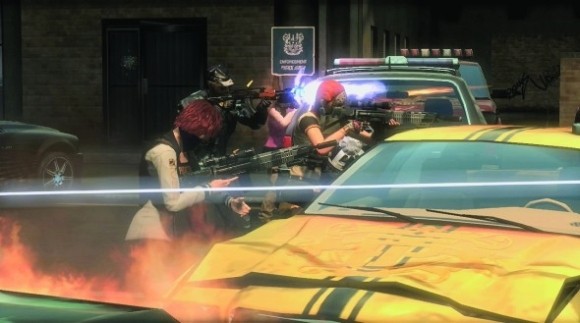
All Points Bulletin, Global Agenda, and Hellgate: London mark three attempts to bring the subscription fee into the shooter realm, with all three failing miserably but only two of the three companies going under because of it.

With All Points Bulletin, Realtime Worlds had the idea to sell an online shooter at full price and then charge hourly for access (with the option of unlimited monthly subscriptions). While functionally different from its competition, APB essentially started the race at a disadvantage, having to convince gamers that an online shooter would be worth not just a subscription fee in a genre where it didn’t exist, but an hourly subscription fee.

It didn’t matter that Realtime Worlds was offering an unlimited play time option, it didn’t change the fact that they thought APB was deserving of an hourly fee, for a premium priced game in a genre that hadn’t yet been touched by cash shops in the west. Perception is a big deal, and in many minds the simple presence of an hourly subscription (that really only existed to make the unlimited version seem more enticing) showed a bravado that they weren’t willing to do business with.

And it didn’t help that APB was an underwhelming game, from the numerous bugs and gameplay issues to a lack of diverse content, the fact that it was a driving/shooting game that failed to deliver on either the driving or shooting, the kerfuffle over Realtime Worlds attempting to embargo reviews. Perhaps as a sign of how poorly managed the game was, players didn’t even get the luxury of knowing when the servers were turning off until the day of.

To add insult to insult and top complaints of unnecessary monetization, the company even introduced advertisements into its voice chat service that could be removed with, you guessed it, another subscription.
e3_globalagenda_domecity

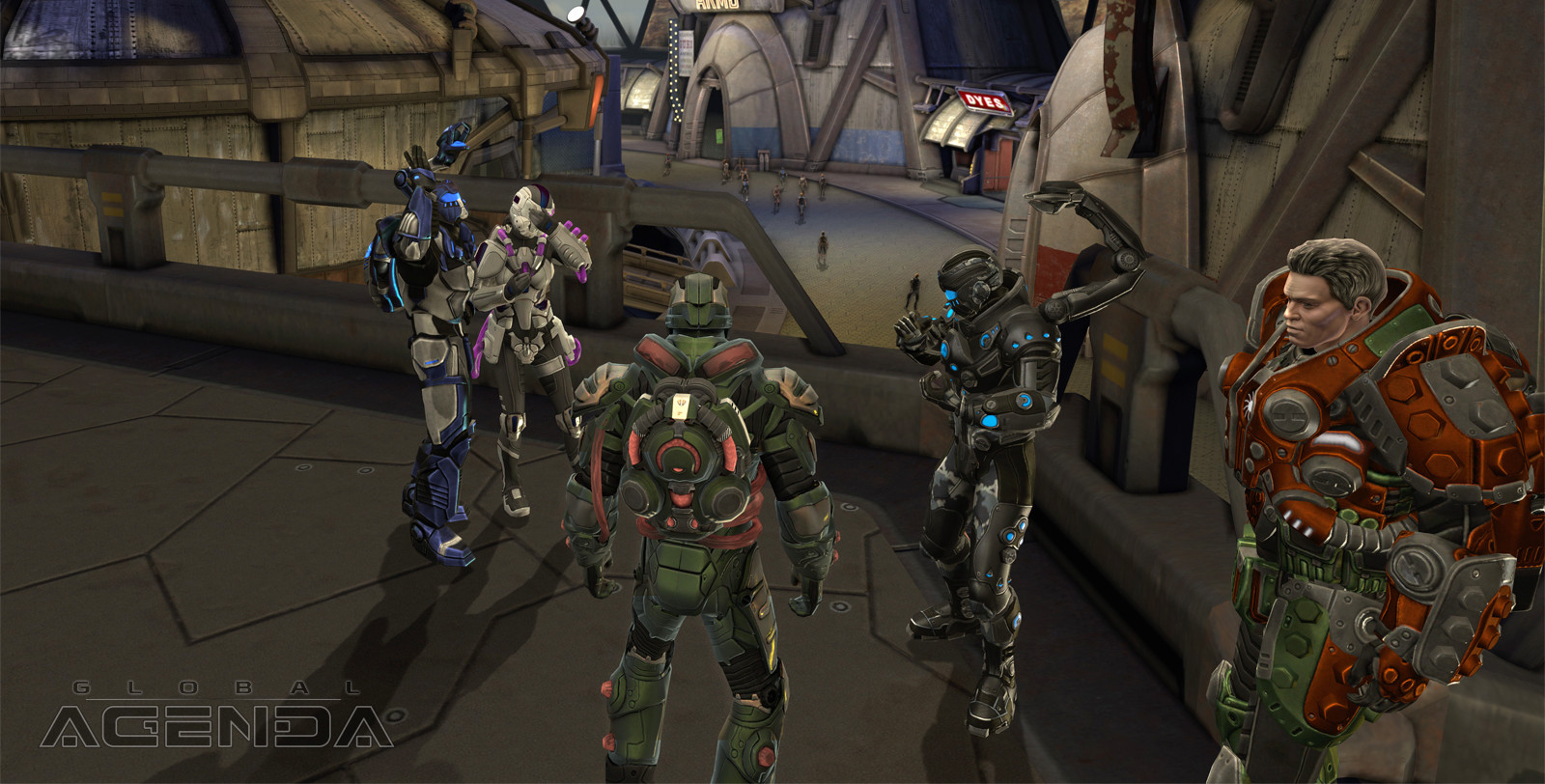
For all of its gloating and taunting the competition, Global Agenda was not a success, in fact it’s a case study I’ve used when talking about market failures.

Like Cities XL and APB, Hi-Rez Studios offered gamers something that they couldn’t specifically get anywhere else, the ability to fight for territory control in a hub-based first person shooter. And like the other titles on this list, consumers opted out when presented with a subscription fee. While Global Agenda is still running on free to play, updates came to a halt years ago.

It’s important to note how crucial player perception was in the inevitable marketing failures that were the games on this list. Essentially the developers were pushing the game to two types of consumers, neither of whom really wanted anything to do with them. MMO gamers had the free to play revolution around that time offering them far more content heavy games for free, and for subscription, while shooter fans already had the entire genre to play without paying monthly.

hellgates

And finally we have Hellgate: London, the game that coined the phrase “flagshipped.” While billing itself as a first person shooter on a level with Diablo, Hellgate: London also demanded a $10 monthly subscription to access subscriber-only loot, hardcore mode, special pvp arenas, more storage space, the ability to create guilds, and access to customer service.

While a novel idea, Hellgate once again found itself competing in an arena where similar games (dungeon crawlers) were already offering their games for no additional charge. None of them were first person shooters, mind you, but as we’ve learned from this list, you can’t slap on a few changes to the base and demand more money.

Flagship Studios later went bankrupt, providing up to fifteen months of “lifetime membership” to the people who ponied up the $150, also cementing the eternal grudge that some gamers will bear against Bill Roper.

As far as trends go, the implementation of subscription fees into pseudo-MMOs was one that the gaming community soundly rejected and a major pitfall that, in my personal opinion, should have been obvious from the start. The games I mentioned above aren’t the only ones to fall into this trap, but they are the most notable.

What’s interesting is that every game on this list, with the exception of Global Agenda, was eventually picked up and run under a different studio with Cities XL seeing successful sequels rather than a straight free to play spinoff, in a way proving that the issue lay heavily with the monetization strategy and the subsequent perception of the company as greedy and selling a not-so-premium product for premium prices.
Taco Tuesday: If I Could Turn Back TIme


It is Tuesday and that can only mean one thing. I am either neglecting my patients for the delicious meat-stuffed corn tortillas down in the cafeteria. One of the greatest, or perhaps the greatest, fifty two days of the year. Taco Tuesday is where we get together to reminisce, throw together new ideas, or even think about how we would improve on those we’ve already made. Now if you hadn’t already figured since I make a weekly column about it: I love tacos. Soft shell, hard shell, with the fixings, steak, chicken, fish, venison, vegetarian, really it doesn’t matter. What I don’t like is when the chef prepares a delicious sauce made of rat poison and then decides to apply it to my food after I have already bought it. No refunds.

So for this week, I’d like to talk about various “events” that should have been thrown out while still just a thought in someone’s brain.

5. Planetside: Core Combat

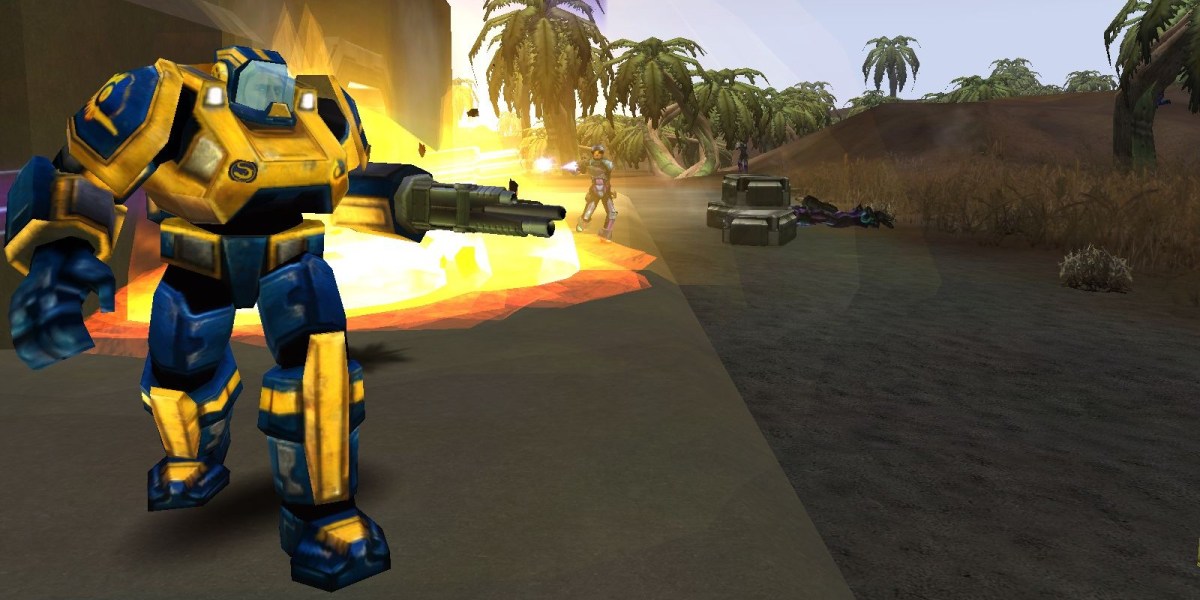
It isn’t often that an expansion can actually damage the game it is attached to, but Core Combat managed to pull it off anyway. Core Combat introduced the idea of caverns, underground areas that could only be accessed by constantly active/inactive portals, where players would battle it out over ancient technology. By capturing nodes in the field below, players were then able to bring those modules up to the surface and gain access to equipment that placed them above their standard, non-alien tech using foe.

The caverns in Core Combat were a pain to get to, a pain to navigate through (a series of small floating bases connected by zip lines), all for a reward that wasn’t really worth the effort. And as a result, the caverns below each planet were about as populated as before the expansion went public: Zero.

4. Allods Online And Its Cash Shop

I remember years ago calling Allods Online as the Free To Play World of Warcraft, and for what its worth I still think the game had a shot at winning that title. Playing in the beta all those years back, Allods Online offered for the subscriptionless crowd exactly what World of Warcraft offered for the subscription crowd back in 2004, and we loved it. Allods Online had depth, the content was polished and the game looked great to boot. And the content promised by gPotato had us foaming at the mouths.

And then the cash shop was introduced. One mistake after another, from inflating prices 10x between Russia and North America/Europe to the whole system of “pay us when you die,” mechanic, the combined powers of Astrum Nival and gPotato managed to not just make poor decisions for the game’s cash shop, but both developers ganged up on their PR departments and made a note of beating them to a bloody pulp. In the case of the Fear of Death mechanic, Astrum Nival portrayed an astounding ability to learn absolutely nothing from its community, and replace the temporary debuff with a permanent debuff. Needless to say, Astrum Nival learned its lesson, but not before Allods Online had relinquished its title as the next World of Warcraft, and set fire to that massive pile of money that the community was just waiting to hand over.

So where do we find ourselves in 2012? Allods Online is a great game, now that many of the cash shop problems have been ironed out. Unfortunately, the game has burned so many bridges that its once-loyal fans aren’t coming back.

3. Jagex And The Great Fansite Lawsuit

I’ve always said Jagex has had an interesting relationship with its community. In the eleven years since RuneScape’s inception, much of that time has been one arm over the shoulder, the other holding a gun to the customer’s back. Sure, the Jagex of old appreciated fans creating websites, but if you mentioned one you could be permanently muted. The old Jagex that held Q&A’s with its community to fight off the idea that they were closed, but the Q&A could predictably hold more than half of the answers being “I can’t answer that now,” with nothing of substance stated. While Jagex has improved its community relations exponentially under Mark Gerhard, there are still old wounds yet to be closed.

But Jagex’s lowest point in PR has to be in 2006 when Tip.It published an article titled Biased Banning Raises Brows. The article sharply criticized Jagex’s banning policy, from vague bans for apparent advertising and inappropriate conduct, to banning families/friends playing on separate computers from the same house (and thus the same IP address), accusing them of being one person multi-boxing. The article also discussed the banning of players with names that would make sense in other languages, but might sound inappropriate when directly spoken in English, and Jagex’s policy of allowing accounts to exist for months, if not years, before banning them without warning and without the ability to change their names. On Tip.It, the article generated quite a bit of discussion with players offering their own stories of over-the-top permanent bans for minor offenses, or misunderstandings on Jagex’s part (banning one player for impersonating a moderator, the person in question simply expressing a desire to one day become a moderator).

So how did Jagex respond to the thread? With grace. Founder Andrew Gower showed up on the Tip.It forums to deny the claims in person. Oh and he threatened to sue the author for libel.

We are considering legal action against the author of this article on the basis of libel. It would be within the author of this articles interest to remove it and contact us immediately.

Now RuneScape was too big by 2006 and this event was too isolated to cause any PR damage, but I like to think Andrew Gower might regret having flown off the handle and seriously considered launching a frivolous lawsuit for the purpose of shutting up some random guy on the internet.

2. Monte Crisco Asks For Subscription

Of course I’m talking about Cities XL, a game some of you may not remember. Cities XL was a city building MMO by Monte Crisco, allowing players to choose between playing online or playing offline, with various perks and setbacks for either play mode. Players online were able to trade resources between cities, work together to build monuments, and generally accomplish what Sim City had not yet attempted. Then Monte Crisco added a subscription.

In order to play online, Cities XL required a subscription fee. The service itself was nowhere near worth the $10 a month Monte Crisco expected players to fork up for the ability to trade between cities, and lose their cities should they stop paying. Cities XL released during that period where multiple different types of products were attempting to launch with subscriptions attached, and like many of its fellow experiments, when it died it left a bankrupt developer. Monte Crisco went bankrupt and the sequel, Cities XL 2012, was developed by Focus Home Interactive.

1. Announcing MMOs Too Early

I bet you thought #1 would be about Star Wars Galaxies didn’t you? Well Galaxies is dead and that issue has been beaten to death. I want to talk about vaporware, in the sense that some MMOs are announced way too early, and the developer either attempts to hype it up all the way to release, or they go silent for the following decade and everyone assumes that they’ve died at the computer screen from malnourishment. Take Darkfall for instance. Darkfall was originally announced in 2001 and released in 2009. Funcom originally announced Anarchy Online’s new engine upgrade in 2007, and Half Life 2: Episode 3 was supposed to be finished five years ago.

Point being: It is important to have a game in a realistic state before you begin talking about it.

Cities XL To Shut Down This March


Historical inaccuracies aside.

With all the commotion(?) over Phantasy Star Universe biting the dust this March, one might think three MMOs shutting down would be enough for the first half of 2010. Odds are none of those people play Cities XL. In an open letter to the community,  Monte Crisco emailed all current subscribers to let them know that Cities’ MMO part, “Planet Offer,” will be shutting down early this year. March, more precisely the 8th.

As for why, well allow me to sum it up in just a few words:

“Not enough players decided to subscribe.”
Monte Crisco

Low subscriber numbers is generally the deciding factor in shutting down an MMO, when the game no longer becomes profitable. Luckily, players will have full access to the single player game even after the online part shuts down.

Monte Crisco’s letter to the community after the break.

Continue reading “Cities XL To Shut Down This March”