As per my own rules, I try to keep the product sales relegated to digital distribution, mainly because considering retail giants would require me to either include stores from a number of countries, increasing the sources I have to regularly check, or just not include any at all. So, in the effort of fairness, I only include worldwide digital distributors (Direct2Drive, Steam, Impulse, etc). For those of you living in the US, which I know for sure includes some of you, you could find Final Fantasy XIV at Target on a price cut for $39.99. I almost purchased it at the store I work at, but the item has been out of stock for weeks.
While browsing Target.com, I went to see if the website had the same price cut, and found the above image. Although Final Fantasy XIV is available on the Target website, the chain is no longer stocking the item in stores. Now, I’m sure half of you will tell me it was due to poor sales, but (at least at my store) when they reduced the price by $10 the store ran out of stock in the matter of a couple of days.
After checking Target’s website, I went on to check Walmart.com, which also listed both Final Fantasy and its collector’s edition as “not sold in stores.” Other websites I checked including Gamestop and Best Buy all seemed to have the title in stores, so as far as large chains go this appears to be isolated to Target and WalMart, but no doubt two of the largest retail giants in America.
Either way, advertising and promotion is key in MMOs, the lack of which almost killed titles like Dungeons and Dragons Online (and sent Turbine launching a lawsuit against their publisher), and Square Enix just lost a big line of publicity with Final Fantasy XIV no longer on the shelves of two retail giants in a time where what they could really use is some players picking up the game.
I came upon this decision months ago, but I’ve been sitting on it until someone pointed out my hint, and they did in an email I received:
I see you updated your calendar showing MMO birthdays, but only titles that are five years old and older are displayed. Is there a reason for this? Or do you consider five years to be the point of “success” and none of the others are worth mentioning.
Borderline obsessive-compulsive grammar notations aside, what the reader pointed out is not correct at all. Those of you who have stuck with MMO Fallout since our earlier days are well aware that I refuse to stick labels on to MMOs, and have maintained that what makes up a “successful” title or a “failed” title really depends on what goals the developer set out and what they accomplished in that time frame. As no MMO will live forever, to put an arbitrary time on how long of a lifespan makes up success would be meaningless.
So what is this Turing test, you ask? My test bases itself on population, place, self-awareness, and perception. The date is five years after release. By the time an MMO passes the Turing test, the following has been in stone:
Population: By the time an MMO hits five years old, the stream of incoming players is more akin to a slow drip, and five years is enough to keep the veteran players entrapped with new content, as well as not wanting to leave behind their high level, high-time-invested characters. The company is well in-tune with the size and needs of their player base, and can plan accordingly.
Self-Awareness: The developer knows the limits of their engine, and has likely hit those limits by now. Using this knowledge, they set reasonable goals that are met in a timely fashion, due to decreased time debugging software and experimenting with previously unused techniques.
Place: This is where the developer knows exactly what spot they fill on the MMO spectrum. For example, Dark Age of Camelot is a Realm V Realm game and thus needs more concentrated servers for player vs player. Runescape is more solo-oriented and players spread out to maximize their resource intake. Darkfall is a niche PvP game that focuses on freedom over babying its players.
Perception: By the time an MMO hits five years, they know where they are going. For games like City of Heroes and Lineage, where the population is still thriving, this means regular updates, expansion packs, and major continued support into its old age. For games like Planetside, that face continuing server mergers, slow death. By the time five years comes around, any MMO that can die via short-term mass-exodus already has, such as FURY, or Tabula Rasa.
The important part of my Turing test is that although I call it a test, it is not my judgement of success. Rather, something to be viewed as closer to one’s employment in a business. After you have worked for a single company for so many years, you likely know exactly where your place is, strengths and weaknesses, relations to those around you, and whether you are seeking a promotion, to stay at your current position, or find a new job entirely.
The Turing test is also not exact. “Five years” is not some magical line, and many companies hit their pass/fail on the Turing test over a year earlier than the five-year mark. I decided upon Five years after looking at the MMOs on the market, those that are long gone, with an extra focus on those that are getting along in years. What I found was that most MMOs that are going to “crash and burn” as some put it, do so within three years of release. Asheron’s Call 2 was 3 years, Tabula Rasa was 2 years, Auto Assault was 1 year, FURY was 10 months, and the list goes on. You’ll notice that even World of Warcraft is not immune to the Turing test, as the title has peaked and is now on a downward slope. The more observant of you will note the date of stagnation at around 11.5 million subscribers: 2009, five years after launch.
So if anything, 3 years is around the “do or die” timeline, whereby 5 years the future of the game should be laid out quite plainly.
My interpretation of the Turing test for MMOs is over a year in the making, and doesn’t draw a fine line as much as it does paint a trend. There are still many MMOs that are in their testing phase, and may shape the Turing test in years to come, so expect several followups over the next couple of years.
To those of you who disagree with my perception, I would love to hear your thoughts on a more finely tuned Turing Test.
Back in my day, our games didn’t have save features. Sure, there were a select few that had the ability to save, but otherwise if you wanted to finish the game, you were going to sit down and play through, or leave your console on and risk overheating. Once save functions became more prevalent and useful (no more 20+ string codes to input), a new generation of gaming was born: The no-save play through. These were players who refused to give up on a time honored tradition of playing through a game without ever saving, ever. If you died, it was game over for good. As time progressed, some games bought into this tradition, and created incentives for players to not save as often, if at all. The Resident Evil series is well known for, in the end-game score, factoring in how many times the player saved, as well as supplying a fairly limited number of ink ribbons (required to save at a typewriter).
As far as MMOs go, death is rarely much more than a nuisance. In fact, if you saw my NIDA Online videos, you’ll see my strategy of saving on health potions by resurrecting on the spot (resurrecting at that location cost so little in gold and experience that it was barely a scratch). At earlier levels, death hits you hard, but as you level up or join a populated guild, death just becomes a minor setback. In many games, you spend a few gold to fix your armor, and you’re back in the action. In MMOs such as Darkfall, you get your guild’s crafter to make you a new set of bone armor, and you’re back in the action. Or you just pull the extra pair of armor and regents out of your bank and head back to do some ganking.
Few MMOs have attempted permadeath, and the community’s cold reception to those that did is an excellent reason why many newer generation titles don’t even bother. Although Everquest had a permadeath server back in 2003, it didn’t last long (it was a promotional server). Star Wars Galaxies originally had permanent death for Jedi, which was scrapped considering the awesome amount of time that was invested into creating a Jedi. Titles like Eve Online and Face of Mankind are two successful titles that have managed a form of permanent death, but at a price: Experiencing permanent death in these titles is extraordinarily hard, as clones are abundant and easy to come by. In these titles, it is easier to delete your character than to die permanently.
As far as current MMOs go, virtually none of our current titles would support permanent death. With how much grind goes into games like World of Warcraft, Allods Online, Warhammer, etc, only the most hardcore of players would be willing to accept a permanent death system, even if it means forgoing any extra incentives (extra rewards or otherwise). Grinding hundreds of mobs for hours on end, just to have your efforts gone to waste because some guy and his clan decided to troll through town and murder everyone. Even more, players on PvP servers would regularly find themselves targets of griefers, high level players who would roll through and kill everyone. I mentioned in an old article about unrestricted PvP, and how there is no reason a level 80 should encounter a level 15 of the opposite faction, let alone fight them (and kill them with a flick of the wrist), and adding in permanent death would merely make the issue worse.
So it is safe to say that the “traditional” incarnation of permanent death is gone: losing your character because your died. That being said, although the feature is not coming back in any commercial MMO, we can see traits of it in other MMOs. Sandbox MMOs are more regularly adopting stat-loss, where your player loses a percentage of their stats across the board when they die. Stat loss is generally used for players marked as player killers, as a method of balancing risk vs reward, and has been well received in sandbox titles including Ultima Online, Mortal Online, and Darkfall.
In Dungeons and Dragons Online, players created a permanent death guild, where upon creating your character you join the guild, and then must leave if you ever die. Players claim it forces a lot more depth and strategy to the game, and although some players opt to delete their characters upon death, others simply treat them as an alternative character, an inviting opportunity to less hardcore players who still want to somewhat experience permanent death.
I’ve talked about this before, but there will likely never be truly meaningful death in an MMO, due to the natural fact that you will die during your game time. Although Eve Online and Face of Mankind include a form of permanent death, the system boils down to an alternate currency that must be paid upon death. Rather than simply paying your cash currency to remove death sickness (Aion) or to repair your items, you pay an alternate currency, purchased with regular currency, that you use to buy more lives. With the way both games have implemented it, it’s almost like taking Super Mario Brothers, but greatly reducing the 100 coin requirement for a 1-up. Aside from losing your items, death becomes still just a small hindrance.
Traditional permanent death will never be more than the kind of niche that Chronicles of Spellborn players look at and say “that is one tiny community.” With traditional permanent death, you set the risk v reward scale so far to one side that no one will want to risk anything, heaven forbid a lag spike come their way at a bad time, the server has a brain fart, or some magical bug causes them to die instantly (I’m looking at you, Runescape). MMOs may have free reign to do what they wish with the death system, but for all intent, the system will be small variations on a handful of features.
Instead of working on new ways for punishing players for dying, why not work on new ways to reward them for living? Lord of the Rings Online went as far as including achievements for getting to certain levels and never dying, with Champions Online including a star-like system where players gain stars (up to five) based on how many enemies they kill, that buffs the player. A little positive reinforcement can go a long way in pushing a player through a particularly long grind session, and in the developer’s benefit, give them the enthusiasm to keep that subscription going to next month, or buying that cash shop item they were on the fence about.
I know that the hardcore community is going to hate me for my belief that there is no median to the debate on death, and that the focus should instead be put on incentives for living, but I’m not the “carebear” some would think. I play a wide spectrum of MMOs, from Runescape to Dungeons and Dragons Online to Mortal Online and Xsyon. There is very little like strafing in a bank so that you aren’t pickpocketed.
I am certain I will revisit the topic if permanent death in the future. Until then, I remain unconvinced that a system will ever work.
Log Entry for the second week of May 2051: After my most recent encounter, I have determined it best to find myself a suitable permanent residence. Traveling for miles over these burned out plains, I pass by numerous, if not countless, houses and buildings in varying states of disrepair. Entire sides of the buildings gone, if not completely crumbled. In my passings, I find plenty of the various flora and fauna of the wilderness, and although I am not exactly living in style, there has yet to be a point where I become too hungry to walk.
But I write this because one day as I was foraging vegetables, a man approached me. Dressed in ragged clothing similar to my own, I presumed him to be the owner of the farm, readying my pistol only to find some cosmic force preventing me from willingly drawing my only means of defense. The man, however, simply approached me, extended his arm, and shook my own. When he spoke, I felt myself awash in heat, his voice reminding me of the depictions of God on the various radio shows, yet not as low pitched. He said;
“You have proven yourself to be a masterful survivalist, and you have foraged more than a thousand fruits, vegetables, and various other plants. For this, I want to give you a special reward.”
He reached into his pocket and retrieved an egg, which I immediately recognized as a prairie chicken egg, and number of chips reminiscent of my own poker-chip currency. Handing each individually to me, he turned and was gone in the blink of an eye. I will still remember his departing words;
“Keep hold of those. You will find use for them in the near future.”
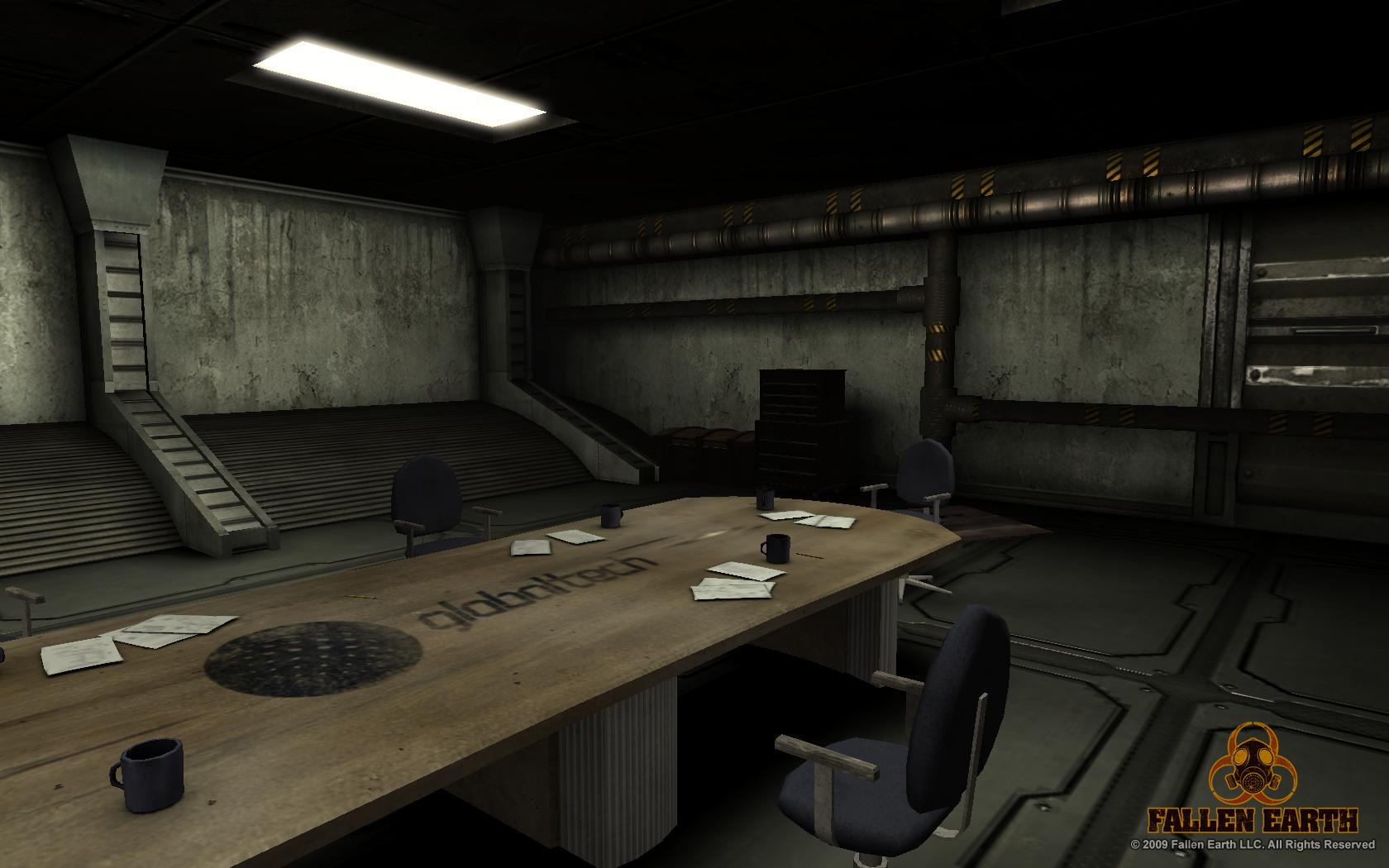
Far overdrawn introductions aside, Fallen Earth has finally introduced achievements! The first batch of achievements, totaling five hundred, have been split into five categories of varying difficulty, and include everything from PvP encounters to killing bosses, scavenging, and crafting. The achievements are retroactive. And if you did not catch it from the above story, a second achievement pack is on the way, bringing with it rewards for achievements. The vanity pet reward system is really just speculation on my part.
Achievements are an interesting line in MMOs. On one hand, you have people who will grind out achievements just to say they got them all, even if that includes killing ten thousand of one particular NPC (I’m looking at you, Champions Online). On the other hand, you have people who absolutely hate the idea of grinding out achievements for rewards. Somewhere in the middle you have the casual gamer, who tries to go for the easiest achievements first and then sporadically goes up from there.
Achievements, if done right, can add a whole new level of involvement to an MMO. Warhammer Online is one of the few MMOs to take the achievement book and turn it into an integrated part of the game, the Tome of Knowledge, that gives you a lot of information on the world and the characters who inhabit it.
And to answer your question: Yes, I will be opening every Fallen Earth article with my little ongoing story.
In violation of my court order to only use the gold image a maximum of twice on the front page, many MMOers are probably aware of South Korea ruling that real money trading, the conversion of digital cash to real cash, is now legal. Your gold pieces, kinah, plats, gil, influence, adena, credits, ISK, whatever you call that cash in your pocket, may be traded for real life cash. There appears, as most news stories have this effect, to be a fervor among MMOers (players and developers alike) as to what this means for their favorite titles. Will City of Heroes be encumbered by Koreans? Will Aion become even more saturated with this gold farming menace? Won’t somebody please think of the children?
As always, when there is a legal question to be asked, MMO Fallout’s “In Plain English” is here to explain it to you. To put it down in plain lettering, what this law does is turn the businesses into legitimate operations, that will pay taxes and refer to themselves in a way that would actually describe what they do.
What the law does not do is make gold farming legal, nor will it prevent companies from banning gold farmers. Swearing is legal, but it can still get you banned if you do it in an MMO. Although this bill does run up the possibility of there being a lot more gold farming companies to deal with, now that the scope is no longer limited to shady businessmen running a small building full of gold farmers off the books, and is more along the lines of a legitimate (questionably) business.
In all likelihood, the increased presence of bots and gold farmers will be minimal, unless you’re moderating the MMO Fallout comments and have to deal with “Hey, great website. I agree with all the things you said here and, by the way, I no this guy who powerlevels fishing. You shud try out his service, very cheep.” on a daily basis, or have to deal with magical pingbacks that don’t lead to a valid website (I do check the links in people’s comments before I approve them).
Out of all the titles that appear on What Happened, Shadowbane is the longest running. At six years, I would agree that although the game shut down, it was definitely a success in all manner of speaking. One of the top selling PC games at launch back in 2003, Shadowbane is still considered one of the best open pvp MMOs on the market. Offering fully open player vs player combat in a dynamic world where players can morph terrain, hire AI guards and have them patrol, as well as building and destroying buildings.
Shadowbane was not without bad times, however, and unfortunately when the bad times hit, they were very bad. The game transitioned to a free to play in 2006, where ads would be shown at different points in the game (open, close, and upon death). The game still suffered from a number of bugs and glitches, and in 2008 would be completely rebooted.
In 2008, Shadowbane went offline to perform a complete reboot in order to stabilize the servers and increase performance. As a result, all characters were deleted and all houses were destroyed. Only three of the five servers were brought back online.
Shadowbane was, from the start, a cult hit that never truly got off the ground, despite the rabid following of its fans. On one side, Shadowbane may be the only example of an internet petition actually accomplishing something. The original shut down date of May 2009 was extended to July due to player feedback.
Overall, Shadowbane was an interesting period in several ways: For instance, it showed how successful a game with Ultima Online’s mechanics can be, one that is parroted by Darkfall and Mortal Online. It gave ultimate freedom to the players, and did away with instancing, pre-set plots for housing, and other standards of MMOs.
There is the possibility that Shadowbane will be making a comeback, in the form of a non-MMO title. Ubisoft has recently trademarked the title for non-MMO purposes.
I have no idea what this has to do with December...
Welcome one and welcome all. Although I realize that for half of the world, December 1st has come and gone, I speak for all when I say: Welcome to December! Festive seasonal holiday deals continue this month in an effort to bring you into that festive cheer, just cheerful enough to reach for your wallet (or memory if you have your card number memorized like I do).
I have no idea what this has to do with December...
Welcome one and welcome all. Although I realize that for half of the world, December 1st has come and gone, I speak for all when I say: Welcome to December! Festive seasonal holiday deals continue this month in an effort to bring you into that festive cheer, just cheerful enough to reach for your wallet (or memory if you have your card number memorized like I do).
It has certainly not been a good few months for Funcom, and according to the company, the situation is expected to get worse. After September’s notice of layoffs of 20% of the company’s workforce, we received further news that the upcoming MMO, The Secret World, would also be delayed by at least several months. Age of Conan and Anarchy Online are allegedly unaffected by the downsizing.
Age of Conan, alongside several other titles, is in the middle of a furious campaign to gain long term subscribers to their title (Because, as I say time and time again, it’s all about retention rate), bringing in heavy discounts for multi-month packages, veteran rewards, and more. Age of Conan has an expansion pack in the works, while Anarchy Online has its major graphics upgrade.
Stargate Worlds is akin to the Duke Nukem Forever of the MMO world. Under approximately eight lawsuits currently, ranging from not paying employees to angry investors, to allegations of a ponzi scheme, the development of the oft-delayed Stargate Worlds can regularly be seen trudging along in a direct path towards nowhere.
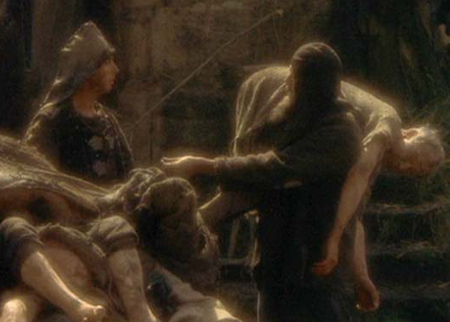
Looking through my own archives, all of the news on MMO Fallout related to Stargate Worlds follows a similar point: A frantic, arm waving “We’re not dead yet!” directly removed from one of the early scenes in Monty Python’s Holy Grail movie. Cheyenne Mountain Entertainment had this to say recently:




 MMO Fallout