Striking it in the face.
Continue reading “Ragnarok: The Lost Memories Hitting Steam”

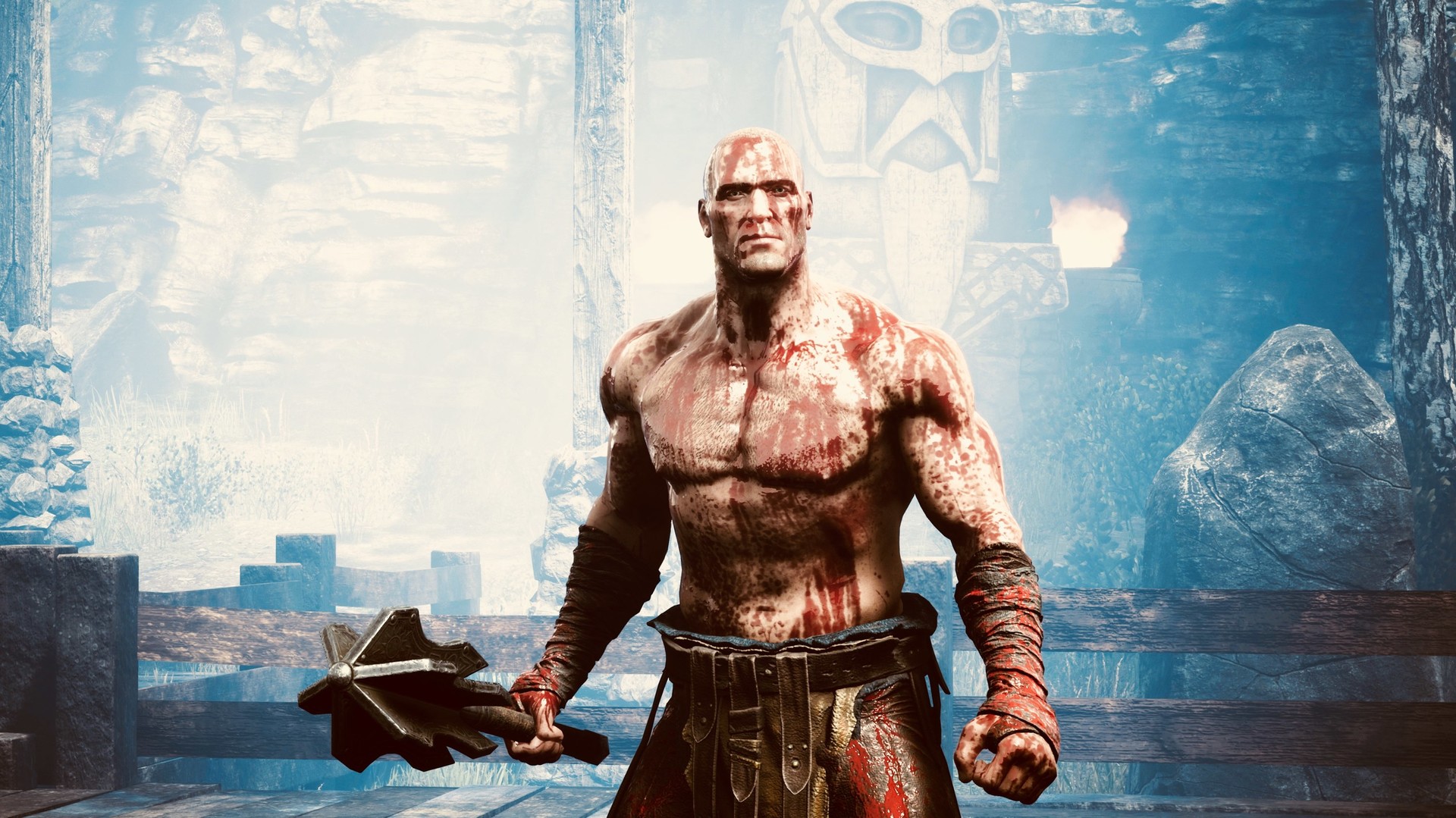
Human Head Studios will always hold a special place in many hearts as the company that made Prey 2006. About three weeks ago, the company launched Rune II on the Epic Game Store. Set in Norse mythology during the end times, Rune II puts you in the shoes of a warrior chosen by the gods to end Ragnarok and save Midgard from the treachery of that trickster Loki.
Rune II is also the focus of a lawsuit alleging fraud, contract breach, and fraudulent concealment, among other charges. The lawsuit stems from the events that occurred after Rune II launched on the Epic Game Store. Right after, as literally a day later they announced that Human Head Studios would immediately shut down with its developers transferred to a new studio under Bethesda’s management. Rune II’s publisher and financier Ragnarok Game LLC is understandably not happy with this turn of events, especially since Human Head is allegedly refusing to turn over source code and assets that Ragnarok now legally owns, in order to allow continued support of the game.
A notice was posted to the Rune II forums discussing the details of the lawsuit.
“Since Human Head’s sudden closure, announcement, and discovering the active concealment of their acquisition, we have repeatedly requested access to the final launch build source code and RUNE II game assets. This is so we can continue to support, update, and execute future DLC for our community. As part of the publishing agreement on RUNE II, Ragnarok Game LLC has paid for the development of these assets and is the rightful owner of them. After repeated refusals by Human Head to produce these assets, we’ve had no choice but to file a legal complaint in order to obtain the RUNE II game assets. We have exhausted all possible options before getting to this point. This is not the step we wanted to take, but it is necessary in order to fulfill our promises to our community.”
The lawsuit itself which can be read online accuses Ben Gokey, Christopher Rhinehart, and Paul MacArthur, all Human Head Principals, of intentionally damaging the Rune II brand and image by failing to perform and then conspiring to abandon the property, with the studio intentionally closing when it did to maximize that damage.
“In summary: (a) Human Head entered into a long-term agreement with Ragnarok — the whole goal of which was to launch Rune II and to provide the necessary support for its commercial success, (b) Human Head accepted millions of dollars in payment, but failed to perform, (c) instead of curing its deficient work, Human Head secretly conspired to abandon Ragnarok and the Rune II community in an apparent attempt to defraud and harm Ragnarok and the game, and (d) Human Head timed the unveiling of its plan to cause maximum damage. By this time, Ragnarok had learned its lesson. Ragnarok refused to be blackmailed and pay the ransom, repeatedly requesting the return of its property. What did Ben Gokey, Christopher Rhinehart, and Paul MacArthur do? They made unauthorized alterations to the code and attempted (unsuccessfully) to make public the unauthorized changes. Of course, since Human Head no longer existed, Gokey, Rhinehart, and MacArthur were not altering the code on behalf of Human Head. Regardless, alter the code they did. “
The lawsuit goes on to accuse Human Head of holding code hostage as ransom for monetary payments, as well as accusing the studio of attempting to upload altered versions of the game to the Epic Game Store despite demands to cease. If even half of the lawsuit is true, it’s a pretty damning story against Human Head heads Gokey, Rinehart, and MacArthur.
Source: Eurogamer

Private servers are a very stingy subject in the gaming press. Many developers don’t like to acknowledge them and, honestly, there is at least one of my contacts who will never return my emails after this article just for the act of referencing their existence. MMO Fallout does not condone private servers, nor do we allow them to be advertised in our comments section. I like to think that private servers can be an important tool for developers to gauge their audience’s expectations, however. Private servers that exist simply to cheat, to bypass a subscription, or gain accelerated experience/items will always exist, and those don’t offer much of a lesson outside of that some gamers are unwilling to invest the time or money.
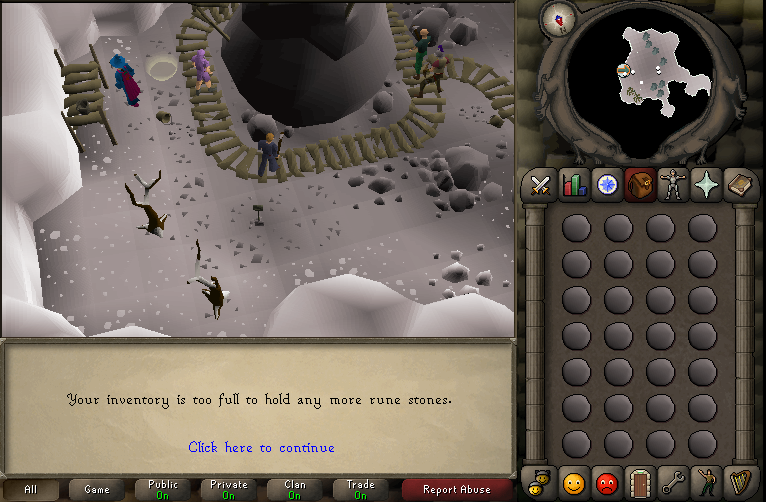
As more developers are realizing, however, there is a great opportunity in classic servers. Jagex has not only maintained the original RuneScape Classic, but launched a version of 2007 RuneScape that remains updated thanks solely to the majority vote of its community. Sony Online Entertainment has, for a long time now, dabbled in classic and progression servers for Everquest. Ragnarok Online launched a classic server back in 2012, and NCSoft recently announced a classic server for Lineage II, at least the Korean version.
There are a million legitimate reasons why a developer wouldn’t want to create their own classic servers. A classic server would need some form of monetization, where a cash shop would risk driving away the target audience and a subscription would put the server in competition with those same private servers that operate for free. The developer could, however, capitalize on this very issue. A dedicated developer could offer stability and quality where many classic servers are at risk of shutting down at moment’s notice, operate on inferior server infrastructure, and are partially hand-built by the operator due to the inaccessible nature of certain MMO mechanics (server side operations).
Other developers refuse to create a classic server on the grounds that doing so would compromise their “artistic vision,” a belief that MMOs change with time and that introducing a classic server would be counter to that vision, or an admission that they made the wrong choice somewhere down the line. Further developers cite an unwillingness to risk splitting the community in half.
Happily, it appears that more developers are recognizing the potential for classic servers or those with alternate rulesets.
Private servers are a very stingy subject in the gaming press. Many developers don’t like to acknowledge them and, honestly, there is at least one of my contacts who will never return my emails after this article just for the act of referencing their existence. MMO Fallout does not condone private servers, nor do we allow them to be advertised in our comments section. I like to think that private servers can be an important tool for developers to gauge their audience’s expectations, however. Private servers that exist simply to cheat, to bypass a subscription, or gain accelerated experience/items will always exist, and those don’t offer much of a lesson outside of that some gamers are unwilling to invest the time or money.
As more developers are realizing, however, there is a great opportunity in classic servers. Jagex has not only maintained the original RuneScape Classic, but launched a version of 2007 RuneScape that remains updated thanks solely to the majority vote of its community. Sony Online Entertainment has, for a long time now, dabbled in classic and progression servers for Everquest. Ragnarok Online launched a classic server back in 2012, and NCSoft recently announced a classic server for Lineage II, at least the Korean version.
There are a million legitimate reasons why a developer wouldn’t want to create their own classic servers. A classic server would need some form of monetization, where a cash shop would risk driving away the target audience and a subscription would put the server in competition with those same private servers that operate for free. The developer could, however, capitalize on this very issue. A dedicated developer could offer stability and quality where many classic servers are at risk of shutting down at moment’s notice, operate on inferior server infrastructure, and are partially hand-built by the operator due to the inaccessible nature of certain MMO mechanics (server side operations).
Other developers refuse to create a classic server on the grounds that doing so would compromise their “artistic vision,” a belief that MMOs change with time and that introducing a classic server would be counter to that vision, or an admission that they made the wrong choice somewhere down the line. Further developers cite an unwillingness to risk splitting the community in half.
Happily, it appears that more developers are recognizing the potential for classic servers or those with alternate rulesets.
 MMO Fallout