The Exiled Hits Steam Today


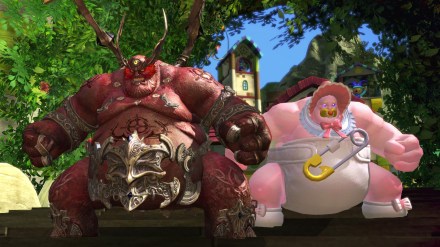
Fairytale Distillery’s MMORPG The Exiled has officially hit Steam. The Exiled bills itself as a social sandbox, combining strategy with survival and showcasing full loot and unrestricted PvP. The game is available to try on Steam for free for 7 days, after which you can continue playing with one of the game’s access packs.

“We believe giving all players an opportunity to try our game for 7 days will be incredibly beneficial to the long tail and overall support of The Exiled during its time as an early access title.” said Fairytale Distillery Managing Director Alexander Zacherl.

(Source: Fairytale Distillery press release)

Greenlight Fraudsters: Asset-Flip Developer Dentola Studios Files Bogus Copyright Claim


Fraudster:
2
a:  a person who is not what he or she pretends to be :impostor;

Dentola Studios is a shady indie developer peddling premade Unity store projects and trying to sell them via Steam Greenlight. How do I know this for a fact? Because the photo above and the photo below are both the exact same thing, however they come from two sources: The first, said shady developer’s Steam Greenlight page. The second, the Unity asset store it was purchased from for $20 USD. We have officially hit a low point.

But let’s continue, because Dentola Studios, whose titles are now under the name Jaffstook, a guy so trustworthy that he actually has a VAC ban on his account, has been religiously deleting any comments showing where you can buy said asset packs for a mere $20. First is Escape From The Tribe, better known as Archer Hero Must Die. There is Castle Defense, or Monster Defense. There’s Endorforce, I could honestly go on all day, or more accurately however long it would take to list all six games.

In response to criticism from Youtubers like SidAlpha, Dentola Studios has begun filing bogus copyright claims. This studio is claiming copyright on a game that they didn’t make, just purchased a license for, compiled, and threw on Greenlight to hopefully sell. Dentola has no more rightful ownership of their games than a Craigslist seller claiming copyright on the Tonka Truck name.

One statement that I will say for the record is that while they may be blatantly shady folks with no discernable programming talent and an evidently bankrupt moral code, there is no evidence of Dentola doing anything illegal. Like it or not, the premade packs on the Unity Store are perfectly fine with someone buying the product and selling it as is.

Now filing a bogus DMCA takedown is potentially illegal, because you do so under the penalty of perjury which can result in fines and even jail time should action be taken against the aggressor (pro tip: In cases like this it usually never is). For Dentola Studios, no doubt oblivious to the can of worms that they have just opened, this assuredly means nothing less than a reputation tattered and burning, their actions stamped into the internet’s history forever, and a gaggle of Greenlight watchdogs ready to follow them and document their deeds for the rest of their lives.

I’ll leave you with these words: If you want to know what happens when you act like this, take a look at James Romine’s desperate attempts to rebuild his shattered reputation after the Digital Homicide saga. Go to a man whose name is now synonymous with internet villains and ask him if it was all worth it. Also all editorial complaints are to be directed to contact[at]mmofallout[dot]com.

[Community] How Valve Can Make Steam Direct (Closer To) Perfect


Steam Greenlight, the process through which developers pay $100 to gain access to submit their games for players to vote to sell on the platform, is going away. In its place is Steam Direct, a process through which developers will be able to pay a per-game fee to guarantee access to the store front.

The new system has been heavily criticized despite a lack of information at this point in time as to how much it will cost and how developers will be able to recuperate said money. Regardless, I’ve decided to put in my two cents on what Valve can do to implement Steam Direct in a manner that improves over Steam Greenlight.

1. Keep Those Fees Flowing

I don’t personally care if Valve is charging money for games to be submitted, and I don’t even particularly mind if they pocket the money from it either. I’d like to see that cash go toward improving the platform, and it likely will since Valve has funded continued updates like reviews, curation tools, better support for refund policies, even though Greenlight money went to charity. For the most part, however, I view the idea of a $100 per title barrier to be just what Steam needs: hurdles for developers to jump over that aren’t damning for the legitimate little guy. Don’t forget, the per-instance fee is what prevented Digital Homicide from using the justice system to harass 100 Steam users, and I have no doubt in my mind that the Romines wouldn’t have had half of their inventory on Steam if they had to pony up $100 for each submission.

Valve is talking somewhere between one hundred dollars and five grand for the submission fee, and in all honestly I think they’ll err toward the lower end. The highest I’d honestly go if we’re discussing a per-title submission fee is $250, and frankly that’s on the high end. This is also disregarding Valve’s statement that the cost will be recoupable, although they haven’t said how. I also assume that there will be different rules for mod submissions.

Let’s face it: $100 isn’t a lot of money if you’re selling a video game, if you can’t recoup that then maybe your game doesn’t belong on Steam. I know that’s not going to be a very popular opinion, but it needs to be said. We already have a place where budding developers can go and dump their experimental free games that won’t sell $100 worth or were just made as a hobby, it’s called Itch.io. Cobbled together a flash game and want to provide it for free? There’s Newgrounds. Steam Greenlight already costs $100, if Valve went with my idea of keeping the price, the only major difference is it would be more costly to dump a few dozen games on the service.

Ultimately, Steam isn’t a dumping ground for weekend projects, high school finals, and troll/meme games. That’s Itch.io. There are other distribution channels.

2. Use That Money To Fund Moderation

This is important, the fee for submission should be going toward improving the store front. By that, I mean it shouldn’t take months upon months of player reports and negative press for you to remove dead games that are unplayable due to offline servers, whose developers are out of business and never bothered to take their store front down. We shouldn’t have to deal with developers like Karabas who make bullcrap claims that they’ve won awards from shows that haven’t happened yet.

Ultimately, Valve’s increased dividends from developers putting down cash for their direct placements should go into improving the infrastructure that they use for said platform, like how the money you pay at toll booths (theoretically) goes toward keeping the roads maintained.

In fact, let’s go a step further and set up the Steam Direct Sponsorship fund, for developers who are doing great work but for one reason or another could never afford the placement on Steam. Let’s say they’re a developer from Venezuela where $100 USD translates to a fair grand. Let some of the money from submissions go into a kitty for these guys and gals, they can submit their game Shark Tank style and let Valve decide which are worthy of passing through.

3. Throw the Whole System In the Trash

Ultimately Steam Direct is the wrong solution implemented to fix a problem that only exists because Valve decided it should. The problem could be solved through curation of games that come in through Steam, as Valve did before Greenlight, but Valve doesn’t feel like curating. They have the money, but don’t want to spend it. They have the employees, but thanks to the flat structure anything related to customer service has been slowly automated over the past few years because nobody wants to do the work and there isn’t anyone in charge to force said work.

So the ultimate solution, the one most guaranteed to never happen, would be for Valve to take quality control into their own hands.

Valve Kills Steam Greenlight, Implementing Steam Direct


Steam Greenlight, has been both applauded and derided, as a method for small developers to find a platform to make money and as an easily gamed portal through which Steam has turned into a dumping ground for Unity asset flips and actual money laundering schemes. On one hand, the change seems to be mostly cosmetic, a new name attached to an old machine. On the other hand, Valve seems intent on stemming the virtual avalanche of low quality titles, and has announced a per-title application fee for Steam Direct.

While we have invested heavily in our content pipeline and personalized store, we’re still debating the publishing fee for Steam Direct. We talked to several developers and studios about an appropriate fee, and they gave us a range of responses from as low as $100 to as high as $5,000. There are pros and cons at either end of the spectrum, so we’d like to gather more feedback before settling on a number.

Currently Steam Greenlight asks for a $100 one-time fee, which is donated to charity, in order for developers to show their determination. As it turned out, $100 wasn’t much to deter developers like Digital Homicide from flooding the platform with dozens upon dozens of low quality shovelware titles. Valve has stated hopes that Steam Greenlight would one day have no curation on their part.

More information on Steam Direct as it is revealed.

(Source: Steam)

[NM] 100% Completion: Tattletail


Tattletail came out on Steam on December 28 and pretty much flew under the radar until a bunch of Youtubers discovered it and made it somewhat a success (I’m sure it more than paid its development costs and probably put a decent amount of pocket money in the developer’s…pockets). Looking at the Steam stats, it actually still turned out to be a low key title with somewhere between six and twelve thousand owners, which is a disappointment because this game is much more engaging and suspenseful than Five Nights at Freddy’s ever was. Me, personally, I threw my $5 down on launch night.

This is a game with a basic premise: You are a child who opens his Christmas present five days early to find that it is a Tattletail (think creepier Furby) and you have to survive each night until Christmas. Each night progressively introduces you to more mechanics, your Tattletail needs to be brushed, fed, and charged regularly otherwise he will not stop chattering. You have a flashlight which also much be shaken regularly otherwise the room gets dark (obviously), and by sprinting you create noise. The noise mechanic is important because in order to avoid the Mama Tattletail who is out to kill you, you’ll need to keep Tattletail satisfied and your flashlight charged. You actually don’t see any real action until about night 4.

I recommend playing through this game, you’ll get a few hours out of it for a fiver and it isn’t as bad as the screenshots might make you believe. Tattletail has resources that need to be filled, but they go down so slowly that it never becomes obnoxious, and even when he does start screaming about food, the game is basically lenient enough that you can walk from one end of the house to the other and still not have to worry about Mama attacking. The tension in the game comes from the feeling of losing control, as you move around the house, avoiding Mama’s red glowing eyes, while trying to keep your flashlight on and shushing Tattletail. The game punishes you for reflexes, the moment your flashlight goes out your instinct is to hit the mouse button and charge it, causing instant death.

The game isn’t perfect, there are a few instances where you’ll be in Mama’s sights without being able to see her on screen, resulting in an instant death because you thought it was safe to charge your flashlight. There are numerous ways to cheese the game, but you should at least finish the game once before you ruin the experience, spots you can seek out where Mama doesn’t have a spawn point watching over, or when you figure out that your flashlight is only necessary while holding Tattletail (because he’s afraid of the dark) and not charging it doesn’t penalize the player while walking alone in the dark while charging it could potentially kill you.

While I hope that the developer behind this game continues to make games, I hope to never see a Tattletail 2 without at least good reason. What little story is there leaves just enough questions to the player’s imagination, and I’d hate to see sequels for the sake of sequels.

Check it out on Steam.

[NM] Valve Cuts Off Another Shady Developer Over Fake Reviews


In a world where curation on Steam Greenlight is virtually nonexistent, shady developers seem to be getting more and more prevalent. Introduce Matan Cohen’s Studio, an indie developer consisting of two people (one of whom is probably named Matan Cohen) who released the game Art of Stealth. It wasn’t well received by a lot of people, with the only positive reviews suspiciously coming from accounts that are private and only seem to own one game (Art of Stealth). Before long, accusations of the developer deleting posts, flagging negative Youtube reviews, and flagging negative Steam reviews as “abusive” naturally came to light.

So what is wrong with Art of Stealth? It may be in the reviews of players claiming that there aren’t any actual stealth elements present within the gameplay, or the off-the-shelf Unity store graphics, the developer’s fragile ego, or the suspicious looking positive reviews. It didn’t take long for Valve to step in and swiftly remove the game from Steam outright, posting this announcement via a certified Valve Employee account:

We (Valve) have identified unacceptable behavior involving multiple Steam accounts controlled by the developer of this game, Matan Cohen. The developer appears to have created multiple Steam accounts to post a positive review for their own game. This is a clear violation of our review policy and something we take very seriously.
For these reasons, we are ending our business relationship with Matan Cohen and removing this game from sale. If you have previously purchased this game, it will remain accessible in your Steam library.

Luckily Valve’s forensics team didn’t need to do much work, the developer admitted the reviews were posted by friends.

A few friends of mine who study computer science with me in the university have decided to join Steam in order to support this game by posting positive reviews. My friends love Art of Stealth and they told me that some members from this forum post annoying comments on their reviews, only because they are positive.

The rise of shovelware games on Steam coupled with the lack of curation by Valve has only spurred the growth in watchdog groups constantly searching the shadows for games like the Art of Stealth trying to sneak in unnoticed among the virtual waterfall of games entering the marketplace on a daily basis. If anything, placing bad games on Steam has only become more dangerous as unscrupulous behavior is now more likely to be widely reported and ultimately do more long lasting damage to said developer’s reputation.

(Source: Steam)

Space Truckers Caught Stealing Sprites From Numerous Games


ss_2aaccdd248c692cd495899dc88f051ad6f026c84-1920x1080

Space Truckers is a relatively new game to Steam, having just launched on November 23. If the community has anything to say about it, its life span on the service will be short and possibly end in legal action. Available for the low, low price of $19.99, currently on sale at 10% off, you can enjoy everything that Space Truckers has to offer, like stolen assets from commercial games and community projects.

Users on the ZDoom forum have posted an alarming number of comparisons showing sprites ripped directly from other games. Not content with merely taking assets from William Shatner’s Tekwars, Space Truckers also allegedly steals from Duke Nukem 3D, Blood, Strife, Left 4 Dead 2, and more. You can head on over to the forums and see a pretty long list of direct sprite rips, sound files, and even Windows assets that made their way into the game.

As usual, this controversy is drawing more attention thanks to accusations that the developer is actively deleting threads on the game’s Steam forums pointing out these stolen assets. MMO Fallout will follow up with any further information.

Abandonware Asteroids: Outpost Yanked From Steam


ss_4288f731964aaf18fc726086e1f154ea1ea4cb31

Asteroids: Outpost was the subject of an Early Access Fraudster article back in March, I pointed out that the game had been abandoned by its developer (Salty Games) with no comment by its publisher (Atari, yes that Atari). As an online only game, the fact that the Asteroids servers had evidently been offline since November (as of March) were bad enough, the fact that the game was still up for sale was even worse, that players were attempting to report the game to Valve and getting nowhere is criminal.

Since that article’s posting, I have made numerous attempts to contact both Valve and Atari with no response from either party. Salty Games, as you would expect from a fly-by-night startup somewhere in Los Angeles has zero company presence in the form of a Salty Games account on Facebook, Twitter, etc. Atari doesn’t even seem to be too sure on who they’re working with, because the game’s product page on the Atari website calls them by two separate names: Salty Studios and Salty Games. I was able to track down several people on LinkedIn listing Salty Games as their former place of employment, and it appears that the studio has been defunct for over a year now. Gone before it ever discovered WordPress.

The important piece to take out of this article is that the game has finally been removed from Steam, seven months after my previous write-up. Atari, a company whose customer support and press relations are virtually non-existent since I tried to get answers by sending emails and submitting support queries, has not responded to a single email in those seven months. They completely ignored the fact that the game was still on sale despite being offline and unplayable for months on end, and it isn’t hard to believe that they won’t realize that the game has been pulled from sale until well into next year. The official website points toward Steam’s nonexistent store page, and the forum link ignorantly leads to a full page of warnings that the game is broken and to stay far away.

So while your dreams of an open world PvP sandbox turret defense MMO Asteroids spinoff may be squashed for the time being, the internet can once again feel safe knowing that another bad game is off the market.

Daybreak Game Company Promises Support For H1Z1: Just Survive


2015-01-16_00025

Ever since Daybreak Game Company split H1Z1 into its two parts, players of the environmentally focused Just Survive have grown pretty frustrated over a perceived lack of support. It wouldn’t surprise many to hear that King of the Kill has been receiving the bulk of DGC’s attention, especially when you consider that the game draws in about ten times the average traffic on Steam. H1Z1’s new General Manager Landon Montgomery has taken to Reddit to let players know that their voices are being heard, and the Just Survive team is working on improvements.

During the short time I have been here, I’ve been able to assess the Just Survive history both internally and externally. And, while I recognize that the past year has been a little frustrating for the loyal crowd, I know that the internal team is excited to push forward and do right by you, the players. It’s one of the reasons I’m here and why we’re actively building up the Just Survive team. We’ve added several key roles and we are excited to introduce these additional team members in the coming weeks.

We wish Landon Montgomery the best of luck in his new position. He’s going to need it.

(Source: Reddit)

Digital Homicide’s Business Destroyed, Lawsuit Against Steam Users Ends


ss_5884a5bc03c163727ca5cb2e5953b68191546d58.1920x1080

The lawsuit by James Romine against 100 unknown Steam users has come to an end. A few days ago, Romine filed a motion for extension of time or dismissal without prejudice, effectively asking the court to either grant him more time or to kill the case until a future date. The reason, as stated in the documents, is as such:

“Upon filing this case, per advice of the local sheriff who could not help me or my business with a massive ARS-13-2921 criminal harassment problem on an Internet Store front and via email, the Plaintiffs business was destroyed completely financially disabling The Plaintiff, destroying usability of all current work effort, and untold other damages.”

If you haven’t been keeping track, Valve responded to a submitted subpoena by terminating their business agreement with Digital Homicide, citing hostility toward customers as a primary reason. As a result, Digital Homicide lost access to a platform that holds at least 70% of the PC gaming community. As such, according to documents filed with the clerk on 9/27, Romine is unable to afford the cost of serving the defendants in said Steam case. Romine had initially asked for either a 90 day suspension or a refund of filing fees and a dismissal without prejudice, which would allow the case to be pursued at a later date.

The court, under the Honorable Stephen M. McNamee, has approved decision #2 and dismissed the case without prejudice. As of September 30th, the case has been terminated. MMO Fallout will update should the case be renewed in the future.