Fallout 76 has plans for 2020. Surprising, I know.
Continue reading “Fallout 76 Details Roadmap Of Upcoming Updates”

Fallout 76 has plans for 2020. Surprising, I know.
Continue reading “Fallout 76 Details Roadmap Of Upcoming Updates”
It is the Dark Souls of comebacks.
Continue reading “Hotcakes: Fallout 76 Is Not Great, But It’s Better”
Game peaks at 16,650 on day one.
Continue reading “Fallout 76 Launches To Mostly Negative Steam Reviews”
Not that you were planning on buying twice.
Continue reading “Bethesda Offers Free Fallout 76 On Steam To Beth.Net Owners”

It’s a new year and that means new second chances. Back over the winter holidays, Fallout 76 suffered a rather embarrassing exploit which allowed players to steal items from another person’s inventory effectively initiating a forced trade. It appears that Bethesda is finally making good on its promise of compensation.
This time around players are reporting that their inventories of lost items have been replaced along with a promised stipend of atoms. Bethesda’s remedy appears to be to clone a version of the player’s character from before the theft with the offer of a free service to transfer items from the cloned character to the non-cloned, presumably further progressed original character.
Source: Polygon via MassivelyOP

Chest timers are so early 2019.
Monetization in Elder Scrolls Blades is getting a little less ridiculous this week as Bethesda released patch 1.5. The latest patch completely removes chest timers, allowing players to immediately open them. In addition, players who spent gems on increasing chest limits will have those gems refunded. Even better, ESB has promised that the update will add more chests to each level, each with a guaranteed gem, along with more loot dropped from enemies, and bosses in each job that may drop legendary equipment. You’ll also have 20 more inventory spaces to store that extra loot.
The full list of changes can be found on the patch notes page here.
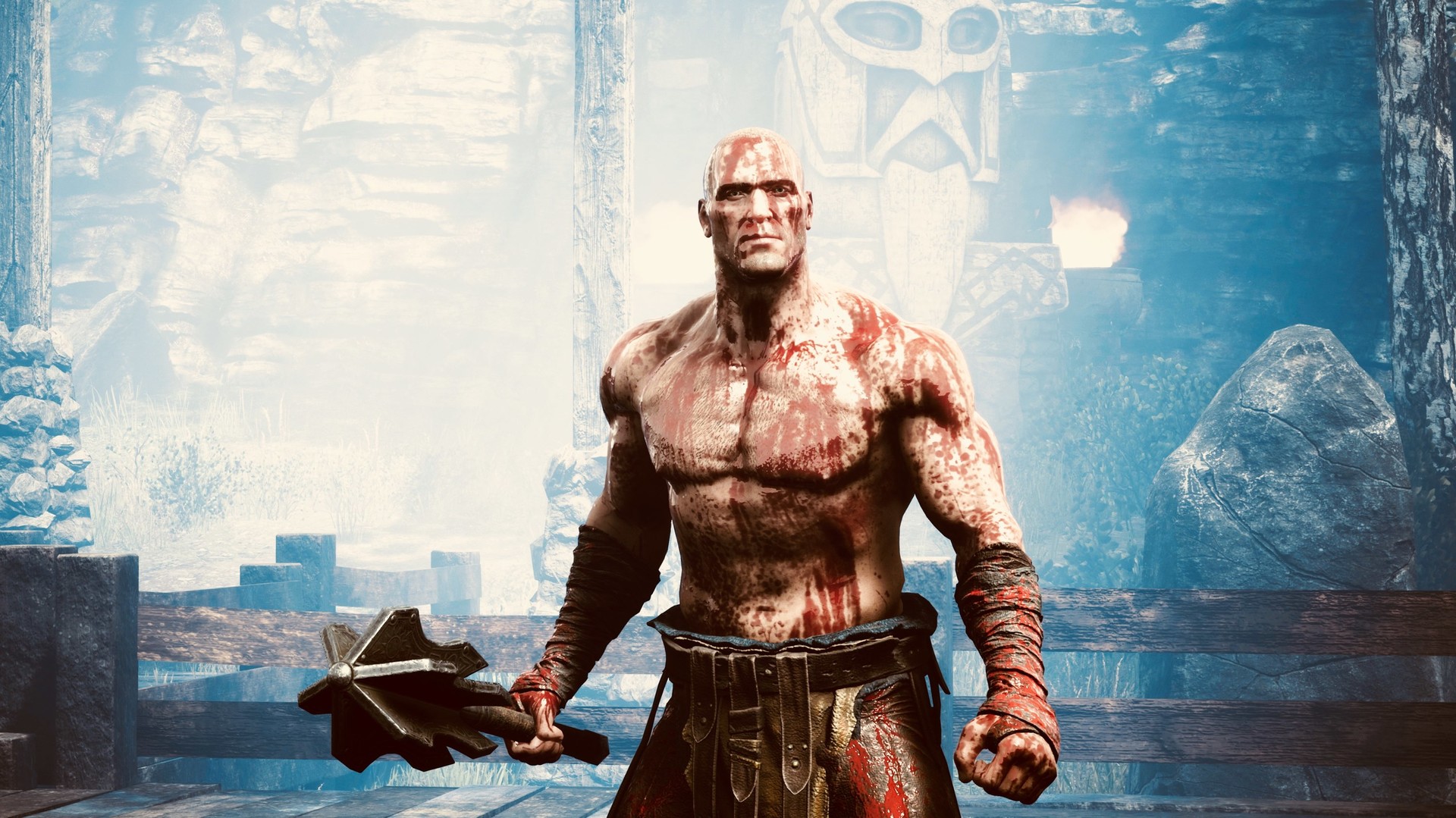
Human Head Studios will always hold a special place in many hearts as the company that made Prey 2006. About three weeks ago, the company launched Rune II on the Epic Game Store. Set in Norse mythology during the end times, Rune II puts you in the shoes of a warrior chosen by the gods to end Ragnarok and save Midgard from the treachery of that trickster Loki.
Rune II is also the focus of a lawsuit alleging fraud, contract breach, and fraudulent concealment, among other charges. The lawsuit stems from the events that occurred after Rune II launched on the Epic Game Store. Right after, as literally a day later they announced that Human Head Studios would immediately shut down with its developers transferred to a new studio under Bethesda’s management. Rune II’s publisher and financier Ragnarok Game LLC is understandably not happy with this turn of events, especially since Human Head is allegedly refusing to turn over source code and assets that Ragnarok now legally owns, in order to allow continued support of the game.
A notice was posted to the Rune II forums discussing the details of the lawsuit.
“Since Human Head’s sudden closure, announcement, and discovering the active concealment of their acquisition, we have repeatedly requested access to the final launch build source code and RUNE II game assets. This is so we can continue to support, update, and execute future DLC for our community. As part of the publishing agreement on RUNE II, Ragnarok Game LLC has paid for the development of these assets and is the rightful owner of them. After repeated refusals by Human Head to produce these assets, we’ve had no choice but to file a legal complaint in order to obtain the RUNE II game assets. We have exhausted all possible options before getting to this point. This is not the step we wanted to take, but it is necessary in order to fulfill our promises to our community.”
The lawsuit itself which can be read online accuses Ben Gokey, Christopher Rhinehart, and Paul MacArthur, all Human Head Principals, of intentionally damaging the Rune II brand and image by failing to perform and then conspiring to abandon the property, with the studio intentionally closing when it did to maximize that damage.
“In summary: (a) Human Head entered into a long-term agreement with Ragnarok — the whole goal of which was to launch Rune II and to provide the necessary support for its commercial success, (b) Human Head accepted millions of dollars in payment, but failed to perform, (c) instead of curing its deficient work, Human Head secretly conspired to abandon Ragnarok and the Rune II community in an apparent attempt to defraud and harm Ragnarok and the game, and (d) Human Head timed the unveiling of its plan to cause maximum damage. By this time, Ragnarok had learned its lesson. Ragnarok refused to be blackmailed and pay the ransom, repeatedly requesting the return of its property. What did Ben Gokey, Christopher Rhinehart, and Paul MacArthur do? They made unauthorized alterations to the code and attempted (unsuccessfully) to make public the unauthorized changes. Of course, since Human Head no longer existed, Gokey, Rhinehart, and MacArthur were not altering the code on behalf of Human Head. Regardless, alter the code they did. “
The lawsuit goes on to accuse Human Head of holding code hostage as ransom for monetary payments, as well as accusing the studio of attempting to upload altered versions of the game to the Epic Game Store despite demands to cease. If even half of the lawsuit is true, it’s a pretty damning story against Human Head heads Gokey, Rinehart, and MacArthur.
Source: Eurogamer

Yea I bought the thing on the thing.
I wanted to talk about Stadia without having to dedicate an entire piece just to the hardware because you can’t really talk about the service unless you’re talking about a game. Those of you who keep track of my social media and other posts on this website know that I fell on the grenade and pre-ordered Stadia way back when it was first announced and made available. Yea, I’m willing to take that $129 hit because I love all of you (especially you).
Fast forward to yesterday and my Stadia came in the mail. Following a ridiculously convoluted setup process which involved downloading the Stadia app, using my invitation code, plugging in the Chromecast Ultra, downloading Google Home, setting up the Chromecast, tying my controller to the phone via bluetooth, updating the controller, registering the controller to my Chromecast, registering the controller to my wifi network, and speaking the seven words of the forbidden one, I was finally able to start. Thing about the Stadia is that you can’t buy stuff through the website, the Stadia service, or in-game. You have to use the Stadia app on your phone for all purchases, even in-game DLC.

The Stadia controller is nice, it has some heft without being a big chungus. Design-wise it’s like someone asked Mr. Google “should this controller look like the Xbox One or the Switch Pro” and his answer was “yes.” The Stadia controller has easy sharing in the form of a snapshot button (that can be held down to record the last 30 seconds) as well as a vestigial button that will eventually be used for something or other as a Google help feature. The controller even has a built-in microphone which is creepy, and I’ll explain why later.
Gotta give Stadia an initial positive: It’s nice to be able to buy a current game and have it immediately ready to play and not have to worry about updates, downloading, clearing space, or day one multi-gig patches. Even the Switch can’t get away from installations for most of its titles.
So why Wolfenstein? Simple; I don’t play fighting games so a fast moving first person shooter is the best way to test just how well the Stadia holds up under high stress situations.

Wolfenstein: Youngblood is simultaneously a load of crap and a bit of a masterpiece, depending on what sides of the coin you’re looking at. At the end of Wolfenstein II: The New Colossus, BJ Blazkowicz and his very pregnant wife Anya have helped spark a resistance against the Nazis. Youngblood picks up from that story nearly two decades later and skips over all the fun stuff. The United States successfully pushing the Nazis back? BJ killing Hitler? We just hear about it in retrospect, without actually getting to play it. Youngblood puts the player in control of twin daughters Soph and Jess who plot a rescue mission to France upon learning that BJ has gone missing during a covert operation.
My big fear going into Wolfenstein on Stadia was that the game was going to play like garbage, being a run and gun shooter using a streaming infrastructure. What I found instead is that the game worked quite well. In the nine hours it took me to finish the campaign and most of the side missions, I had one instance where the stream started to break up but otherwise it was almost buttery smooth. It’s difficult to pinpoint what is a case of lag in Stadia on Wolfenstein. There are several moments where I’m fairly certain that I was on target but my shot missed regardless, but I can’t definitively say it was from lag.
I liked Youngblood a fair bit more than the general audience did. As a budget ($30) shooter it played a role as filler between Wolfenstein II and the inevitable Wolfenstein III, a side story that advances the plot without being completely necessary to the overall structure.

Youngblood’s first cardinal sin is that the game introduces a completely unnecessary RPG system to pad out gameplay. Different areas have level requirements and if you head in underleveled you’ll find that enemies can simply tank your damage. Previous Wolfenstein games have had armored enemies, sure, but it doesn’t make sense even in the context of the game why an unarmored Nazi soldier should be able to take six shotgun shells to the face and brush it off simply because they are higher “level” than the player. I also noticed that enemies level with you once you out-level a zone, meaning while Jess and Soph will regularly feel underpowered, there never comes a time when you feel like badass Nazi-killing machines.
Youngblood’s second cardinal sin is directly tied to the cooperative nature of the game. Jess and Soph have a shared life system where you can get up three additional lives. Get knocked down to 1hp and instead of dying outright you’ll enter a downed state and can be rescued in a short span of time without losing one of those lives. If you die without extra lives, you’ll get knocked back to the last checkpoint. In raids, this can be a long setback. Because you have the ability to pick each other up and because the game assumes there are two people playing, Wolfenstein ramps up the number of armored enemies packed into very tight corridors leading to deaths that aren’t quite…fair in the grand scheme of things.
And while I’m tearing this game apart, I’ll point to a third cardinal sin: Deescalating boss encounters. The bulk of Youngblood’s story centers around taking control of three towers. At the top of each tower, you end up fighting a big armored Nazi boss in a mech suit. The first encounter, strangely enough, is the hardest as not only does the level offer very little in the realm of proper cover but large parts of the floor are randomly engulfed in deadly lasers and you get easily overwhelmed by the couple waves of lower Nazi grunts that come in. The latter two fights against the same type of mech suit lose the laser floor and offer several places that the mech suit can’t get to. Couple that with the fact that by the second and third encounter you have more health, better armor, and more weapons at your disposal and the progression doesn’t quite make sense.

As with prior iterations, Wolfenstein Youngblood is a game that can theoretically be played as a stealth title. I didn’t find any reason to, as now any Nazi soldier can raise the alarm and bring in reinforcements. You end up wanting those reinforcements because more Nazis killed means faster leveling, whereas stealthily getting past soldiers gets you nothing except potentially underleveled and forced to replay levels as punishment.
So was there anything that I did like? Of course. Wolfenstein’s’ trademark gunplay is back. Guns pack a punch that make each of your kills feel impactful as you run down corridors shredding Nazis into confetti. The credit system used to buy upgrades stonewalls your progress in the beginning but by the end of the game you’ll have more coins than you know what to do with. My personal favorite weapon was the automatic shotgun.
Youngblood also excels in world-building. Each level is a combination of open world French streets, closed corridor buildings, and underground sewers. The implementation of double jumping adds a new element of height as you jump across balconies, fight enemies that can leap across buildings, and use cover to your advantage.
I also got used to the two main characters; Soph and Jess. As the daughters of the famous Terror Billy, the Blazkowicz daughters have big shoes to fill and are ready to go out and kill Nazis. As a couple of presumably-18 teenage girls, they are also one to goofing off which can be seen in the elevator sequences where the duo dance, make rude hand gestures at one another, and just generally screw around waiting for the killing to start up again. The game also acknowledges how ridiculous it is that a couple of young girls with no military experience but an arsenal of guns and some power armor are beating the crap out of a trained Nazi regiment. There are also “peps,” which are basically emotes that carry buffs. The Blazko sisters can give each other thumbs up, metal horns, or do a dance to give each other buffs.

What Youngblood sets itself in is the 80’s punk atmosphere. You’ll come across campy horror movies with a fascist twist, 80’s synth bands singing in German, and versions of comic books and other products that are reminiscent of real world things while also clearly being Nazi propaganda.
Youngblood ultimately tastes like half of a Wolfenstein game which fits that it was sold for half the price. On a 150/150 megabit internet connection with my Stadia hooked up by wifi and sitting about seven feet from the router, the picture quality never really dropped from a crisp image and outside of one big stumble I don’t think I would have fully recognized that the game was streaming if I hadn’t already been aware of it.
Now Destiny 2 on the other hand is trash, and I will dive into that more in my next piece.
As a note of humor, after several hours of playing I had forgotten that I left my session on public (anyone can drop in). A user came into my session without my noticing and left his microphone on, treating me to the creepy faint sound of an infant crying as I stealthily made my way through the Paris underground. I nearly jumped out of my seat at the loud “Papi, que estas jugando” coming over the speaker.
As another point of contention, the snapshot system in Stadia sucks. Sure it’s easy to take snapshots, but you can only view them from the app and there is no method to download your screenshots so I had to bring each one up on my phone, screenshot the photo, and then upload them to WordPress. The quality may have degraded.

There should be no surprises in this report card.
Bethesda’s performance in 2019 indicates a company that has become wholly incompetent and is either incapable of or unwilling to fix its flaws, but instead has chosen time and time again to double down on everything that it does wrong and throw consequence into the wind. Let’s look at Bethesda’s 2019 release record:
Bethesda (and its subsidiaries) shoveled out more unwanted garbage in 2019 than any company with its size, franchises, and experience ever should. The Fallout 76 team has shown nothing but incompetence over the entire year, not to mention a complete lack of caring for systematic and repeated lies made to the public. Their releases in many cases not only floundered, but may have done long term damage to their associated brands. In the case of Rage 2, you have the most disappointing awaited sequel since Dambuster messed up Homefront. For Cyberpilot, a low-effort attempt at cashing in on a trend. In Commander Keen? The shameless skinning of a beloved old IP.
With all of that considered, I have to give Bethesda in 2019 the grade of:

I hit the breaking point with Bethesda and Fallout 76 so long ago that I couldn’t honestly tell you when I got sick and tired of hearing about this game. In fact, it’s hard to believe that Fallout 76 just hit its one year anniversary. It feels like this game has been a living parasite for roughly a third of my life. I don’t know how many times the public can say “Bethesda can’t get any more incompetent,” only for Bethesda to turn around and indignantly reply:

History should look upon this past week, that of October 20, 2019, the year of our Lord, as when Bethesda threw off the veil and admitted to the world that it just doesn’t care about its reputation, its integrity, or about the quality of its games. Bethesda is going to Bethesda, and Bethesda knows that when Bethesda launches a game, that its legion of sycophant fanboys are going to give them lods of emone. They don’t need to care about quality because their customers don’t expect quality.
Rewind the clock a bit and you have Bethesda admitting to what everyone already knew: That Pete Hines is a Peter Molyneux-tier liar and Bethesda had no intention of keeping to its promise that the atom shop would be cosmetic only. That much was obvious once they started adding in repair kits, but admitting that it has a problem is the first step in Bethesda’s ultimate corporate suicide.
But before I get into the latest heaping pile of trash that Bethesda has served as chicken kiev, I have to ask a simple question: Did anyone expect Fallout 1st to not be a bug-riddled dumpster fire? Anyone? Really? After all this time?

Fallout 1st is a subscription program for Fallout 76, a premium-priced substandard service to complement a substandard game. It’s like paying $13 for a cup of Nescafe instant coffee to complement your entree of a steel-toed boot to the crotch. Fallout 1st had already raised criticism over its blatant pay to win elements; an unlimited scrap stash, placeable fast travel camp, and being forced to pay monthly for non-permanent private servers. Oh and in case you missed the implication, modding is going to be tied behind a paywall if that ever comes to Fallout 76.
But not to worry, because if you thought Bethesda was going to let players pay a premium and reward them you are sorely mistaken. This is Fallout 76, a game that punishes you for showing faith in its improvement.
Keeping in line with Bethesda’s quality standards, Fallout 1st has launched as an absolute wreck. Those private servers you’re paying a premium for? They aren’t private. Players are logging into the worlds only to find themselves in recycled servers that other players have already gone through, complete with dead NPCs and looted zones. Unlimited scrap stash sound too much like pay to win? Bethesda is on it, since a major bug is causing scrap stashes to be completely and irreversibly wiped. Second portable fast travel point sound too powerful? Well you’ll be glad to hear that people are experiencing crashes to desktop when placing them. Evidently Bethesda is utilizing the Rian Johnson approach to subverting expectations.
And all for the low, low price of $99 annually.
I don’t know what to say anymore, folks. There are people who are still playing Fallout 76 and for some reason enjoying it (and more power to them if they are), but the players outraged over the quality of this launch have nothing to complain about. Bethesda threw your asses overboard before this game even launched, and for some reason you keep paying for another ticket to get back on the boat. You keep going back to Big Louie’s House of Turds and then complaining when the poopoo platter you ordered is covered in crap. You know, the same as it was the last time you came to this obviously named restaurant and pre-paid for the same damn order. Someone is smoking meth in this transaction and I’m pretty sure it’s not me.

Fallout 1st is a con, Pete Hines is a compulsive liar, and Bethesda is a racket squeezing whatever it can out of Fallout 76 players. MMO Fallout’s thoughts and prayers go out to those who bought the annual pass for Fallout 1st which will undoubtedly see some major price reduction as another gigantic middle finger to the community. I also have a bridge in Brooklyn to sell you, you gullible peons.
Otherwise I have no opinion on the matter.
 MMO Fallout