
Users welcome to voice concerns in a different language.
Tag: Bluehole
Elyon: The First 30 Levels (Impressions)
Because the first ten levels would be maybe five minutes of gameplay.
Level In TERA, Unlock Another Character Slot

TERA’s latest class is here, the male brawler, and they’re giving people a reason to log back in and give him a chance. The male brawler carries the same fighting capabilities as his female counterpart. To mark the occasion, En Masse Entertainment is hosting a series of events. Log in between March 13 and 20 to obtain a free character slot, level the male brawler up to 15 by April 10 and receive a box of goodies to get you started, and take part in weekend events over the next month.
The male brawler has the same amazing moves, uses the same massive powerfists, delivers the same punch-and-counter combat rhythm, and embodies the same fighting fury as the female version. Human females have had the spotlight long enough! It’s time to let human males do some of the fighting.
More information on the male brawler can be found at the link below.
(Source: TERA)
PUBG Is Dominating PC, But Fortnite Is Gaining Speed

The effects of Fortnite Battle Royale on Playerunknown’s Battlegrounds appears to be nil, at least in the sense that the former has seen a great deal of success and yet the latter continues to rise in popularity. Launched as a free addition to Fortnite, Epic’s Battle Royale clocked in an impressive 525,000 peak concurrent user count with 3.7 million daily active users. If Battle Royale was a Steam title, that would put it somewhere in fourth place below PUBG, Dota 2, and Counter Strike: Global Offensive. Meanwhile, Playerunknown’s Battlegrounds continues to shatter records on Steam, setting a new peak of 1.98 million players on Saturday October 9.
Both titles are currently dealing with a swarm of cheaters, an inevitable outcome given the overall active user base. Fortnite announced that it has banned thousands of cheaters and will continue working on features that reward legitimate players while punishing people who cycle through throwaway accounts. In spite of these efforts, Epic also announced that Fortnite is experiencing an issue with false positive bans.
Bluehole meanwhile continues to work against cheating with some success. Despite their efforts, blatant cheaters are dominating the PUBG leaderboards. According to multiple sources, you can identify what are effectively advertising accounts for cheat creators situated in China, as the number strings are QQ (think Chinese Skype) contact details to buy said cheats. How Bluehole plans on taking down cheaters effectively using their platform to advertise their business has not been detailed.
Regardless, it looks like there is plenty of room on the internet for both games to thrive, and continue growing.
[Column] Bluehole Studio Doesn’t Have A Moral (or Legal) Leg To Stand On
Bluehole Studios this week decided to release a press release stating that it is considering “further action” against Epic Games over the Battle Royale mode recently added to Fortnite. According to the release, Bluehole is concerned over similarities between the two games, and how Epic uses Playerunknown’s Battlegrounds in conversations with the community and press in comparison to Fortnite.
“We’ve had an ongoing relationship with Epic Games throughout PUBG’s development as they are the creators of UE4, the engine we licensed for the game. After listening to the growing feedback from our community and reviewing the gameplay for ourselves, we are concerned that Fortnite may be replicating the experience for which PUBG is known.”
As someone who has been following actual cases for years, I’ll give this as simply as I know how: Bluehole Studio doesn’t have a leg to stand on, either legally in court or morally in the court of public opinion. And since PUBG is running on Epic’s Unreal Engine, any action taken by the former against the latter would accomplish little more than a self-inflicted gunshot to the leg, just ask Silicon Knights how that worked out.
So let’s take this piece by piece.
1. (Legal) Bluehole Studios Doesn’t Own The Mechanic
You can’t copyright game mechanics, it is not within the purview of United States and UK law, and the EU has not weighed in on the matter yet. It is, however, possible to protect your game mechanics through trademark, however the process is extremely time and resource intensive, and I can say by simply pulling up a list of patents owned by Bluehole (a list of one) that they do not own the patent for a Battle Royale game mechanic. In short, Bluehole Studios has no legal standing because they don’t own the concept. Neither does Brendan Greene.
For legal precedent, we can look at exactly the kind of company devious enough to patent a game mechanic, and of course I am talking about Namco Ltd. Back in the 90’s, Namco patented the concept of having a mini-game that can be played during a game’s loading screen. The patent didn’t actually have the chance to be legitimized in court, as Namco never used it to sue another developer, and it expired in 2015. There are heavy doubts as to whether or not Namco would have won such a lawsuit, but the threat was enough to keep some developers from taking the risk.
Namco’s patent very likely would have failed because patent law stipulates that your patented item can’t have existed, and there are verifiable records of games with mini-game loading screens existing before Namco patented the idea in Ridge Racer. Likewise, the existence of numerous Battle Royale style games ensures that, even if Bluehole decided to head over to the patent office and absorb that cost, that they would ultimately fail in their attempt at ownership.
2. (Moral) That Time Bluehole Tried to Steal Lineage III
Out of the two parties involved in this dispute, incidentally Bluehole is the one most acquainted with criminal theft, a matter that MMO Fallout covered heavily back in its infancy. Back in 2009, civil and criminal charges were brought against multiple Bluehole Studios employees alleging that they had stolen trade secrets and assets while employed at NCSoft and used those assets in creating the action MMO Tera. Six employees were found guilty, with jail sentences being handed out as part of the criminal proceedings, however Bluehole as a corporate entity was found to not be guilty. Those employees, as you might expect, haven’t been working at Bluehole since then.
But still, there is a certain level of hypocrisy for a company with an established record of employees going to jail for stealing from another developer, to start pointing figures and making threats, over a mechanic that it doesn’t own, against other developers. Bluehole didn’t start the genre, even if it does have the most popular game in it as of present, and it doesn’t own the genre. If Bluehole does take the threat further, they open themselves up to a world of hurt from Epic’s legal team. Let’s not forget what happened to the last developer that tried to take Epic down in a frivolous lawsuit.
Otherwise I have no opinion on the matter.
TERA Sees Huge Number Spikes Thanks To Steam
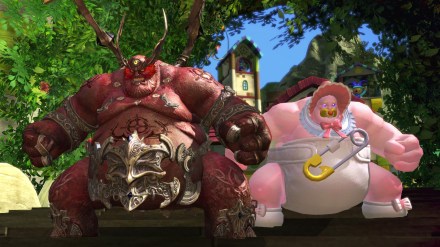
As surprising as it may sound, releasing on Steam can do wonders for a game’s community, as European publisher Gameforge and developer Bluehole Studios found out following the successful rollout of TERA on the digital distribution service. Since its launch, TERA has remained in the top 30 list of free to play games. According to Steam Charts, TERA enjoys on average more than three thousand concurrent players on Steam alone.
Olaf Bernhard, CMO of Gameforge, says: “Our strategy of bringing not only new releases to Steam but also re-releasing our most successful games, proves very successful: With every game we manage to bring new fans in and reactive former players.”
Support for TERA is still going with a new class set to release in April, the Valkyrie, which players will be able to reserve their names for shortly.
(Source: TERA press release)
TERA Servers Are Paid After June 11th
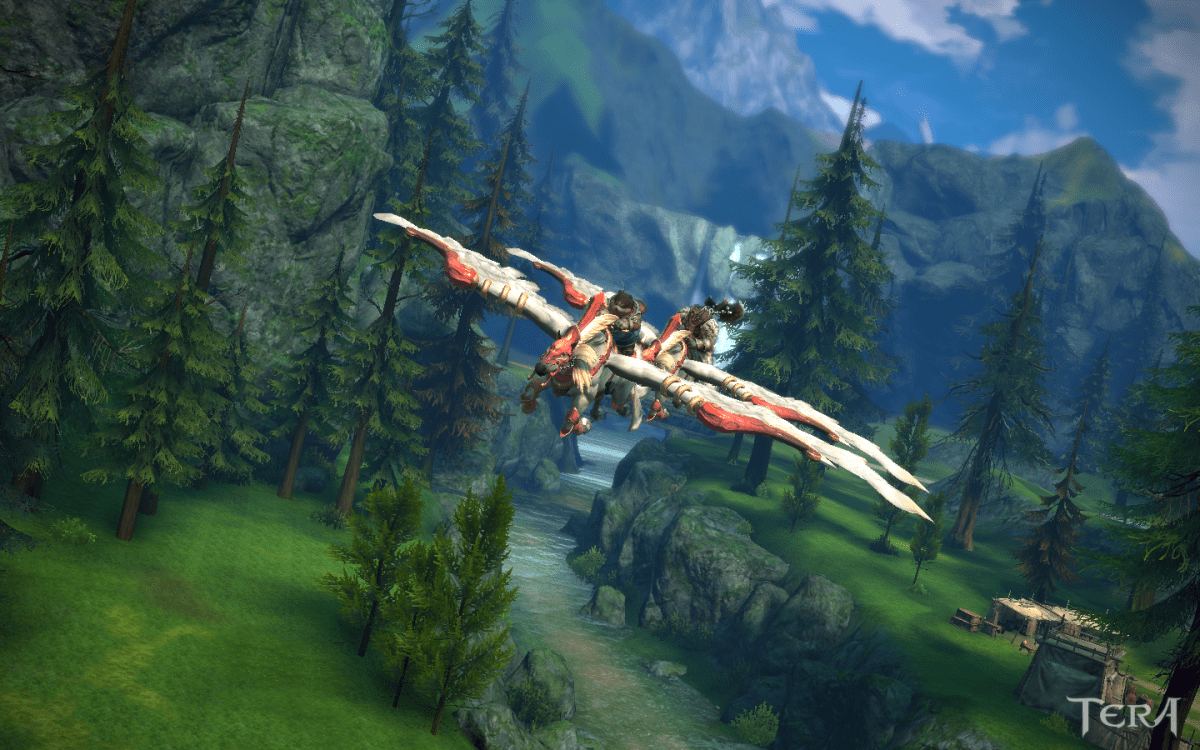
TERA players will be happy to know that the restrictions on server transfers have been removed, allowing movement to the previously denied Lake of Tears and Ascension Valley. Players are advised to make use of this freedom of movement, since server transfers will no longer be free soon. Beginning June 11th at noon Pacific, server transfers will cost 2,750 EMP (1,650 for elite) with a limit of the character being at least level 20, a transfer limit of fifty thousand gold, and a five day cooldown between transfers.
For the free transfer period, everyone’s cooldown period has been wiped clean.
(Source: TERA)
TERA Previews Coming Soon

Moving with MMO Fallout’s commitment for expanding our medium, I’ve committed to producing more video features. While I will not have access to the TERA sneak peek this weekend, reportedly neither the sneak peek or beta tests will be covered by a non disclosure agreement, meaning MMO Fallout will be publishing several TERA previews, both in video and text over the course of the closed beta period.
Stay tuned for more information.
TERA Can’t Escape Licencing, IP Blocks Coming
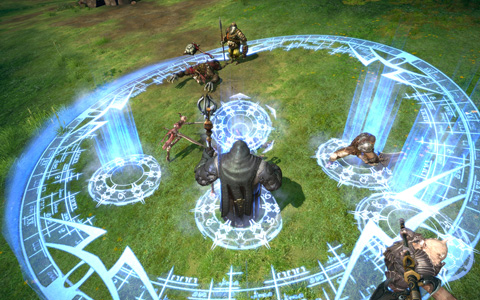
Back when Bluehole announced that TERA would have no region restrictions whatsoever, I was admittedly skeptical. An MMO without regional restrictions generally spawns from one of a few circumstances: The same company is publishing it in all regions ala City of Heroes, or there is only one worldwide server ala Eve Online and Mortal Online. In the case of TERA, back in 2010 Bluehole announced that while the clients are region specific, there was nothing stopping someone in Europe from purchasing a North American client and playing on those servers.
Not the case. If Bluehole truly wanted cross-oceanic play, this idea was met with a dead “negative” by the game’s publishers. Bluehole did make this statement to Massively:
We had to change our stance on IP restrictions due to licensing and security issues. While we can’t go into the reasons in detail, we would like to say that although these restrictions are not a panacea for preventing hacking, they are highly effective, and produce more positive results than might be expected.
So licencing reasons. Restricting IP addresses will not accomplish much in preventing gold farmers in Russia or China from accessing North American and European services or stolen accounts, considering ease of use in a proxy. Unfortunately, these IP restrictions also mean that certain regions aren’t able to play the game until a publisher picks up the title in that region. In many cases, the game just never releases in those regions.
Still, this is another example of what happens when you let the developers make announcements about decisions that should be handled by corporate. If TERA had announced from the start that there would be region restrictions (or had they not waited a year and change to go back on that statement) than this wouldn’t even be an issue (save for the regions that can’t play at all).
TERA launches in May for North America and Europe and is being published by En Masse Entertainment (North America) and Frogster Interactive (Europe). Read up on Bluehole Studios’ lawsuit with NCSoft here.
TERA Can't Escape Licencing, IP Blocks Coming
Back when Bluehole announced that TERA would have no region restrictions whatsoever, I was admittedly skeptical. An MMO without regional restrictions generally spawns from one of a few circumstances: The same company is publishing it in all regions ala City of Heroes, or there is only one worldwide server ala Eve Online and Mortal Online. In the case of TERA, back in 2010 Bluehole announced that while the clients are region specific, there was nothing stopping someone in Europe from purchasing a North American client and playing on those servers.
Not the case. If Bluehole truly wanted cross-oceanic play, this idea was met with a dead “negative” by the game’s publishers. Bluehole did make this statement to Massively:
We had to change our stance on IP restrictions due to licensing and security issues. While we can’t go into the reasons in detail, we would like to say that although these restrictions are not a panacea for preventing hacking, they are highly effective, and produce more positive results than might be expected.
So licencing reasons. Restricting IP addresses will not accomplish much in preventing gold farmers in Russia or China from accessing North American and European services or stolen accounts, considering ease of use in a proxy. Unfortunately, these IP restrictions also mean that certain regions aren’t able to play the game until a publisher picks up the title in that region. In many cases, the game just never releases in those regions.
Still, this is another example of what happens when you let the developers make announcements about decisions that should be handled by corporate. If TERA had announced from the start that there would be region restrictions (or had they not waited a year and change to go back on that statement) than this wouldn’t even be an issue (save for the regions that can’t play at all).
TERA launches in May for North America and Europe and is being published by En Masse Entertainment (North America) and Frogster Interactive (Europe). Read up on Bluehole Studios’ lawsuit with NCSoft here.
 MMO Fallout