The relaunch of Final Fantasy XIV has brought nothing but good tidings to Square Enix since it hit shelves last year. According to an article on Gamasutra, Square Enix has increased its forecasted earnings in both revenue and overall profits, with the latter up 50% over previously anticipated returns. Originally, Square Enix had anticipated a $20 million loss for the fiscal year. Thanks to the unexpected performance of Final Fantasy XIV and arcade sales, the company is now projecting a profit of $64.9 million.
Perfect World Entertainment becomes the latest company to enter MMO Fallout’s portfolio of charts and graphs. As you can see from the chart above, the Chinese developer/publisher has come a long way just since the earliest financial statements available on their website (Q3 2007). This quarter, Perfect World made out with $136.2 million in total revenue and $104.4 million in gross profit. Robert Xiao, CEO of Perfect World, was happy to report that the company’s bottom line has been boosted by 50%, thanks to strong reception of numerous expansion packs and content updates, as well as the release of several new Chinese games.
In the pipeline, Perfect World is gearing up for releasing DOTA2 in China, as well as the Chinese localization for Neverwinter. Perfect World will also acquire 100% equity in two of China’s leading gaming portals, Wuhu Huitian and Daqu. Revenues for Q4 2013 are expected to increase by 2-7% over this quarter.
So life isn’t exactly perfect over at the Cryptic Studios offices right now. Long story short, a series of bad choices and oversights on the part of the Cryptic team lead to a very long thread and a long apology from producer Dan Stahl. I will allow Mr. Stahl to explain it in concise detail:
An apology is due, and while I’ve admitted fault in previous posts about this , I’ll do so again in this one. The release that was pushed to Holodeck last week failed in several critical ways. There was a failure on the part of a designer to test their work before it was checked into the game. Similarly, there was a failure in communication with the QA team on the said check in and on top of that, no one headed the concerns on TRIBBLE. Ultimately, this is all my responsibility as the lead on the team and I do apologize. There has been corrective action on our end to address this issue and it is our intention that the build going out to Holodeck tomorrow will resolve problems introduced last week. This doesn’t mean that all bugs on Holodeck are magically gone, it means that we are looking into the processes that cause these bugs and taking action to correct them.
In addition, the removal of Fleet Marks was a heavy handed change. It needed to be done because it was getting out of hand and there was an ever increasing amount of exploitation in the Foundry to maximum Fleet Mark rewards. That said, we should have had the Fleet Mark changes we are making this week ready to go last week so there wouldn’t have been a week with the drop in Fleet Mark earning. Again sorry. It doesn’t make us feel any better when we make stupid mistakes.
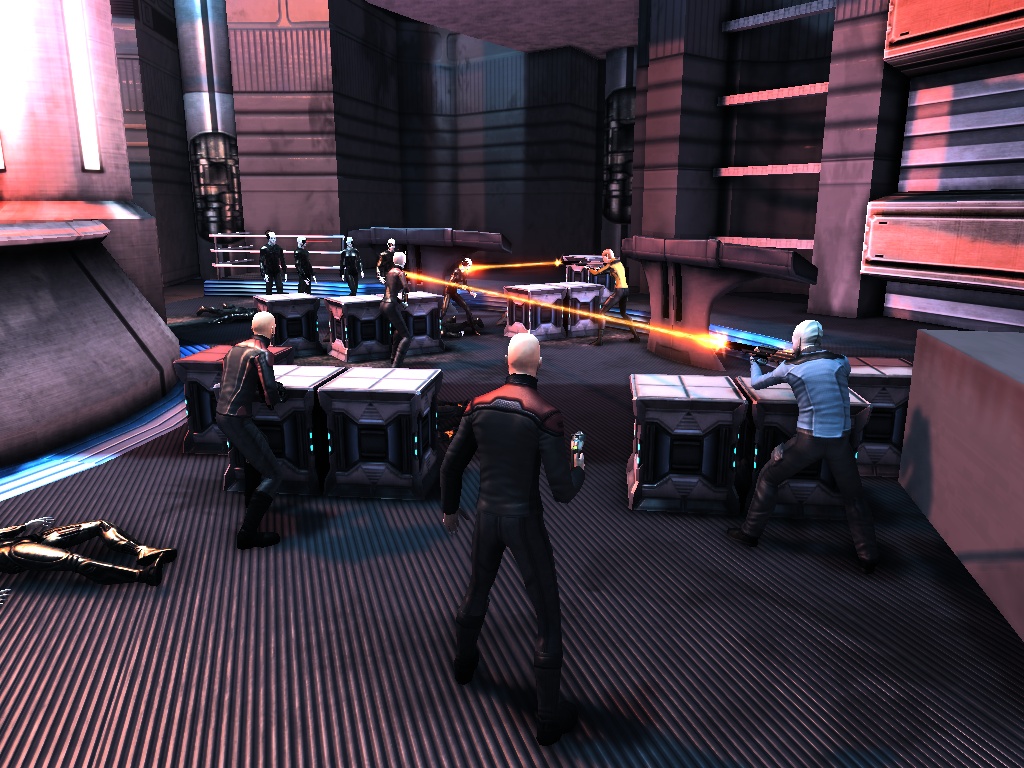
One bit of information to take out of this is Stahl’s comment that Star Trek Online is currently Perfect World Entertainment’s most successful title. This puts the game over other big titles in Perfect World’s library, from the Torchlight series, Blacklight, PWI, and more.
While you may not agree with all of our designs and decisions, the proof is in the success the game is having and how much the game continues to grow. While we don’t share our internal information, STO is the best performing game for Perfect World Entertainment and is enjoy month after month increases in new captains.
This also puts Star Trek Online above Cryptic’s other game, Champions Online.
So life isn’t exactly perfect over at the Cryptic Studios offices right now. Long story short, a series of bad choices and oversights on the part of the Cryptic team lead to a very long thread and a long apology from producer Dan Stahl. I will allow Mr. Stahl to explain it in concise detail:
An apology is due, and while I’ve admitted fault in previous posts about this , I’ll do so again in this one. The release that was pushed to Holodeck last week failed in several critical ways. There was a failure on the part of a designer to test their work before it was checked into the game. Similarly, there was a failure in communication with the QA team on the said check in and on top of that, no one headed the concerns on TRIBBLE. Ultimately, this is all my responsibility as the lead on the team and I do apologize. There has been corrective action on our end to address this issue and it is our intention that the build going out to Holodeck tomorrow will resolve problems introduced last week. This doesn’t mean that all bugs on Holodeck are magically gone, it means that we are looking into the processes that cause these bugs and taking action to correct them.
In addition, the removal of Fleet Marks was a heavy handed change. It needed to be done because it was getting out of hand and there was an ever increasing amount of exploitation in the Foundry to maximum Fleet Mark rewards. That said, we should have had the Fleet Mark changes we are making this week ready to go last week so there wouldn’t have been a week with the drop in Fleet Mark earning. Again sorry. It doesn’t make us feel any better when we make stupid mistakes.
One bit of information to take out of this is Stahl’s comment that Star Trek Online is currently Perfect World Entertainment’s most successful title. This puts the game over other big titles in Perfect World’s library, from the Torchlight series, Blacklight, PWI, and more.
While you may not agree with all of our designs and decisions, the proof is in the success the game is having and how much the game continues to grow. While we don’t share our internal information, STO is the best performing game for Perfect World Entertainment and is enjoy month after month increases in new captains.
This also puts Star Trek Online above Cryptic’s other game, Champions Online.
City of Heroes is undoubtedly the most surprising shut down of the year, not to mention the show of support for the game by its community during its last days.
You didn’t think that the drama surrounding City of Heroes was over just because the servers had shut down, did you? Well think again. MMORPG.com has posted an article today detailing exchanges between NCSoft and a former Paragon Studios employee over the fate of City of Heroes, and as usual the two pieces of information directly clash with one another. According to the source from Paragon Studios, City of Heroes had been profitable even before the transition to free to play, bringing in twelve million annually compared to four million in operating costs. NCSoft apparently wanted $80 million to sell City of Heroes to another developer, however they valued the game at $3 million for tax purposes. Ultimately, however, the game was shut down as while the game was profitable, the profits were not “what they needed to be,” and Paragon wound up the weak link in NCSoft’s restructuring.
MMORPG.com asked for a comment from NCSoft, and received the following note from Lincoln Davis, Director of Corporate Communications:
“It is disappointing that such inaccurate information was provided to MMORPG by an anonymous source and is being reported on as news. The operating cost, annual revenue figures and other financial information shared by this anonymous source are simply wrong. The studio was unprofitable before the shutdown. Both NCSOFT and Paragon Studios were incredibly proud of the transition of City of Heroes to a Free to Play business model, but unfortunately it wasn’t enough to support the studio’s needs. We made the difficult decision to close Paragon Studios and sunset City of Heroes because the franchise no longer aligned with the long term profitability goals for the company.
“While we looked to sell the franchise multiple times, we were unsuccessful in finding a suitable partner that we thought would support City of Heroes’ fans in a manner they were accustomed to for years to come. Closing a studio and sun setting a beloved franchise is never an easy thing to do for the publisher, the developer or the fans. This was not an easy decision to make. The Heroes and Villains have taken to the skies of City of Heroes for the last time, but the game and community will remain in our memories. We truly thank our fans for their years of support and we hope they understand the difficult position we were in when making the final decision.”
I’d like to look at one particular node: Paragon Studios. Now, the anonymous source claims that Paragon Studios had another game in the works, a Lost meets Minecraft game, which means that Paragon was eating far more money than simply keeping City of Heroes optional. Lincoln Davis doesn’t say that City of Heroes was unprofitable, and one can only imagine that such a game wouldn’t consume three million dollars a quarter in upkeep alone. Rather, Lincoln Davis specifically states that “the studio” was not profitable, referring to Paragon Studios itself. It is entirely possible that while City of Heroes was profitable, the second project that Paragon Studios was consuming the rest of its revenue and then some, leaving the studio as a whole as a burden on NCSoft’s finances.
I should point out that the source was anonymous by request, meaning MMORPG.com presumably knows who they are talking to and that person is a credible source in the company. It is also important to note that this is the first time someone from NCSoft has commented directly that Paragon Studios was not making a profit, a comment that should have been made several months ago when Paragon Studios was first shut down. Despite the comment by Lincoln Davis, the latest entry into the City of Heroes saga once again leaves us with more questions than answers.
Was City of Heroes itself profitable? How much was this second project by Paragon Studios costing them to develop? Why didn’t Paragon just shut down the project since it was apparently breaking the bank? What was going on with this second game Paragon Studios was making? If the cost that NCSoft was asking for City of Heroes was not $80 million, as Lincoln Davis claims the figures were “simply wrong,” then how much were they asking for? If Paragon Studios was unprofitable due to these other projects, what kind of money were they losing every quarter? Who decided that shutting the game down now would be better than putting it into maintenance mode and simply ceasing development (like Microsoft recently did with Age of Empires Online)?
We will probably never get a complete answer on exactly what was going on at NCSoft and Paragon Studios that lead up to the shut down, but the statement by Lincoln Davis paints a pretty clear picture that the performance of Paragon as a studio and its other projects, regardless of how City of Heroes itself had been running, played a major part in the studio being shut down. There is an answer somewhere, and it is likely much more complicated than any of us will be able to figure out.
City of Heroes is undoubtedly the most surprising shut down of the year, not to mention the show of support for the game by its community during its last days.
You didn’t think that the drama surrounding City of Heroes was over just because the servers had shut down, did you? Well think again. MMORPG.com has posted an article today detailing exchanges between NCSoft and a former Paragon Studios employee over the fate of City of Heroes, and as usual the two pieces of information directly clash with one another. According to the source from Paragon Studios, City of Heroes had been profitable even before the transition to free to play, bringing in twelve million annually compared to four million in operating costs. NCSoft apparently wanted $80 million to sell City of Heroes to another developer, however they valued the game at $3 million for tax purposes. Ultimately, however, the game was shut down as while the game was profitable, the profits were not “what they needed to be,” and Paragon wound up the weak link in NCSoft’s restructuring.
MMORPG.com asked for a comment from NCSoft, and received the following note from Lincoln Davis, Director of Corporate Communications:
“It is disappointing that such inaccurate information was provided to MMORPG by an anonymous source and is being reported on as news. The operating cost, annual revenue figures and other financial information shared by this anonymous source are simply wrong. The studio was unprofitable before the shutdown. Both NCSOFT and Paragon Studios were incredibly proud of the transition of City of Heroes to a Free to Play business model, but unfortunately it wasn’t enough to support the studio’s needs. We made the difficult decision to close Paragon Studios and sunset City of Heroes because the franchise no longer aligned with the long term profitability goals for the company.
“While we looked to sell the franchise multiple times, we were unsuccessful in finding a suitable partner that we thought would support City of Heroes’ fans in a manner they were accustomed to for years to come. Closing a studio and sun setting a beloved franchise is never an easy thing to do for the publisher, the developer or the fans. This was not an easy decision to make. The Heroes and Villains have taken to the skies of City of Heroes for the last time, but the game and community will remain in our memories. We truly thank our fans for their years of support and we hope they understand the difficult position we were in when making the final decision.”
I’d like to look at one particular node: Paragon Studios. Now, the anonymous source claims that Paragon Studios had another game in the works, a Lost meets Minecraft game, which means that Paragon was eating far more money than simply keeping City of Heroes optional. Lincoln Davis doesn’t say that City of Heroes was unprofitable, and one can only imagine that such a game wouldn’t consume three million dollars a quarter in upkeep alone. Rather, Lincoln Davis specifically states that “the studio” was not profitable, referring to Paragon Studios itself. It is entirely possible that while City of Heroes was profitable, the second project that Paragon Studios was consuming the rest of its revenue and then some, leaving the studio as a whole as a burden on NCSoft’s finances.
I should point out that the source was anonymous by request, meaning MMORPG.com presumably knows who they are talking to and that person is a credible source in the company. It is also important to note that this is the first time someone from NCSoft has commented directly that Paragon Studios was not making a profit, a comment that should have been made several months ago when Paragon Studios was first shut down. Despite the comment by Lincoln Davis, the latest entry into the City of Heroes saga once again leaves us with more questions than answers.
Was City of Heroes itself profitable? How much was this second project by Paragon Studios costing them to develop? Why didn’t Paragon just shut down the project since it was apparently breaking the bank? What was going on with this second game Paragon Studios was making? If the cost that NCSoft was asking for City of Heroes was not $80 million, as Lincoln Davis claims the figures were “simply wrong,” then how much were they asking for? If Paragon Studios was unprofitable due to these other projects, what kind of money were they losing every quarter? Who decided that shutting the game down now would be better than putting it into maintenance mode and simply ceasing development (like Microsoft recently did with Age of Empires Online)?
We will probably never get a complete answer on exactly what was going on at NCSoft and Paragon Studios that lead up to the shut down, but the statement by Lincoln Davis paints a pretty clear picture that the performance of Paragon as a studio and its other projects, regardless of how City of Heroes itself had been running, played a major part in the studio being shut down. There is an answer somewhere, and it is likely much more complicated than any of us will be able to figure out.
Bigpoint Games notoriously has a big mouth when it comes to pointing out their accomplishments, and despite the objections of some of the gaming community over the publisher’s very blatant and self-noted pay-for-advantage model, the company continues to post major profits and major user numbers. Today, the publisher announced that their portfolio of over 60 games has brought in more than 250 million registered accounts. That’s enough accounts for around 3% of the world’s population to have an account.
As I’ve said before, Bigpoint has been consistently up front about selling power in their games, and very successfully at that. The developer raked in revenues of $200 million in 2010, and that number continues to grow as they add more titles to their lineup.
By now this type of news shouldn’t be too surprising, and I doubt anyone expected to see a headline: “Cryptic announces major loss in revenue after move to free to play.” As Turbine, Sony, and more have proven before us, the seeming majority who bash everything with a free option and a cash shop ultimately turn up as a very vocal, very tiny minority. There are, of course, those who will claim that Champions Online will have died without making the switch, and they are probably correct in that assessment.
However, if Cryptic Studios is going anywhere now, they’re going to the bank. According to Cryptic, the number of unique logins, concurrent players, and revenue have spiked over 1,000% since the game went free last month. To celebrate, Cryptic is placing a one-hour xp boost in the Cryptic Store for free, limited one per account. If you’re jonesing for some quick cash, the item is apparently tradeable, so save it and see if someone will buy it for a good amount of in-game money.
Having Champions Online free to play will be an interesting move in the months/year to come, as this means more competition for City of Heroes and DC Universe. Will the competition have to adapt to survive? Will Iron Man have to face his one true fear in order to defeat his nemesis? Find out all this and more! On the next issue of Amazing Issues of Amazing Amazements!
Since it had to be asked: Does Bill Roper regret leaving Cryptic now? Someone just missed a fat bonus check.
There is still a group of players who cling to the old ideology that free equates to terrible community, imminent shut down, and dying developer. I don’t think I need to count out how many people were screaming on forums before the Lord of the Rings Online free to play shift about how this would ruin the game, and that current subscribers would drop the game like a sack of rotting flesh-bricks, and how the community would be inundated with children and social deviants who would do nothing but grief (read: making Chuck Norris jokes over region chat).
So when I forward Turbine’s announcement at GDC that their revenue has doubled, with over half of players using the Turbine store, I recognize that people will simply deny this information as Turbine misrepresenting facts to inflate their figures. There is no convincing someone who flat out denies Turbine’s figures of the free to play launch having a bigger reception than the game’s original launch, or that 20% of past subscribers have returned to the game, or that peak player counts are triple their previous level.
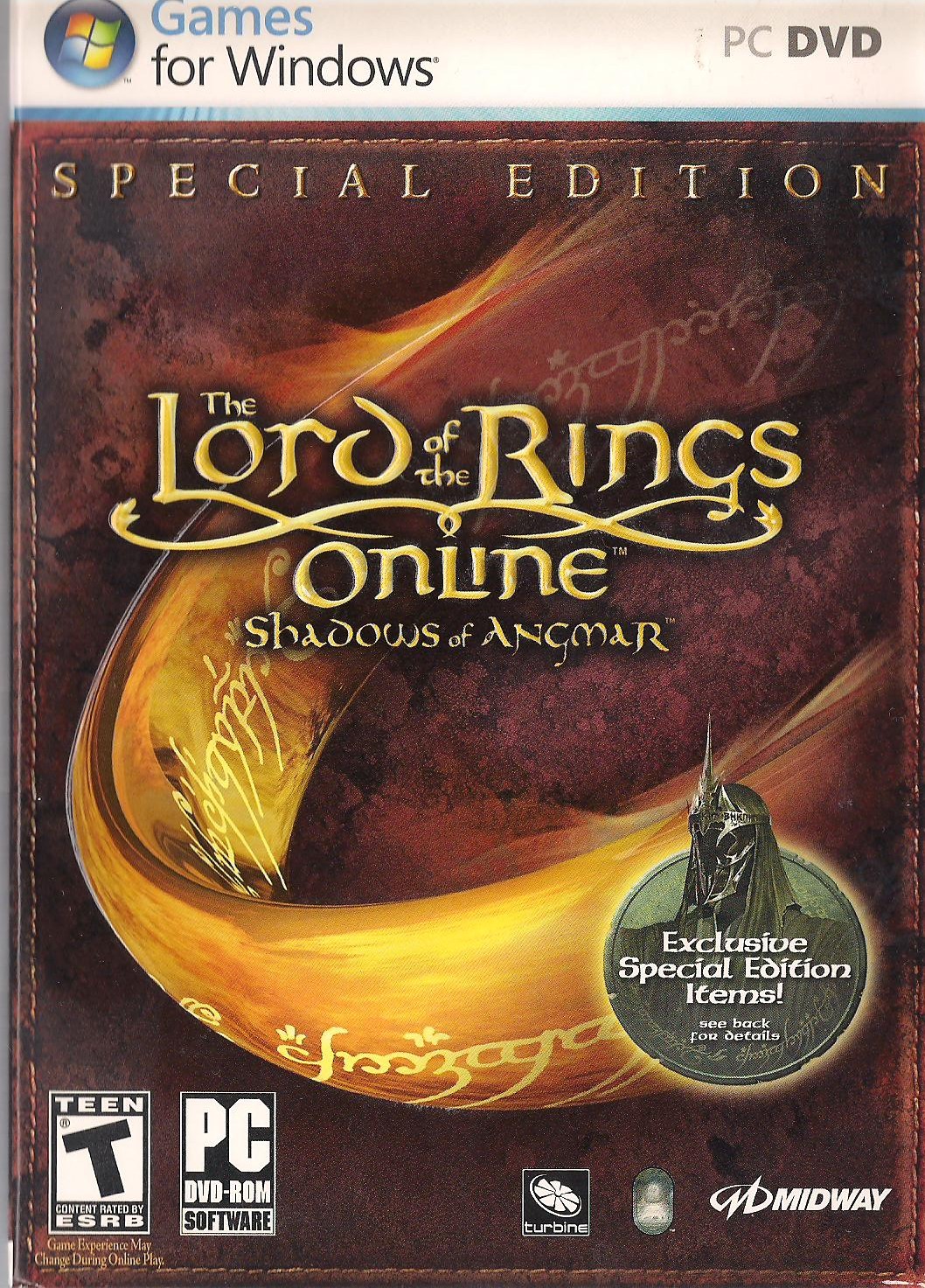
I personally have a premium account, seeing as I bought the Lord of the Rings special edition for $1 in a Christmas sale some years ago, but I have yet to put any money into the Turbine store. One can argue long term stability, but ultimately all we have to go on is speculation as to whether or not the game will sustain these figures. Over half of your game’s population using the cash shop is an incredibly high figure, however, presuming Turbine doesn’t include the VIP subscribers who receive an “allowance” of Turbine points each month.
Perhaps this is just a boom for Lord of the Rings Online, but Turbine can worry about how the population levels out as it happens, rather than listening to screams more frantic than the children playing in traffic outside my window.




 MMO Fallout