
And is suing in London to prove it.
Continue reading “Was Jagex’s Sale Legal? A Chinese Asset Manager Says No”

And is suing in London to prove it.
Continue reading “Was Jagex’s Sale Legal? A Chinese Asset Manager Says No”
It is an unhealthy pleasure that keeps me up at night.
Continue reading “Hotcakes: Digital Homicide Is My Quarantine Drug”
You all remember Amro Elansari, patron saint of MMO Fallout and guy who is constantly sticking it to the man. What do you stick to the man? Chewing gum, probably.
Last we heard from Mr. Elansari, he had just come off of a failed lawsuit against Jagex over claims that being muted in RuneScape constituted a violation of his freedom of speech, due process, and human rights. Judge Kearney, patron saint of shutting down nonsense, dismissed the case with prejudice noting that a private company like Jagex could not be charged with violations of the constitution. Most definitely they could not be sued on such grounds in state court. Elansari was informed that he could file in federal court should he decide to.
And he decided to, as Elansari appealed to the third circuit federal court who…shut it down immediately. In his appeal, Elansari brought forward a fourteenth amendment complaint which Judges Schwartz, Restrepo, and Rendell noted would require a state actor working with Jagex. If Jagex had a secret state government employee that they were conspiring with to squash Elansari’s constitutional rights, he might have a lawsuit. Elansari did not present any such claim of a state actor, and as a result the lawsuit is kaput.
Elansari also attempted a Title II claim of unequal treatment which would require discrimination based on protected status (race, gender, religion, etc) but Elansari did not make any claim as to his punishment being a result of discrimination. The most recent court filing dismissing the lawsuit is below.
Source: Justia
With the motion for final approval of settlement details scheduled for April 17, it will have been four and a half years since the lawsuit over ArcheAge’s launch and boy has a lot happened in that time frame including the death of Trion Worlds as a corporate entity. Back in August we talked about how the lawsuit was finally coming to a close, owing mostly to the fact that the defense was being funded by the liability pool of Trion’s insurance company which would also be handling the payout, meaning the longer the lawsuit went without agreement on a settlement the less money would actually be available for the aggrieved parties.
Trion’s insurer has set aside an amount that while high isn’t exactly great. $420 grand for parties to make claims. You have until March 13, 2020 to make a claim, do nothing, opt out of the settlement, or object to the terms. Thankfully you don’t even have to do any receipt checking, as the website will let you submit your username or email associated with the Trion Worlds account and will calculate your eligible credits directly.
Payout of course is tied to the number of people submitting claims, so the more people who claim the lesser the individual payout will be. We’ll check in when the settlement is approved and payouts start going out to see what kind of compensation people are receiving.
Source: ArcheAge Settlement via MassivelyOP

If you haven’t been paying attention to his Twitter account over the past while, Tommy Tallarico of the Amico Tallarico clan has been in a back and forth kerfuffle with Roblox over allegations that Tommy owns the rights to the “oof” sound effect that has become iconic to Roblox over the past decade or so, and that Roblox is continuing to use the sound effect without his permission and without compensation. Tommy has been attempting to negotiate a settlement to avoid a potential legal battle but has yet to have any luck.
Roblox has officially responded to the allegations, claiming that the oof sound was obtained from a stock sound CD-ROM that was legally purchased consisting of copyright free sounds. They further claim that Tommy has furnished no proof of ownership, although admit that they have been working to reach a fair resolution (which would be needless if Tommy didn’t own the sound).
Roblox’s founders, Erik and David, got the oof sound (along with all the original Roblox sounds) from a stock sound CD-ROM they purchased of licensed, copyright free sounds (not from an illegal website as Tommy has suggested on social media).
We deeply respect the rights of IP creators, and we have built our platform over the past 12+ years based on respecting and honoring creators.
Despite the fact that Tommy has no copyright to the “oof” sound (and in response to our requests he has presented us no proof of ownership to it) we’ve nevertheless been working in good faith to reach a fair resolution with him. As part of that, we have asked Tommy to become part of our creative community and we look forward to exploring that opportunity with him further.
The full statement can be found at the following link. Tommy alleges that he created the sound effect for the game Messiah which readers can listen to at the embedded video below. Tommy has also stated that he has possession of the original recordings of the sound.
Um… I have the original DAT tape recording, a video, a contract and my metadata on the sound. As well as a ton of sounds just like the one they took. Yes… lets go to court and see who wins. @Roblox ignorance on display. How about showing your proof of this so called https://t.co/iMezQbJWPk
— TommyTallarico (@TommyTallarico) January 11, 2020
https://platform.twitter.com/widgets.js

Infamous for their reluctance to engage in courtroom shenanigans, Epic Games has filed a lawsuit. The company is pursuing Sick Picnic Media and Matthew Geiler in a move that can only be described as “you’re not taking us to court, we’re taking you to court.”
The lawsuit is over something old, something new, something licensed, and something…orange. Matthew Geiler may be best known to the internet memesters union as the guy behind that dancing pumpkin video that went viral many many years ago. The lawsuit stems from the use of the pumpkin man dance in an emote available in Epic Games’ lesser known title; Fortnite.
“This case concerns one of those emotes: a Halloween-themed emote called “Pump It Up” that Epic Games made available for a single day shortly before Halloween in the fall of 2019 as part of its annual Fortnitemares event (the “Pump It Up Emote”). In the Pump It Up Emote, the avatar performs a brief dance to a Halloween-themed song developed by Epic Games while the head of whatever avatar the player has selected is transformed into a jack-o’-lantern face designed by Epic Games.”
This isn’t the first time Epic has been sued over the use of dances in Fortnite, although every single one of those suits were voluntarily dismissed by the plaintiffs. What makes this one different is that Epic is suing the dance creator for a preliminary declaration of non-infringement. Similar to their lawsuit against Acceleration Bay, Epic has taken the preventative step of asking the court to decide on a potential lawsuit before the would-be plaintiff ever files it.
Oh and unlike the previous lawsuits, Epic Games actually licensed the dance. The lawsuit goes on to state that Epic Games and Geiler actually licensed the use of the dance, which Geiler happily admits to on Facebook (making for great evidence that Epic handed to the court). Geiler actually says “Luckily they did a licensing deal with me
ahead of time!” Despite admitting to having a licensing deal in place, Geiler has apparently been submitting cease & desist notices to Epic demanding that they remove the emote. Epic now pleads the court for a ruling of non-infringement.
Source: Lawsuit
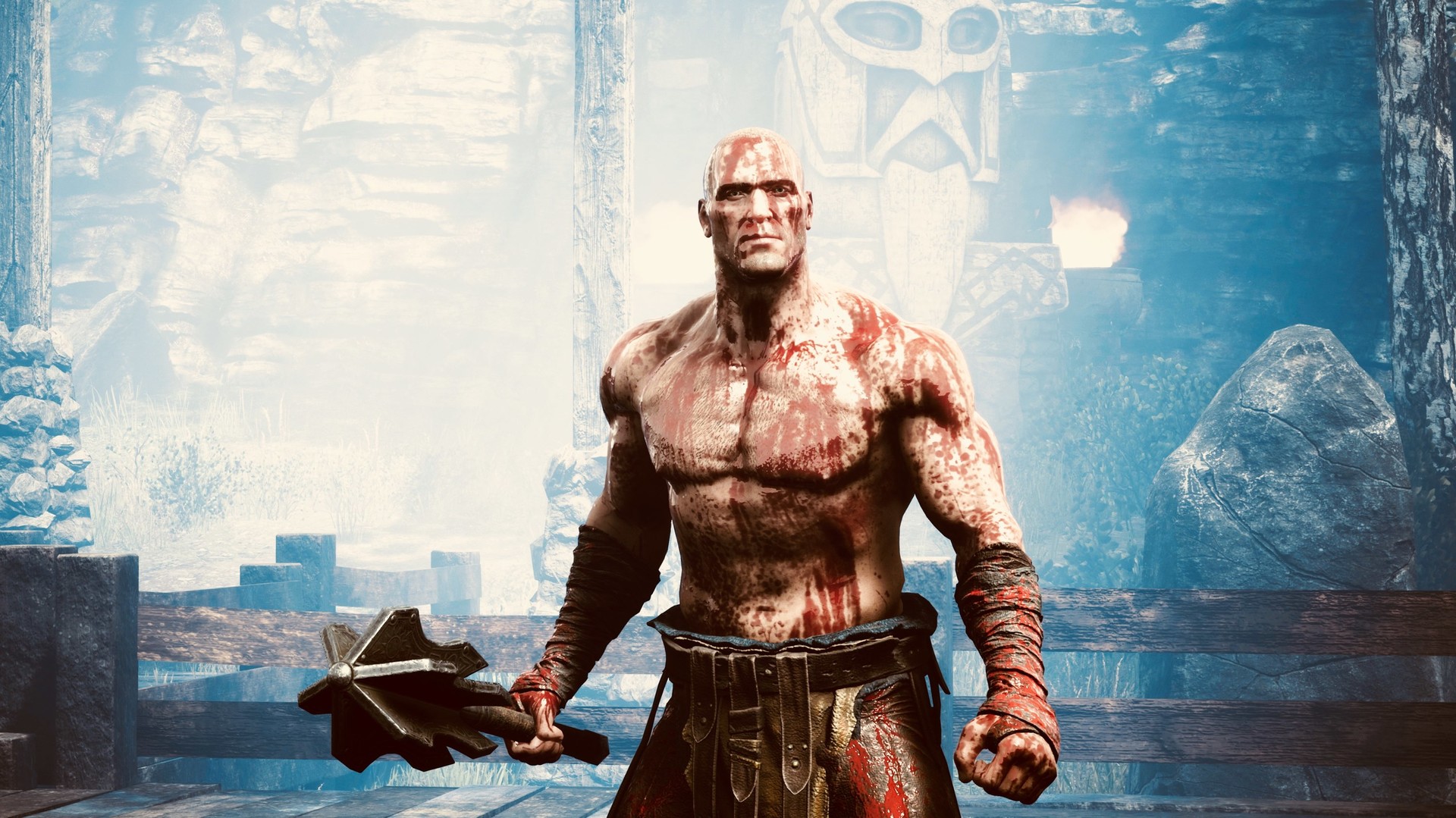
Human Head Studios will always hold a special place in many hearts as the company that made Prey 2006. About three weeks ago, the company launched Rune II on the Epic Game Store. Set in Norse mythology during the end times, Rune II puts you in the shoes of a warrior chosen by the gods to end Ragnarok and save Midgard from the treachery of that trickster Loki.
Rune II is also the focus of a lawsuit alleging fraud, contract breach, and fraudulent concealment, among other charges. The lawsuit stems from the events that occurred after Rune II launched on the Epic Game Store. Right after, as literally a day later they announced that Human Head Studios would immediately shut down with its developers transferred to a new studio under Bethesda’s management. Rune II’s publisher and financier Ragnarok Game LLC is understandably not happy with this turn of events, especially since Human Head is allegedly refusing to turn over source code and assets that Ragnarok now legally owns, in order to allow continued support of the game.
A notice was posted to the Rune II forums discussing the details of the lawsuit.
“Since Human Head’s sudden closure, announcement, and discovering the active concealment of their acquisition, we have repeatedly requested access to the final launch build source code and RUNE II game assets. This is so we can continue to support, update, and execute future DLC for our community. As part of the publishing agreement on RUNE II, Ragnarok Game LLC has paid for the development of these assets and is the rightful owner of them. After repeated refusals by Human Head to produce these assets, we’ve had no choice but to file a legal complaint in order to obtain the RUNE II game assets. We have exhausted all possible options before getting to this point. This is not the step we wanted to take, but it is necessary in order to fulfill our promises to our community.”
The lawsuit itself which can be read online accuses Ben Gokey, Christopher Rhinehart, and Paul MacArthur, all Human Head Principals, of intentionally damaging the Rune II brand and image by failing to perform and then conspiring to abandon the property, with the studio intentionally closing when it did to maximize that damage.
“In summary: (a) Human Head entered into a long-term agreement with Ragnarok — the whole goal of which was to launch Rune II and to provide the necessary support for its commercial success, (b) Human Head accepted millions of dollars in payment, but failed to perform, (c) instead of curing its deficient work, Human Head secretly conspired to abandon Ragnarok and the Rune II community in an apparent attempt to defraud and harm Ragnarok and the game, and (d) Human Head timed the unveiling of its plan to cause maximum damage. By this time, Ragnarok had learned its lesson. Ragnarok refused to be blackmailed and pay the ransom, repeatedly requesting the return of its property. What did Ben Gokey, Christopher Rhinehart, and Paul MacArthur do? They made unauthorized alterations to the code and attempted (unsuccessfully) to make public the unauthorized changes. Of course, since Human Head no longer existed, Gokey, Rhinehart, and MacArthur were not altering the code on behalf of Human Head. Regardless, alter the code they did. “
The lawsuit goes on to accuse Human Head of holding code hostage as ransom for monetary payments, as well as accusing the studio of attempting to upload altered versions of the game to the Epic Game Store despite demands to cease. If even half of the lawsuit is true, it’s a pretty damning story against Human Head heads Gokey, Rinehart, and MacArthur.
Source: Eurogamer

Epic Games is moving forward with its lawsuit against Acceleration Bay (ABC) following an order denying the defendant’s motion to dismiss.
Taking the initiative upon itself, Epic Games filed suit several months ago against Acceleration Bay, seeking a declaratory judgment that their game Fortnite did not infringe on patents owned by the defendant. The lawsuit was predicated on contacts between the two parties where ABC appeared to be offering a “mutual resolution” to avoid potential litigation, as it believed that Epic Games had infringed on a patent owned related to network technology. Epic got snarky with its response, noting that ABC appears to exist solely to litigate patents it buys in bulk from third parties.
Last month Acceleration Bay filed a motion to dismiss on grounds of lack of subject matter jurisdiction (wrong court) and lack of controversy (there must be reasonable anticipation of a lawsuit in order to file for a declaratory judgment). Following oral arguments on October 22, the court denied the motion. Acceleration Bay must file an answer to the lawsuit no later than November 5.
As always, MMO Fallout has uploaded the relevant dockets to our Google Drive. You can view the decision at this link. The file included a motion to seal certain exhibits so you may see some of our documents get replaced/removed/redacted in the future depending on circumstances.
 MMO Fallout