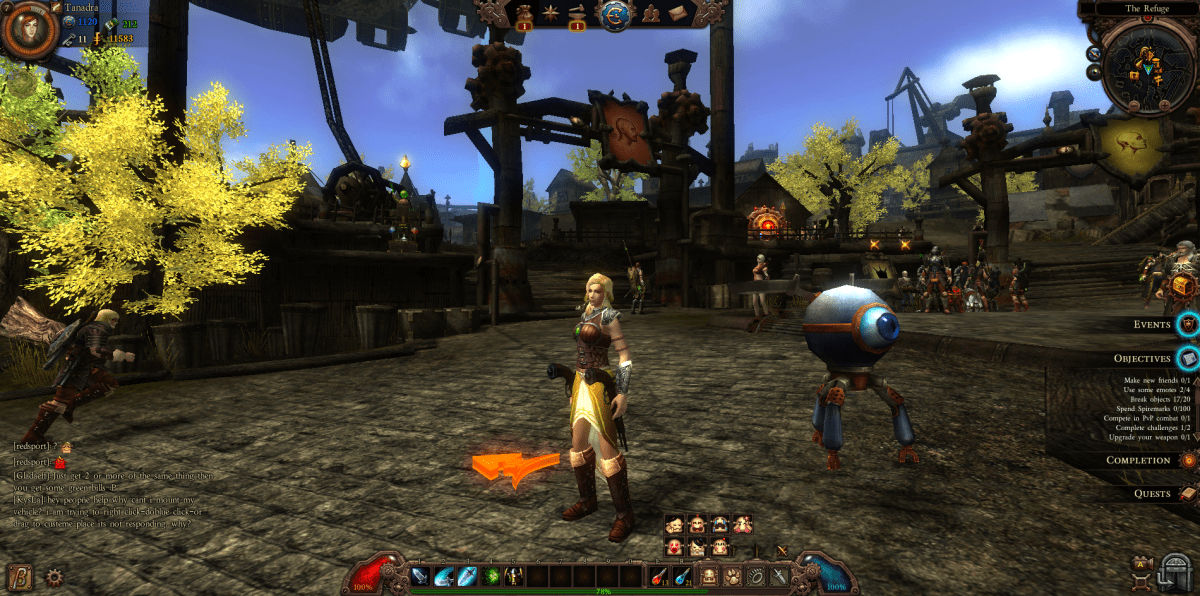
Less Massive Review: Tales From The Borderlands Episode 1


rhys-smash-card

(Note: This review contains spoilers for Borderlands 2.)

Telltale Games is easily one of my favorite game developers, proving the viability of AAA point and click adventure games in a world that had long since left the genre behind. The company spearheaded and successfully proved the viability of monthly episodic games, allowing players to buy the entire season with the added bonus of getting it all on dvd at the end for simply paying the shipping cost.

The idea of an episodic, intelligent, narrative take on the Borderlands universe is one that excited me greatly when it was announced earlier this year. I have a fondness for the Borderlands series, and while the series has progressed quite a bit since the first title, the games have never delved deep into the world in which your vault hunters live. All Borderlands needs to bring out its underbelly is a capable set of hands.

fiona-smash-card

Tales From The Borderlands is set after the events of Borderlands 2. Handsome Jack is dead and the Hyperion Corporation is going through a bit of a power vacuum. Vault Hunters are on the prowl looking for the newly discovered vaults, and Hyperion wants a piece of the pie. The story is told by two narrators. Rhys, a Hyperion employee, finds himself demoted to janitor and heads down to Pandora in an effort to screw over his boss and secure a vault key (and hopefully cement his real promotion). Fiona, a con artist, works on Pandora with her sister and adoptive mentor who absolutely won’t betray them, Felix.

As far as narrators go, you won’t find a pair less reliable than Rhys and Fiona, a factor that the game makes readily apparent from the start. The story shifts between perspectives, often going back and retelling the same story from the other character’s point of view, with both sides regularly contradicting each other. Who is telling the truth? Did Rhys really stand up to that group of psychos or did he wet himself and cry while the machine gun wielding robot did all of the work? That’s up to you to decide.

the-stranger

In their travels, the characters meet a variety of insane locals including my current favorite: Shade. The characters in this version are a lot more tame than their Borderlands counterparts, a more subtle comedy to match the slower pace of the game. As with previous games in Telltale’s lineup, Tales From The Borderlands has more in common with an interactive movie than a full-fledged action title. There are a few actiony moments here and there, mostly fed through quick time events, but anyone familiar with the Telltale Games series knows that these games are all about strong characters, powerful dialogue, and (more recently) giving the player choice to shape their game.

The best part is that the episodic nature allows Telltale to shape future episodes based on features players didn’t like or suggest. I can’t wait for episode 2 of Tales From The Borderlands, not to mention the upcoming Game of Thrones. Check it out on just about any device. Episode one is available now, with new episodes coming in the next few months.

vasquez

Diaries From RuneScape: November In Review


JagexLauncher 2014-11-17 10-29-10-98

RuneScape is going to be a regular game for the Diaries From column, published on the last Thursday of each month and covering the entire month’s worth of updates.

1. Prifddinas Part 2 – 9/10

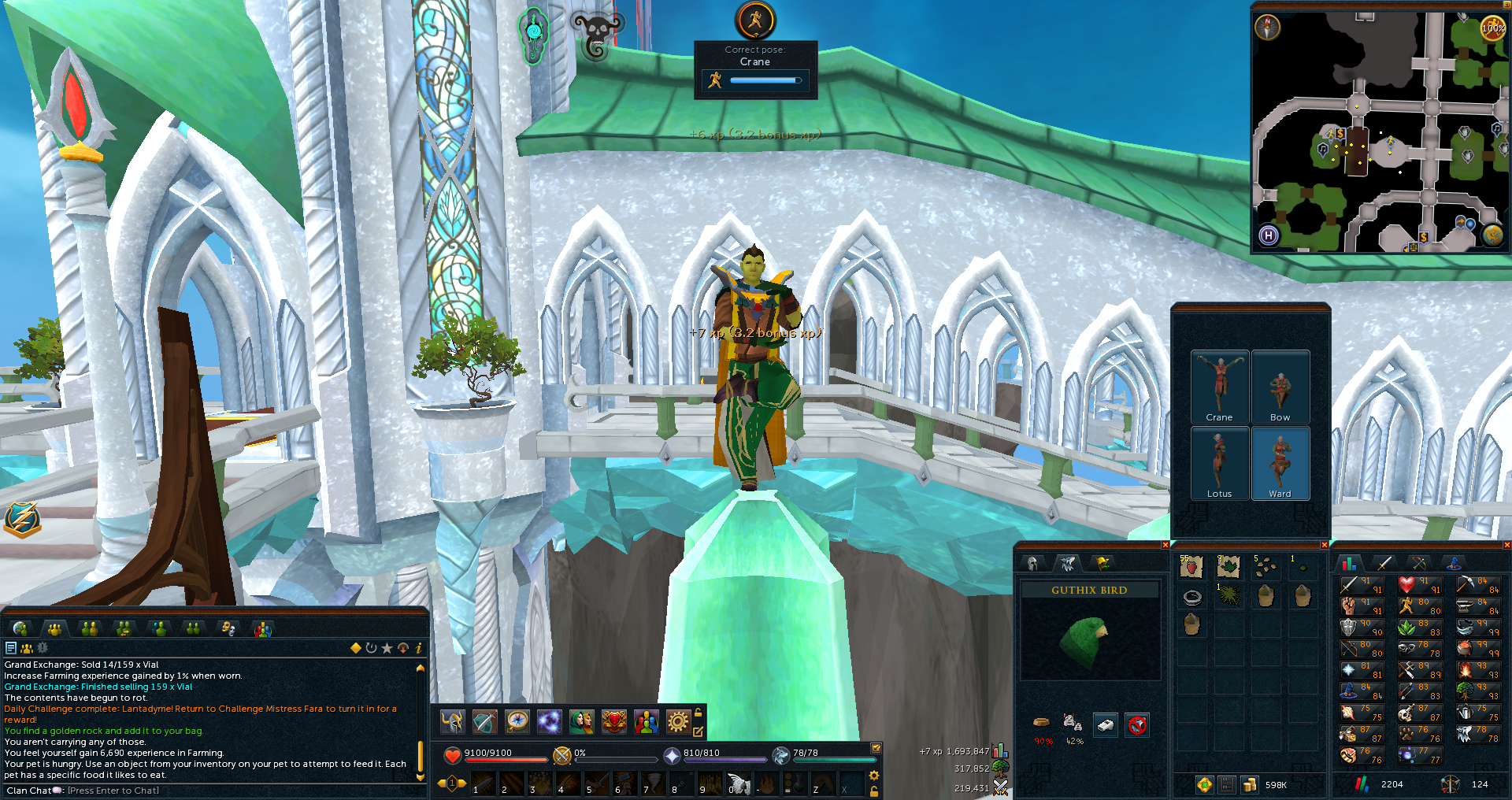
The elven city of Prifddinas has quickly become one of my favorite updates of 2014, and not just because I’ve been waiting for this update ever since it was teased way back in 2004. I went through high school and ended up one semester away from my bachelor’s degree in the time Jagex took to put this update out. There are kids playing RuneScape today who were still in diapers when the city was first teased. It was a really long time ago.

Prifddinas is a giant skilling hub, a place where high level players can theoretically go and virtually never have a reason to leave. There is a ton of content, from pickpocketing elves to finding hidden titles, unlocking pets and other rewards, and I have only managed to scratch the surface.

  • Clan Amlodd (Divination and Summoning) – Shadow creatures are useless as a divination training, since they don’t drop cores enough to be a viable alternative. The only time I’ve found myself killing shadow creatures is when a daily task dictates it. Otherwise this area has the convenience of an NPC to trade your summoning pouches in for a small amount of shards to make summoning less of a money sink.
  • Clan Ithell (Construction and Crafting) – This is my new favorite area in the game. The harps provide semi-afk crafting training with the bonus reward of harmonic dust that can be used to upgrade your dragon pickaxe and hatchet. Next to the harp room is a big rock containing soft clay next to a potter’s wheel and furnace, making crafting dailies much more convenient. When the area first released, mining the maximum fifty crystal stone per day and turning it into flasks was a great money maker before the market flooded.
  • Clan Hefin (Agility and Prayer) – If there is one skill I hate training more than crafting, it’s agility, and this area is right up my alley. I haven’t touched the new agility course, but I should since it is the fastest course and offers various rewards for completing laps. Generally I only have enough patience for agility to grab the twenty thousand (forty if you have bonus exp) agility experience for participating in the daily mini-game. The prayer section is a money sink, for 130,000 gold you can buy and clean crystals for prayer experience. If you are really rich, you can clean thirty stones per hour, spending 3.9 million for 279,000 experience. A much better alternative to buying and grinding bones, if for convenience over price.
  • Clan Meilyr (Dungeoneering and Herblore) – I don’t have 95 dungeoneering so I can’t comment on just about anything in this section. Harmony moss is interesting, you buy seeds for 50 thousand, and then plant them on skill-specific posts. The moss grows by gaining experience in the related skill, and the final product can be used in potions or sold for a small profit. I love combination potions since I can finally ditch my super sets, and I like the idea of certain potions requiring you to find the recipe in dungeoneering. It offers an extra incentive to go dungeon diving.

2. Treasure Trail & Community Tools – 8/10

Treasure trails are RuneScape’s treasure hunting mini-game, scrolls found from monsters and through other activities that offer puzzles and clues that must be followed to find rewards. If you’re lucky, you can find insanely expensive equipment/cosmetics. Otherwise you are 99% of the community and find a few low level items for a half hour or so of hunting. I don’t have the logistics to figure out if the rewards are statistically dropping at a better rate, but I like the idea of introducing new and better stuff while removing less desirable rewards.

I’ve found that the majority of players fall into two categories for the player examine feature: those who haven’t touched it and are at the default settings or those who have set their account to private.

3. Heart of Stone Quest – 6/10

I didn’t enjoy this month’s quest. RuneScape’s quest system has been rough ever since Jagex brought the world into the sixth age and made it so each quest set before then is a flashback or a memory or something. Heart of Stone is supposed to be an introductory quest to the elder gods, a topic that if you’ve been keeping up with the quests will seem out of place since your character has marinated in the topic for years. Every once in a while Jagex will go back and bring in a quest to introduce players to a certain idea, throwing consistency into the wind when your character who has known about these topics for years suddenly has no idea what they are.

As an introductory quest, it feels like everyone else is doing the fun stuff. You show up in the quest after all of this interesting stuff happens, and the quest is over before the really interesting stuff will happen, and knowing Jagex the sequel is at least six months away, if not a full year or more.


The first and second batches for Prifddinas are going to keep myself, and many other players, busy for a long time to come. By giving a more tolerable way to train the most intolerable skills, hitting end-game content is looking a lot more realistic.

Less Massive: Afterfall Insanity Is Free, And Still Costs Too Much


2014-10-15_00001

If you follow MMO Fallout on Twitter, or even if you don’t and simply catch my tweets on the sidebar of this website, you might have followed a link yesterday to redeem a free copy of Afterfall Insanity. Well, after putting about six hours into the game, I can honestly say that I got out of this exactly what I paid in: Absolutely nothing. The simple fact that I knew what the twist ending was going to be not even five minutes into the story should have been the first sign, and probably the only one I needed.

Afterfall Insanity is a third person game from Intoxicate Studios. The game takes place in a fictional timeline where nuclear war breaks out and most of the world is destroyed. Thankfully, a small portion of humanity managed to survive by living in underground Fallout© shelters. You play as Albert Tokaj, a psychiatrist specializing in confinement syndrome who notices that the mental and physical status of those in his shelter is growing increasingly unstable. Is everyone going insane around Tokaj, or is he the one who is truly crazy? Spoiler: It’s him.

2014-10-16_00001

In the world of “survival horror” games, Afterfall Insanity is on the level of Syfy original movie. Like many other low-budget horror flicks before it, Afterfall Insanity sets out to tell a serious story and, in the process, unintentionally creates something so schlocky that the horror element is replaced by bad comedy. Tokaj flips from “I’m a doctor, I have to help these people” to beating insane people to death so fast, the player is bound to get whiplash from the experience. There is less than a minute between Tokaj punching his guard for abusing an insane person and him wielding a fire axe and chopping off limbs.

It’s hard to get motivated for the horror aspect of Afterfall when the voice actor playing Albert has the emotional range of stale roadkill. Just about all of the voice actors provide the kind of enthusiasm you’d expect from a high school student being picked to read a passage from Shakespeare. It’s the kind of voice acting that makes you suddenly appreciate the works of Tommy Wiseau, or the dramatic chops of Nicolas Cage. Throw that voice acting in with copious amounts of broken cutscenes that clip through actors and the environment, and shake in some mediocre animation, and you have a recipe for gaming’s Asylum Film company with none of the self-awareness.

I have to assume that Intoxicate Games developed Afterfall by looking at popular survival and horror games and plucking concepts to use, albeit half-cocked and unfinished. The melee combat system, by which you’ll find all sorts of pipes and axes lying around, is clearly taken from Condemned, minus the unique feel of each weapon that set Condemned apart. Melee combat in Afterfall is clunky, Albert will often take another swing or two after you’ve stopped clicking. Enemies get in cheap shots often, hit detection is poor at best, and blocking seems mostly useless since it doesn’t do much to mitigate damage.

2014-10-17_00003

Afterfall grabs fear aspects from various other titles, and implements them in a manner that is just as woody and inauthentic as the acting. Albert will get spooked when scary things happen around him, leading to the picture going fuzzy and aiming a gun becomes difficult, effectively meaningless if you’re using the melee weapons. There are puzzles in the game, most of which consist of repeatedly hitting the same button, or hitting the directional arrows in a random order based on trial and error.

Which isn’t to say that the game falls completely flat. Afterfall is at its best when the developers aren’t trying as much. During the first half of the game, when your biggest adversary is the darkness and your limited flashlight, the game genuinely gets creepy. It is blatantly obvious from the beginning how the game is going to end, anyone who has played Spec Ops: The Line knows this tale back to front, but in that time where Albert loses his two bodyguards and must travel through the dark and creepy passageways alone, that is where the game hits its high points. Parts like silhouette children dancing in a circle are not scary.

There are so many better horror games on the market, and a lot of them come from indie developers like the Penumbra games and Amnesia: The Dark Descent. Instead of going for a game that picks random elements from other games, why not just play those games directly? Amnesia, Dead Space, Eternal Darkness, etc.

MMOments: Destiny


10655179_10152733524359600_9149003542480043990_o

Have you heard of the black garden? The greatest threat to us all lies there. I wish I could tell you all about Destiny’s rich story and lore, I really do, but frankly there isn’t much that I can remember that isn’t tied to a basic storytelling trope. Basically the story is that a giant construct called The Traveler came to Earth where it ushered in a new era of technology and innovation, taking humanity to the stars. In space, naturally, we encountered aliens hell bent on killing us for no apparent reason other than that they are evil and we have god on our side. A traveler named The Traveler, bad guys called The Darkness, and the guardians of light are Guardians? I’m rather surprised that Bungie didn’t go full force and have you taking missions from Goody McGooderson, aided of course by his eventually-outed-as-evil assistant, Badguy McBackstabby.

It’s hard to remember much about Destiny with such groundbreaking writing like “the Vex are so evil that they despise other evil beings.” Most of this is narrated by a Peter Dinklage who sounds suspiciously like he found a copy of the Destiny script while bored at the doctor’s office and Bungie stealthily recorded him narrating it out loud. The rest is told through grimoire cards, but you’re going to have to go to Bungie.net in order to read what they are because there is no in-game lore book like in, well, every other RPG with some form of lore book. I mentioned my hope in the beta that this would be fully implemented on release, count that as a disappointment.

10697127_10152730652469600_3753579906584561296_o

It’s hard to not make comparisons to games like Borderlands, when the two are so similar. Destiny is a solid shooter and a fun time, and yet it will deserve every single one of the disappointed reviews that are currently making their way to press, and that is a shame because Destiny is a very fun game. When all is said and done, Bungie’s greatest sin in all of this will be that they gave too much hype to a generic game, like when McDonald’s would treat the return of the McRib as if it were a brand new discovery when it was the same sandwich we’d been having for years. We get it, Ronald, you put boneless rib on a sandwich and added some onion and a pickle. Twenty marketing campaigns later, and it’s the same sandwich.

10694267_10152730655174600_690763185510293652_o

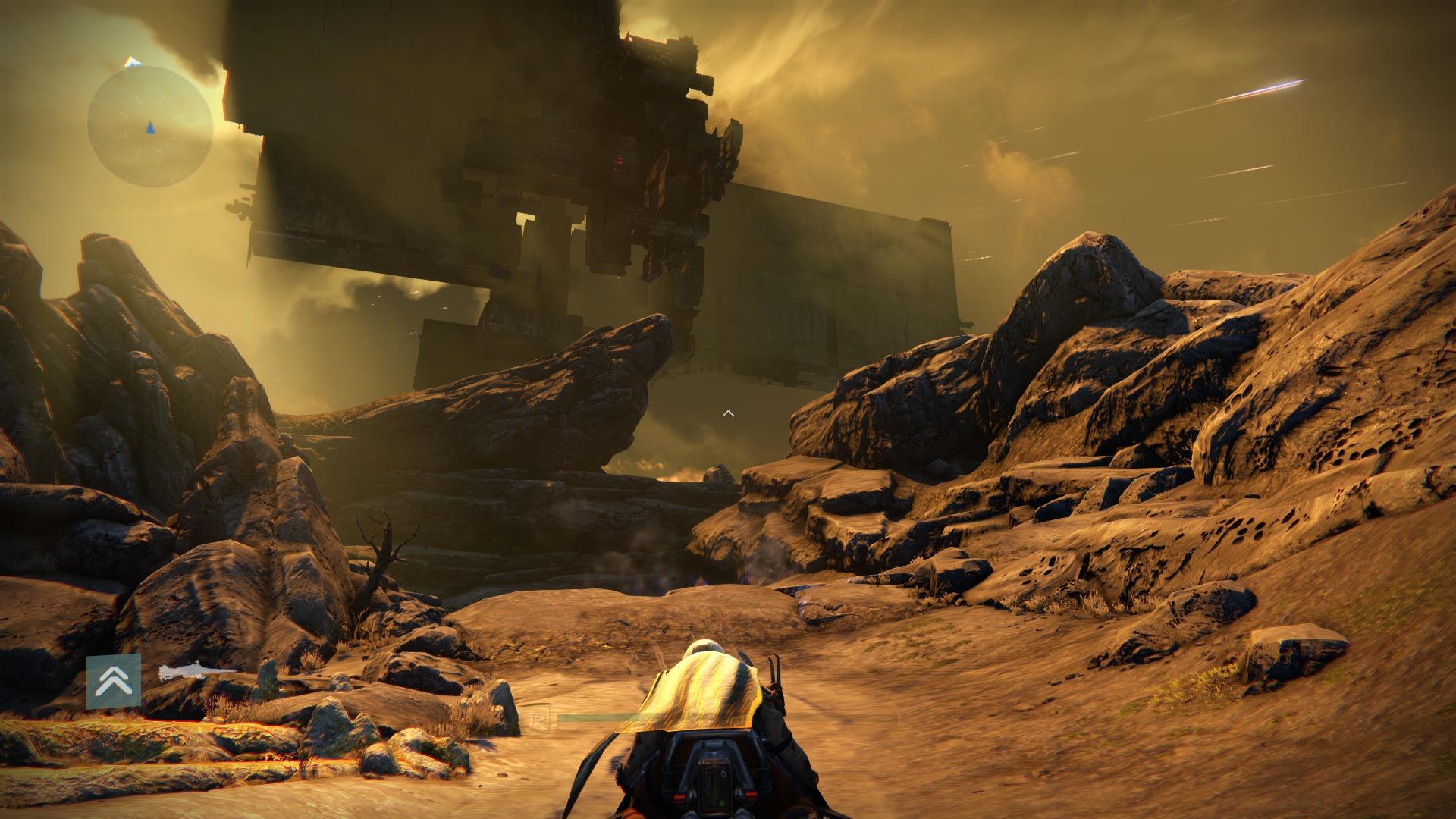
Make no mistake, Destiny is an impressive looking game both in the graphical department as well as taking relatively small environments and making them look gigantic. It is also a solid shooter with solid RPG mechanics and progression system with some loot on the side. As with games like Borderlands and Diablo before it, part of Destiny’s draw is the never-ending quest for more loot, higher levels, and progressively more powerful weapons and armor to shoot a lot of bad guys who have committed the crime of carrying your loot. The shooting, Destiny does well. Weapons feel like they have real weight and especially handcannons pack a punch that feels like it could knock the controller out of your hands.

Combat against the AI varies in nature, and as with Borderlands can eventually feel like a chore. Devoid of any intelligent AI, Bungie’s take on difficulty is to employ the same cheap tricks used in similar games, and use them in intolerable numbers and combinations that make me think Bungie missed a course on how combat is balanced in RPGs. You see, in standard mobs there is a balance between power, defense, and speed. You can have mobs that are invisible, mobs that have high health, and mobs that run incredibly fast in large numbers and deal heavy melee damage. Creating a creature that mobs in packs, has a lot of health and does heavy damage, and runs around invisible? Ridiculous. Snipers using invisibility is a pretty common trope in gaming, but snipers that remain invisible while they’re shooting you? That’s just sadistic.

Bosses carry the same poor AI, considering that they merely serve as walking tanks. They aren’t difficult as much as they are unfair, merely large hitboxes with a lot of health carrying a weapon with ridiculously high damage and splash radius, which makes them very easy to defeat if you can keep moving. I think I died by one boss so far, and it’s because his area had a constant stream of mid-tier creatures whose guns all had lock-on bullets. Oh yea, enemies have guns with bullets that change course and follow you through the air. Otherwise, I can guarantee that your death will almost always come when the game goes “screw it” and just throws so many mobs at you at once that there is no way to kill them fast enough and nowhere to use cover to regenerate.

10658690_10152733523964600_3692456607300919308_o

One problem Destiny faces is that Bungie’s take on sociability is, well, odd to say the least. On one hand, partying and getting into impromptu groups with random players and friends alike is seamless and enjoyable. I’ve taken on numerous boss dungeons where I suddenly found two other players by my side, and while none of them talked, everyone seemed to know what to do. Chat is handled through emoticons as well as through local voice chat if you can find anyone else with a headset plugged in.

On the other hand, the social aspect is essentially nonexistent outside of the off chance you manage to stumble upon one of the game’s exceedingly rare public events. The trade hub, the center for social contact, has little promise for social activity. Chat is nonexistent in both its vocal and keyboard form, there are no social mini-games, and trade doesn’t exist at all in Destiny so you can’t even go into town to sell off or give away your loot. Bungie’s official statement is that this is because they want every weapon to have a personal story behind it. This is a pretty heavy order, since it assumes that your combat moments will be memorable enough for players to actually remember how they got their weapons. I remember how I got each and every one of my weapons: I killed a bunch of unmemorable mobs until an orb popped out and then I picked that up.

PvP is a mess, and a real heavy step back considering we’re talking about the company that made Halo 2. The one thing Bungie did right was to consolidate stats in the Crucible, meaning you are no better than any other player just because you are a higher level or have better gear. Everyone is the same. Well, mostly. Maps are far too small and close-quartered, there is no segregation between competitive and noncompetitive players, you can’t vote on what map or mode you want to play next, there is no punishment for abandoning your team, no playlists, no private matches, and no matchmaking by pvp rank.

10658784_10152733791889600_647848678133423377_o

If there is one thing to be said about Destiny, it’s the knowledge that Bungie’s alleged dedication to the title means that all of these problems could be a thing of the past when you’re reading our updated review months from now. For now, though, what we’ve seen at launch is an incredibly forgettable story wrapped around a game that is, for all purposes, incredibly barebones and at the retail price of $60-150 despite missing a number of features. The social aspects are weak, if not mostly nonexistent, considering that this is apparently an MMO. Unless you are hell bent on getting the game immediately, give it a few months to go down in price.

Destiny falls somewhere in the realm of decent, and assuredly there are plenty of people who will find joy in it. Hopefully Bungie will work hard over the next couple of months to fix some of the game’s more glaring issues.

MMOments: RuneScape Companion App


scapefix

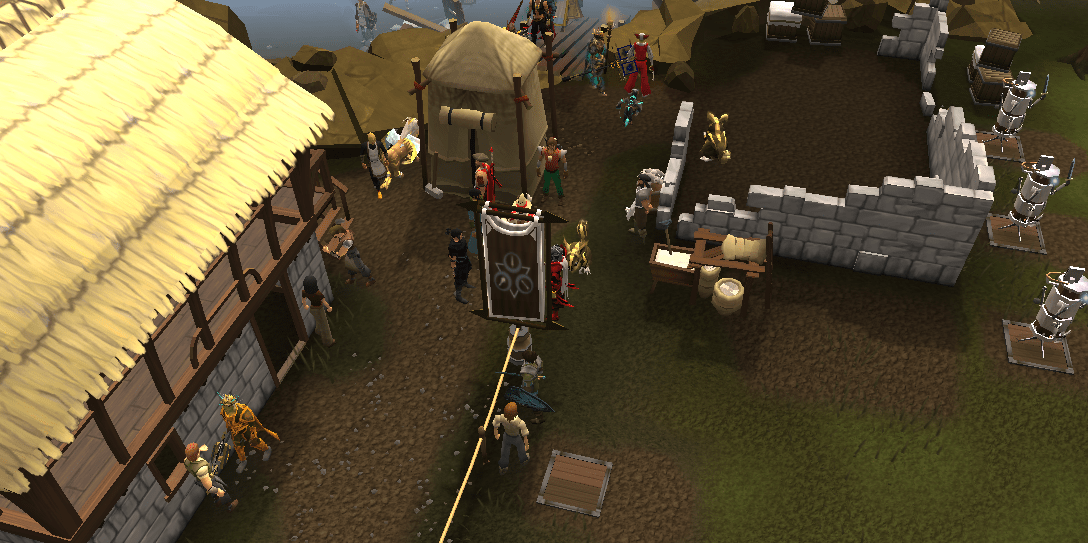
I finally had a chance to try out the RuneScape companion app on my iPad today. Currently the app isn’t an actual app, as in one that you download through the Google Play store or Apple store, but exists as a website you access through your device’s browser. The app allows access to a multitude of features, including your bank, the Grand Exchange, stock market, chat, and more. I tested this out using an iPad mini, and found performance to be mostly alright. There is a bit of annoyance in setting up the device, as you are required to have an authenticator set up to access features like the Grand Exchange, which is likely on the same device. You also have to talk to the tutorial NPC at the Grand Exchange and enable access through the game.

As a companion app for RuneScape on the go, this is turning out to be a pretty good program. Trading is done seamlessly via items stored in the bank, and anything purchased through the Grand Exchange is stored in your bank as well. Merchants can use the app on their phone while out of the house to continue making money flipping items (buy low, sell high), which is what many seem to already be doing. You can even simply use the app to keep up with your friends and clan using the chat program. The distractions & diversions window shows progress and reset timers on activities, making it possible to check progress without actually going in-game.

But none of this is useful if you want to have the companion app open while playing, as currently you cannot be logged into both simultaneously (which is unlikely to change). Logging into RuneScape will kick you out of the companion app. On the other hand, you can also access the companion app from your desktop browser, meaning that you don’t need one of those fancy smartphones or tablets to enjoy the convenience.

I have high hopes for the RuneScape companion app.

This slideshow requires JavaScript.

Less Than Massive: Thinking About Burial At Sea Part 1


20131004120128-lestempsperdu_web

I finally finished Bioshock Infinite’s second DLC: Burial at Sea Part 1, which wasn’t exactly an easy feat. I see a lot of reviews stating that the game takes around two hours to complete, which sounds like a reasonable estimation, but I kept getting frustrated by multiple game-breaking bugs that the process from start to finish took a few days. If you aren’t an idiot like I am and knew where you were going, backtracking is literally impossible at the moment (at least in the PS3 version) because of the presence of a bug that causes the airlocks to spin forever when you try to enter through them a second time. I also faced several times where the game crashed, which I think had to do with attacking certain story-related splicers before I was supposed to. I haven’t seen a game crash from breaking NPC scripting in a long time.

My biggest complaint with Burial at Sea is that the game attempts to merge both worlds of Columbia and Rapture with varying success. In all honesty, I would have rather seen Infinite’s characters dealing with a more Rapture-centric lifestyle. Plasmids and Eve are the exact same Vigors and Salts you encountered in Infinite, they are just called Plasmids and Eve now. Elizabeth lies to Booker by telling him that her ability to rip tears is just a Plasmid called none of your damn business, and he doesn’t question much further. The sky-hook, or the air grabber as it is called here, has no contextual reason for existing in Rapture’s tight corridors and would have been better replaced by Bioshock’s large wrench, but I get the feeling that Ken Levine wouldn’t let this go through without the sky hook being present. Apparently someone created a tool to navigate Rapture’s equally pointless decorations.

There aren’t many upgrades, not that it matters because you won’t find enough money over the course of the game to afford more than two or three of them. I managed to pick up a generic weapon mod that gave +25% damage across the board and an upgrade to the shock jockey. Ken Levine said that Burial at Sea is all about stealth and resource management, a fancy way of saying that ammo is extremely scarce, and the game definitely feels like a constant fight for survival. You’ll find yourself regularly outnumbered and outgunned, and death comes very easy in Rapture. Even on the lower difficulty, your shield doesn’t protect from much and recharges very slowly. You have a very difficult game when you add in Rapture’s ability to fill what was previously a cleared out room with new splicers.

One bit I particularly enjoyed about Rapture is the ability to miss what otherwise would have been key features. Previous Bioshock games had a habit of ensuring you were forced to encounter new weapons and Plasmids in order to progress the story. Aside from the one or two Plasmids required to progress, it is very possible to walk by and completely pass them over if you aren’t paying attention. I actually missed the Carbine and the shotgun my first playthrough. The most powerful weapon in the game is the microwave gun, another creation that has no reason for existing, that literally cooks your enemy until they explode, can also be completely missed if you don’t find the audio log that reveals the door code.

The short glimpse of normal Rapture that you get is rigid and filled with emotionless exposition on topics you already know if you’ve played the original Bioshock games. It feels less like a walk through pre-crazy Rapture and more like a really inauthentic museum exhibit. Where they do manage to impress is in a couple of small areas where you see people using Plasmids in a context that has nothing to do with murder. The waiter, for instance, zips around the floor of a restaurant to better serve the customers with the use of a teleportation Plasmid. Booker snaps his fingers to create a flame to light Elizabeth’s cigarette. Small things, but interesting nonetheless.

I found myself more interested with Sander Cohen, the man who sends you to the prison Andrew Ryan set up for Fontaine’s men to find your lost daughter, than anyone else. After all, I already knew (or thought I knew) Booker’s story and Elizabeth is about as subtle as a hammer to the skull. Cohen is still the same brilliant artist and maniacal psychopath that he always was, and his art gallery and performance are bound to terrify and leave you in awe. As in Bioshock, Cohen seems to know a lot about what is going on, and what part Booker and Elizabeth play in it.

Burial at Sea definitely has closure in its ending, one that throws a curveball by playing on your knowledge of Infinite to get you guessing as to what the big reveal is, only to go in a completely opposite direction. If you enjoyed Infinite, pick up the season pass for $20. It includes a survival mode and Burial at Sea part 1 and 2.

Review: Path of Exile


2013-10-25_00005

Path of Exile is quite possibly the most difficult game by far that I have reviewed here at MMO Fallout. Up until now, I could probably review most ARPGs with a single paragraph since fans of the genre already know whether or not they’re going to play it. There isn’t much story, you travel through randomly generated dungeons, kill a nation’s worth of minions and bathe in the oceans of loot that they drop, slowly leveling your character and improving your equipment and abilities, chugging potions while taking down giant bosses, and playing cooperatively with your friends. You are either a fan of the genre or you aren’t, and tastes may vary depending on feature changes or art style. To sum up Path of Exile in this fashion wouldn’t do the game justice, so let’s dive in and see what it has to offer.

Let’s start with story: Path of Exile takes place on the grim, dark, and gritty continent of Wraeclast, the land of the doomed filled with nothing but evil. You are an exile who has been sent to this land for varying reasons, and wash up on shore after your captors lovingly throw you overboard with the simple message of “sink or swim.” Each class has its own personality and a story that is both simple and rather endearing. The Witch, for instance, was exiled because she murdered several children in retaliation for their parents burning down her house out of fear that she might, oh say, murder their children. The duelist murdered a lord who threatened his honor, and intends on staying true to his beliefs. The ranger was exiled for living off of the land, and sees Wraeclast as just another land to live off of. My favorite class personality, the Templar, truly believes that his betrayal by the other members of his order and subsequent exile is part of God’s greater plan to use him as a tool to cleanse the world of evil. So strike that down as positive number one: I never thought I would see an ARPG with a story that I would find moderately interesting.

2013-10-26_00007

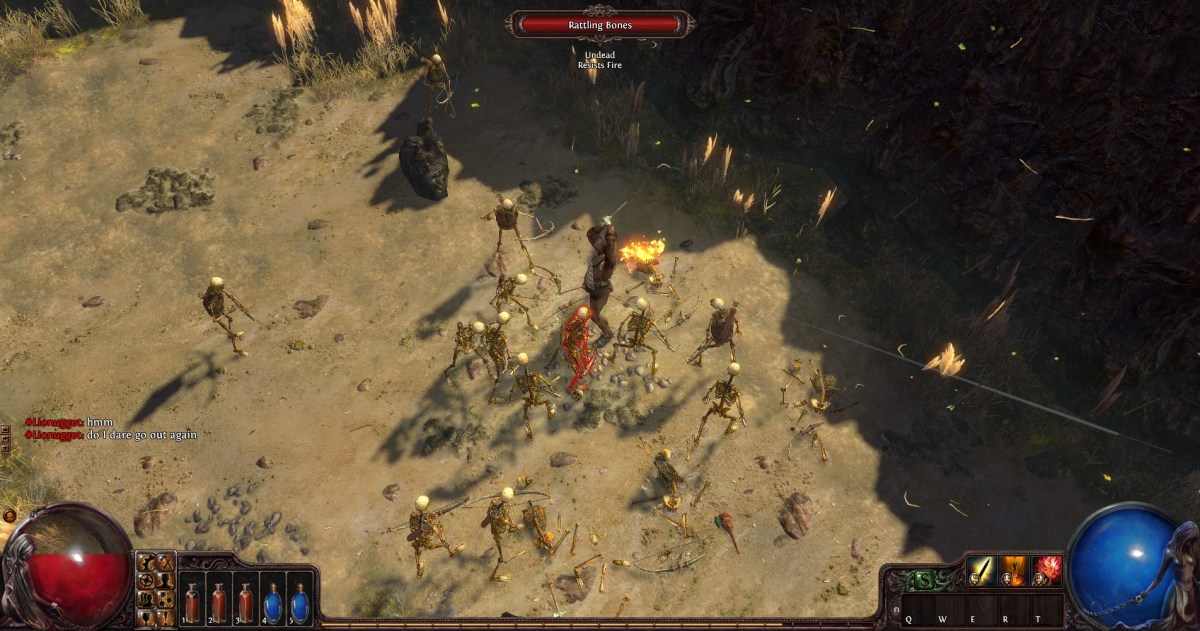
Path of Exile seems to have taken the best of all worlds when it comes to gameplay mechanics, with enough left standing that players from the Diablo and Torchlight games should be right at home. The game is full of your standard fare, you go around slaughtering thousands upon thousands of mindless shambling minions for experience and loot to upgrade your character and level up. There is your standard and hardcore modes, as well as temporary races and leagues set up with additional challenges. In place of the usual gold system, Path of Exile trades in items like identification scrolls and augmentation gems. Much like its predecessors, the vendors in Path of Exile don’t have much worth buying that can’t be easily replaced with something found in the field, so the game essentially does away with the accumulation of useless wealth entirely. So far, my only use for the vendor has been to purchase higher tier potion flasks.

Which brings me to another positive about Path of Exile: No health orbs. Path of Exile offers up five slots to fill with potions of health, mana, speed, etc. Being able to fill your potions through the simple process of laying waste your enemies is a massive improvement over Diablo II’s system of chugging potions and Diablo III’s system of mostly relying on health orbs. In this system, the potions are only as good as you are, although the idea of suddenly finding yourself with empty potions and low health can be mitigated by opening a portal, stepping back into town, being instantly refilled, and popping back. Overall you need to give in order to receive, and skillful players should find that they still allow for a brutal massacre, each kill fueling the next.

PathOfExile 2013-10-24 23-20-01-36

Leveling and abilities is where Path of Exile truly stakes a name for itself. In other ARPGs, you gain levels and receive points to invest in unlocking active and passive abilities on a skill tree. In Path of Exile, you are awarded points to invest in a massive network of buffs, ranging from boosted stats (strength, intelligence), better armor or health, increased damage, resistance, speed, etc. Your active abilities, on the other hand, are determined by gems socketed into your armor and weapons. There are three different colors of gems to coordinate with your equipment and they can be easily added and removed with a simple mouse click. The gems gain experience as long as they are socketed and can be leveled up much like your character. Leveling gems is a task in and of itself as with each level the requirements to carry the gem increase. It is very likely that your gems will occasionally require more to level up than you can give, halting their progress until you raise your base stats (strength, dexterity, intelligence, etc).

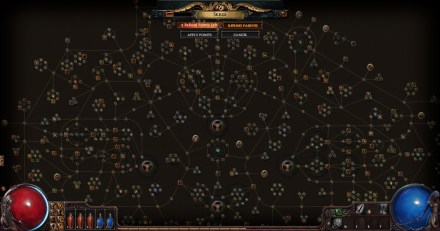
The passive tree, on the other hand, is massive to the point that it is intimidating to new players. Take a look at the image below, and then understand that only about half of the full tree is showing. You start off at one end and branch out as you see fit, taking in bonuses along the way. The benefit of this system is that buffs are stacked in an order that the casual player should be capable of finding his way around without gimping his character, while allowing any class to take on any role. Want to transform your witch into a tank? Your Ranger into a healer? There’s an app for that, and a calculator to help you do so as efficiently as possible.

2013-10-28_00004

So the game looks great and has enough appeal for the less attuned and the seasoned veterans alike. So now let’s talk about the cash shop. Generally I can rip a cash shop apart in two seconds flat, but honestly I don’t have much to say here. The worst that this game has to offer is extra character slots, extra stash slots, and guild slots (default 30), which I don’t think a large portion of the population will make much use of. Otherwise, everything is cosmetic, and I do mean everything. Vanity pets, cosmetic item effects, alternate animations, and dances for some reason. You can’t obtain any of the cash shop items without paying for them, but you won’t find any detriment to your experience by not buying a vanity item. They are on the expensive side, but they’re just vanity items. This is the system that most players can only dream of having in their games.

And now it’s time to talk about the bad parts of Path of Exile. Before we get to that, let’s look at this turtle enjoying a raspberry.

tumblr_mt8r6vHSK41szz0w2o1_500

That’s a happy turtle. In the case of Path of Exile, I tried to ask myself the damning question of what would ultimately be the cause of my quitting the game, and the answer is desync. Not latency issues, desync. I play on a desktop connected via ethernet and my internet service is Fios Quantum, which offers a stable 63ms connection on Path of Exile. Desync in Path of Exile isn’t so much lag as it is your client synchronized with the server, meaning the character locations on your client reflecting their location on the server. This is a massive problem since it can make the game confusingly difficult. At its best, desync might cause you to think your attacks are missing when in reality the creature isn’t actually standing there, at worst it will get you killed.

The worst desynchronization I have seen involves creatures dying a full two seconds after they were hit, other mobs simply vaporising out of existence or into existence, and finding myself suddenly surrounded by a group of mobs only to be hacked to death. Desync is especially terrible in creatures who are capable of blink-movement (teleporting around), and those that either suicide bomb you or explode upon death. I have also experienced the frustration of attempting to retreat from attacks only to find myself randomly yanked back twenty yards with the creatures that had previously been about fifteen feet behind now encircling my avatar. Naturally the problems with desync only seem to affect you considering mobs have no problem targeting and attacking your character while you flail around trying to figure out if the problem is your accuracy rating or if you really just missed a special attack four times in a row.

2013-10-26_00004


Final Verdict: 8.5/10

I had a lot of fun with Path of Exile. It is a great looking game with an excellent soundtrack and solid gameplay that keeps the genre back in its roots while pushing it in the right direction. This game has a lot going for it, and can only get better as time passes assuming that GGG doesn’t fall down the cash shop rabbit hole. You won’t find many games that offer as much as Path of Exile does for free, or go as far as getting rid of the idea of pay for convenience. I’m sure Grinding Gear Games could make a lot more money in this genre by selling experience tokens and similar items, so the fact that they refuse to is an excellent sign of the company’s dedication.

That said, nothing hurts like losing a hardcore character to desync, or being booted out of the nemesis league because of some poorly coded anti-hack mechanic. With that in mind, I have to give Path of Exile an 8.5 out of 10 on MMO Fallout’s meaningless point-o-meter. The game is 100% free and available on Steam, you should try it out for yourself.

FFXIV Review Part 2: The Bad


ffxiv 2013-08-19 00-31-56-61

(Editor’s Note: This was originally supposed to be a one part article, but for some reason it was playing hell with the server, so it has been split up)

Now let’s talk about the negatives, starting with everyone’s favorite piece from 1.0: Levequests. Levequests are back and they are just as convoluted as they were in their past iterations. Levequests work by accepting them at an appropriate NPC, who then directs you to another area where you enter a specific location and “initiate” the levequest. This generates monsters that are specific to you and cannot be attacked by anyone else, and at the end you are rewarded bonus experience and gil. Remember the artificial limits I mentioned that were in that other game? They are back. Levequests are limited to six daily, however they roll over and stack for any days you miss or don’t run any. What this means is that the more dedicated players will quickly run out of things to do, since traditional quests are sparse and easily completed.

For now, players are power leveling by completing FATES, the game’s open quest system similar to those found in Guild Wars 2, Rift, Defiance, etc. The FATE system not only awards extremely generous amounts of experience, but they pop up fast enough that they are not only the best form of leveling up, but compared to the sparse story quests and limited levequests, they are the only viable option for a solo player to level up that doesn’t involve sitting around just killing stuff for base experience.

And I’ve already touched on this in the previous, very short impressions piece, but the more I look at it the more I believe that Square Enix hires their designers by going to McDonald’s, finding the people who weren’t qualified to work there, and ignoring them for the homeless person rummaging through the dumpster out back. Now that the server issues are mostly squared away, I can turn my attention to other choices that would qualify under “why didn’t you learn this the first time?” Like the horrible chat interface that forces you type a person’s name in if you want to blacklist their chat, making blocking goldfarmers just about impossible when they are either spamming too fast to writer their names down or, god forbid, their name uses confusing or special characters that can’t be replicated on an American keyboard. Forgetting an easy ignore button in an MMO is something I’d expect from a startup company, not from a game that is built from the remains (and lessons) of one of the worst launches in gaming history.

There are plenty of rookie mistakes that Square continues to make, including the total lack of an AFK kick function resulting in unnecessary server congestion, being unable to leave chat on “shout” and having to select it every time, the fact that you have to log in to multiple different websites to manage various aspects of one account, and the total lack of defense against gold spam.

ffxiv_09092013_082834

I did my best to review Final Fantasy XIV: A Realm Reborn without thinking about the MMO’s prior release, but I found that the game is just too deeply burned into my brain to not make comparisons. That being said, I think that people who even slightly enjoyed the original MMO will be very happy to see the improvements that Square Enix has made. Those of you who are just coming in for the first time will either be overjoyed or disappointed to know that FFXIV doesn’t deviate from the standard MMO spectrum all that much.

If you put a gun to my head and asked for a numerical score, I’d give it a 9.0 out of 10. Yes it isn’t perfect, and I’m sure there are a lot of people who simply will not like it. I can see myself paying the monthly subscription for this, which is a lot more than I can say for most other MMOs.

RuneScape: Divination Skill Impressions


divination

Divination is the latest skill to be released in RuneScape, and it is certainly interesting. The premise of the skill is that after the god Guthix is assassinated, the resulting fallout caused immense damage to the world in which the game takes place. Guthix’s life energy dispersed in the form of wisps, a combination of divine energy and memories. The divine energy is the force that once protected the world of Gielinor, but was shattered and sent raining down from the heavens upon Guthix’s death. By harvesting wisps for their divine energy and memories and return them to various craters located around the world, in the hope that this will heal the damaged planet.

It’s important to remember that Divination is a gathering skill, not unlike Fishing, Woodcutting, Mining, etc. With that knowledge, training Divination is a slow trudge through a seemingly endless bog of grind. You start out at level one with the basic wisps, and every ten levels you leave your current spot and make your way to the next tier of wisps. An oversimplification? Yes, but if you play RuneScape then you already know that this is generally how gathering skills work, except Divination doesn’t give you the piles of items to sell off at the end of the day.

As a gathering skill, Divination is meant to complement other skills. Fishing gives resources to cooking, mining to smithing, farming to herblore, etc. Divine energy can be weaved into portents and signs, powerful items that are carried in the inventory and activated automatically. These items offer benefits including automatic healing once your health drops below half, the ability to save more items upon death, increased gravestone timers, resurrection on the spot, automatic banking of items collected, and more.

divination2


Divine Locations are one of Divination’s odder creations. Locations are essentially skill hotspots that are weaved and placed down, allowing anyone around to harvest before it disappears (generally after 30 seconds). The lesson to take home is sharing is caring, and Divination rewards plopping down your divine location in a crowded area by just handing you resources as other players harvest them. The downside to divine locations is that only one can be put down per day, and you can only harvest a limited amount of those created by other players.

And finally, players have access as they level up to abilities that allow them to “upgrade” resources of lower level to those of higher level. While it sounds cool to convert three coal into a mithril ore, or two trout into a tuna, the RuneScape Wiki shows that you’d be better off just selling the resources and buying the higher material at a profit.

Ultimately, Divination is a means to an end. Divine energy can be traded to other players at the benefit/cost of experience gain. Many signs and portents can be traded, but odds are most of your divine energy is better spent boosting your experience gain towards the next tier of wisps.

City of Steam: The Good, The Bad, And The Steamy


chrome 2013-05-12 01-09-08-47

I’ve previewed City of Steam several times in the past, and I am very happy to see that the game is in a state of “soft launch,” ie: technically still in beta but the characters aren’t going to get wiped. In the past previews, I have pointed out that City of Steam isn’t breaking much ground in terms of gameplay: You talk to NPCs, take quests, go into dungeons, and kill stuff while looting stuff. The stuff you loot is equipped if it is better than your current stuff, or you can sell it to an NPC in return for medicine to heal you while you hunt for more stuff. What it does do is package a game that is familiar to all and deliver it without a client download.

So City of Steam isn’t so much a revolution of the genre as it is a slight evolution. Still, that doesn’t stop it from being a very fun game to play, so let’s go through the good, the bad, and the steamy.

1. The Good
chrome 2013-05-12 10-36-55-76

City of Steam is the game that the folks at Unity should be utilizing to showcase the capabilities of their platform. The game runs entirely through the browser and manages to pull off amazing graphics without the need to sacrifice client stability or pull heavily from system resources. The engine powering City of Steam manages to render large numbers of objects, NPCs, and other players on screen with little to no performance drag or lag on the system.

At its core, City of Steam is closer to an ARPG than a traditional MMO, and that means you’ll be repeating content quite a bit in the search for more loot. Each hub area you come across has a number of dungeons, each of which carries the standard level which is used for many of your traditional quests and daily offerings. Each dungeon also carries two additional challenge versions that can be completed for extra rewards and involve tasks like killing a certain number of a certain monster, destroying objects, or opening chests. Quests are what you would expect from an mmo: killing things, collecting things, and talking to NPCs.

Although City of Steam throws you a lot of items that have no purpose other than stating in their description “sell me to a vendor,” the game makes excellent use of worthless equipment. Any weapons or armor you find can be salvaged into scrap metal, which can be used to upgrade your equipped items, leading me into my second favorite thing about City of Steam: Meaningful upgrades. My pistol, for instance, was able to be upgraded three times, bringing its damage rating from 9-14 all the way up to 24-37. Unlike many other games, City of Steam gives you a reason to keep your items for a good long time, essentially using the garbage you find along the way to add to the life span of the stuff you have equipped. It seems like a small part of the game from the outside, but the idea of your gear sticking with you longer than any other game would have it forms a deeper relationship between the player and their avatar.

City of Steam’s combat is solid, responsive, and attacks pack a real satisfying punch. The abilities you gain are useful, diverse, and rarely do you come across an ability that is functionally useless in one fashion or another. One of the hit or miss systems that appears in games like City of Steam is the factor of how much your character feels like a badass bringer-of-death on the battlefield, and City of Steam delivers ass kicking like it’s on the clearance rack at 75% off. Abilities are balanced pretty well, ensuring that you get to use your more powerful attacks without being too slow to recover.

2. The Bad

chrome 2013-05-11 00-50-17-99

City of Steam violates the Rule of Privileged NPCs, a rule I made up that stems from when game engines were too basic to support things like line of sight or barriers, so oftentimes the developers wouldn’t properly code NPCs to not be able to do things like see through walls or shoot through them. The mobs in City of Steam break both of these barriers. I have had times where an NPC is standing right next to me and attacking me with melee, yet my gunner was unable to attack back until I re-positioned her. Other times I have seen NPCs shooting through closed doors. It is obnoxious, and also a pain when you’re running down a corridor and npcs in nearby hallways are activated because their aggro is based on proximity without regard to line of sight.

This leads me to my second and last major engine complaint, about the game’s geography and pathfinding which I have complained about before. This doesn’t happen a lot, but there is an existing problem with your character either getting stuck on the geometry when using click-to-move, or having problems initiating attacks if your enemies are either near or on the other side of doorways, narrow passages, or corners. I haven’t died from it yet, but it does make some parts of the game frustrating when your avatar simply refuses to attack or falls into this bug where the character is “attacking,” yet not doing any damage.

As a fan of the closed beta period, I’m not all that happy that the game was thrown down the simplification tree and managed to hit every branch along the way. Challenge dungeons have had their timers removed, along with the race-against-the-clock feel that made the more difficult dungeons so enjoyably frustrating. The leveling system has also seen a severe oversimplification, with talent upgrades consisting of choices like putting 200 points into steam, health, or dividing equally between the two. The ability system is equally simplified into one of three choices at level intervals.

What is worse is that, like an apartment built over an ancient Indian burial ground, there are still spirits roaming around to haunt and confuse new players. Dungeon challenges still feature challenge “ranks” even though they are just about meaningless and in many cases are impossible to achieve anything other than the highest rank (boss challenges have the same objective for all three ranks). You still gain ability points, even though once you choose an ability for the corresponding rank set, you don’t have any choice but to put it into that skill.

The cash shop is also going to be a pin in many player’s sides. The “cosmetic” aspect of the equipment sold in the shop is a flat out lie. The cosmetic equipment from the shop increases experience gain, shilling gain, and also increases your base damage to the tune of $17-25 depending on what you purchase. In order to revive yourself on the spot, you need to pay electrum (cash shop currency), there are unused weapon slots on the cash shop, and the game regularly harasses you to increase your inventory size via electrum.

3. The Conclusion

Like a can of soda left out in the sun, City of Steam tastes like it has flattened since we last saw it. There is little doubt that the leveling system has been drastically reduced in complexity, and that the game has been reshaped primarily around the expanded and rather expensive cash shop. And it’s obvious where these sudden changes are coming from: R2Games, a publisher well known for its pay to win systems. Now, Mechanist Games continues to claim (as they have told us) that they have final say on anything that goes into the game, kind of like how a man with a gun pointed up to his head will tell the neighbor who knocked on his front door “no, I’m perfectly fine and home alone, no need to call the police.”

How do I know R2 is calling the shots? Simply, that is is the case in virtually every publisher relationship, it just comes with the business. Otherwise, you could look into the City of Steam FAQ and see that not only is it filled with spelling errors and Engrish, the section was so lazily written that half of the questions have absolutely nothing to do with City of Steam.

I recognize that City of Steam is in open beta, which is why I have not made a single comment about bugs (apart from issues I see being engine-related and therefore unlikely to be 100% fixed) and the fact that there are races and . Those of you who have read MMO Fallout in the past know that I love City of Steam, it is one of my favorite games to come out in 2013, and I liked it enough that I partnered with Mechanist Games to hand out keys during the closed beta. I am still having a lot of fun with the current incarnation of City of Steam, even though I question some of the decisions that Mechanist Games made, City of Steam remains a solid game with a solid foundation and it is something I can see myself playing for a long time.

Those of you who read MMO Fallout know that I refuse to traffic in “prospects.” Every game has the promise of eventually being something better, and I refuse to advocate for a game based on the perceived quality that it may speculatively reach some day. What I will say is that this is a testament to how awesome City of Steam was in the closed beta, that I can sit here and , and then turn around and say that regardless of some of the elements that were changed for the worse, City of Steam is still looking toward launch as an awesome game.