Planetside 2 Alpha Squad Prepurchase


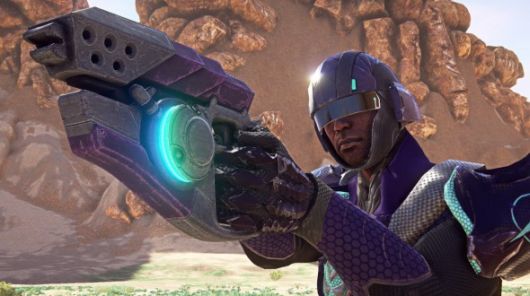
There seems to be a trend in MMO shooters lately. Both DUST 514 and Tribes: Ascend have offered pre-purchase packages, including benefits from currency to bonuses, and more importantly; beta access. Players intending on playing the game have an opportunity to both nab some exclusive items and gain access to the game early.

For $39.99, Sony Online Entertainment is selling the Alpha Squad package, including $40 worth of Station Cash, exclusive decals and titles, as well as instant beta access. The offer also includes twelve weapon unlocks. This package cannot be purchased with Station Cash. You are not sent a key, so access cannot be transferred.

While early access starts now, it is important to remember that Planetside 2 is still a long way from release. There will be regular server downtime, character wipes, and a whole lot of bugs and balance issues.

(source: Station Website)

Everquest & Everquest II: More Expansions!


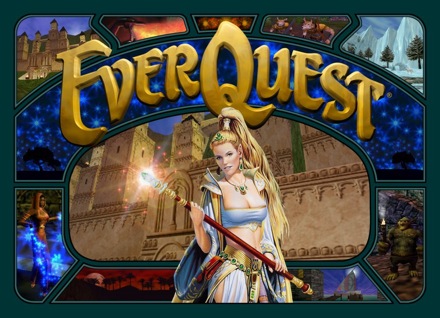
As I sat in my chair today, I thought: What does Everquest need more than anything? And like the small statue on the mantle above where I was sitting, the answer struck me like a ton of bricks. Everquest needs a nineteenth expansion. And before I could pull myself out of the concussion and contact Sony to pitch the idea, someone had already stolen and pushed it through.

First up: Everquest. Rain of Fear, the game’s nineteenth expansion, takes place directly after the events of House of Thule. Fresh from destroying a god, players will now find that crystalline shards are raining down on Norrath. If this means nothing to you, the expansion includes a level cap increase to 100, as well as thousands of new items, recipes, and spells. The expansion also includes new quests, raids, zones, and the ability to kill off halflings. And forget the rest of the notes, it’s about time those short demons got what was coming to them.

On to Everquest’s younger brother. Everquest II has unveiled its not-nineteenth expansion, Chains of Eternity. The expansion promises new items, a raised level cap, as well as new quests, a whole lot more loot, and new abilities to boot.

Both expansions are set for a November release.

(Everquest Expansion)
(Everquest II Expansion)

Sony Announces Player Studio: Create Items For Everquest


Sony Online Entertainment has done it again. Last night, John Smedley tweeted that there were two major announcements coming Thursday and Friday. No, they aren’t the shutting down of Planetside (nor are they the acquisition of Paragon Studios, so stop asking). The first major announcement, released today, involves the Everquest games, Vanguard, and Free Realms. Soon enough, players will be able to design their own in-game items, and sell them on the cash shop, and be paid for it!

More information will be revealed at Sony Live in Las Vegas. Players are currently able to play around with a program by Sony to get the feel and perhaps start working on their designs. Players will not be allowed to set the stats for their creations.

(Source: Official Website)

Everquest II's Goblin Games Seems Inspired By Squeal of Fortune


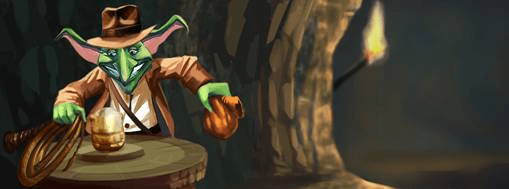
I have to imagine that somewhere out there, at least one person has stopped playing RuneScape because of Squeal of Fortune, and wound up playing Everquest II instead. The odds are low, incredibly so, but with time my mind seems to think that such a person must be, and gee, will this news stink. For the uninformed, Squeal of Fortune is a cash shop game on RuneScape where players receive spins either through in-game activities, purchased through the store, or daily as an allowance. The mini-game is hosted by a goblin and has the chance of winning gold, resources, and equipment.

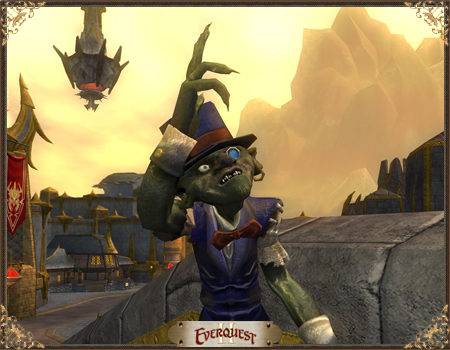
Today, Everquest II revealed the latest update: The goblin games. In this mini-game, players are issued tickets on a monthly basis, depending on their membership status, with the option to purchase more on the cash shop. Those tickets can be used to play one of several mini-games, each of which ultimately ends up in the player receiving a loot box that offers a random item from the list.

So what are the differences? In RuneScape, spin tickets are given on a daily basis while in Everquest II free tickets are offered monthly. Both games offer one ticket to free players and three to members (in RuneScape it is normally two, three for the summer event). In RuneScape, spins cost approximately $5 per ten tickets ($.50 per ticket) with bonuses for higher quantities, while in Everquest they cost $1 per ticket with no option to purchase in bulk.

Maybe I’m just reading too far into this.

Everquest II’s Goblin Games Seems Inspired By Squeal of Fortune


I have to imagine that somewhere out there, at least one person has stopped playing RuneScape because of Squeal of Fortune, and wound up playing Everquest II instead. The odds are low, incredibly so, but with time my mind seems to think that such a person must be, and gee, will this news stink. For the uninformed, Squeal of Fortune is a cash shop game on RuneScape where players receive spins either through in-game activities, purchased through the store, or daily as an allowance. The mini-game is hosted by a goblin and has the chance of winning gold, resources, and equipment.

Today, Everquest II revealed the latest update: The goblin games. In this mini-game, players are issued tickets on a monthly basis, depending on their membership status, with the option to purchase more on the cash shop. Those tickets can be used to play one of several mini-games, each of which ultimately ends up in the player receiving a loot box that offers a random item from the list.

So what are the differences? In RuneScape, spin tickets are given on a daily basis while in Everquest II free tickets are offered monthly. Both games offer one ticket to free players and three to members (in RuneScape it is normally two, three for the summer event). In RuneScape, spins cost approximately $5 per ten tickets ($.50 per ticket) with bonuses for higher quantities, while in Everquest they cost $1 per ticket with no option to purchase in bulk.

Maybe I’m just reading too far into this.

Falling Out #12: An MMO Far, Far Away


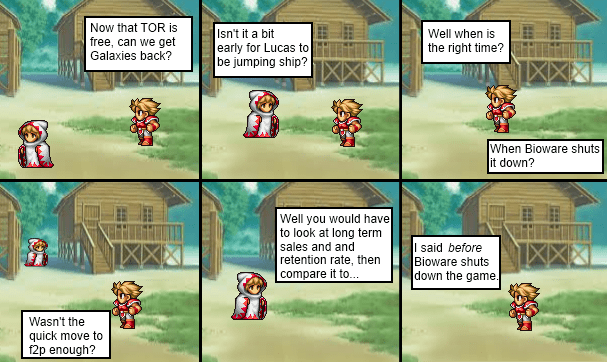
Regardless of The Old Republic, do you think it’s about time Lucas Arts lets Sony bring back Galaxies?

ProSiebenSat.1 Deal Altered, More Titles Heading To Europe


You may remember back in February when Sony Online Entertainment announced that they would be opening up a multi-year partnership with European ProSiebenSat.1 Games Group. The list of games affected includes DC Universe, Everquest II, Free Realms, Everquest Next, and Planetside 2. Oddly enough, and without explanation, the list did not include Everquest, Vanguard, and the upcoming Wizardry Online, leading to speculation that ProSiebenSat simply wasn’t interested in the titles.

Well, bad news bears (those of you expecting that Sony would continue hosting said titles in Europe). Today Sony announced that the deal with ProSiebenSat.1 has been expanded. The set list is to include the aforementioned Everquest, Vanguard, Wizardry Online, and the recently released Bullet Run.

“ProSiebenSat.1 is the ideal partner for us to reach an even broader audience in Europe. We are confident that the combination of the media power provided by ProSiebenSat.1 and our expertise in developing high-quality online games will appeal to players in a new and captivating way, creating the perfect prerequisite for achieving great success with our games in Europe.”

The community is once again split over this decision.

(Source: Everquest Forums)

Why Aren’t You Playing: Bullet Run


Whenever I hear about free to play shooter MMOs I think of one thing: over-extensive cash shops. I think about time-limited cash shop weapons and upgrades, with the option of spending a very long time grinding through kills in order to nab that better weapon. For myself, and a number of others, such titles start out fun but quickly lose their edge as the slow grind to achieve new weapons becomes longer and what might normally be random, mindless violence is now less enjoyable than slogging through quests in a fantasy MMO. Thankfully, Bullet Run is not that title.

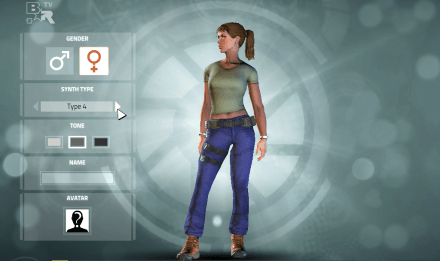
First things first, before you can start shooting people you must create an avatar capable of holding an automatic weapon. Character customization at creation is virtually nonexistent. Apart from a type, tone, and gender, there isn’t much you are able to alter about your avatar. All characters start with the same basic submachine gun. The in-game marketplace is used to purchase additional cosmetic gear as well as new weapons and attachments, both of which can be purchased with either Station Cash or currency acquired through regular play.

Talking about Bullet Run’s gameplay aspects almost seems redundant, because if you’ve played any other recent first person shooter, you already know what to expect. There are two game modes present, Team Deathmatch and Dominion. The former features two teams of players sparring over a set of maps to see who can rack up the highest score in the time allotted. Dominion, on the other hand, has one team attacking a set of nodes as the other team attempts to defend the map. Dominion is played in two halves, allowing each team a chance to attack and defend. As you complete matches and kill other players, you gain experience and currency which are used to level up and purchase additional weapons and attachments. Abilities are docked and slowly build up a charge over the course of the match as you kill enemies and gain points, and encompass everything from mobile turrets to massive chainguns.

As far as cash shop titles go, Bullet Run scores a few points with its durability system. In many other free to play shooters, items offered on the marketplace are limited by time, often times not allowing the player to purchase a permanent version with in-game currency (assuming one exists at all). Once the time limit has passed, your purchased weapon is useless. In Bullet Run, weapons operate on a durability system  where the weapon must be repaired with either Station Cash or currency. The advantage of the system, however, is that even if you allow the durability to run out, the weapon can still be used at a 10% loss in damage. And considering the fast paced nature of Bullet Run, a 10% drop in your gun’s effectiveness isn’t going to lose you any battles.
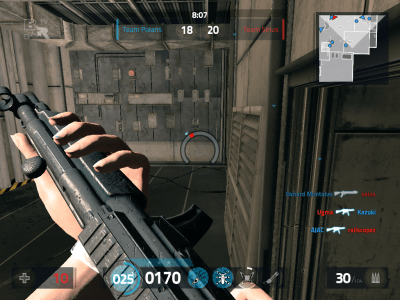
Playing Bullet Run isn’t all run and gun, however. One feature added to give an advantage to players who can keep their cool under stress is a sliding bar when you reload. If you have decent reflexes, you can easily receive a speedier reload and some point bonuses as well. On the other hand, you can let the reload take its course, or risk jamming the gun and leaving yourself open to attack. When you find someone in a tight corridor and both of you empty your clips, the reload bonus can mean the difference between life and death.

Where Bullet Run falls short is content, the game lacks variety in almost every sector possible. Most important: There are only two modes to choose from, Team Deathmatch and Dominion. And while the marketplace plays host to a wide assortment of guns, the cosmetic clothing and hairstyles offered are few. Even the commentary by the characters in-game is lacking, with the same phrases being repeated over and over. The end result is that Bullet Run feels incomplete, as if the game had launched as soon as there was a stable product to show, rather than waiting until more content could be added. This isn’t to say that Bullet Run is a bad game by any means, it functions as intended, is fun to play, and the cash shop is much more player-friendly than similar titles.
With further development, and assuming Sony doesn’t cut the game short like a certain other developer, Bullet Run will enjoy a loyal following of shooter fans.

Pros:

  1. Generous cash shop: Weapons/Attachments can reasonably be purchased with in-game currency.
  2. Functional: I didn’t come across any notable bugs, and the servers even managed to stay stable on launch night.
  3. Stable: Lag was not a problem in any of the matches I played.

Cons:

  1. The game lacks content.

Why Aren't You Playing: Bullet Run


Whenever I hear about free to play shooter MMOs I think of one thing: over-extensive cash shops. I think about time-limited cash shop weapons and upgrades, with the option of spending a very long time grinding through kills in order to nab that better weapon. For myself, and a number of others, such titles start out fun but quickly lose their edge as the slow grind to achieve new weapons becomes longer and what might normally be random, mindless violence is now less enjoyable than slogging through quests in a fantasy MMO. Thankfully, Bullet Run is not that title.

First things first, before you can start shooting people you must create an avatar capable of holding an automatic weapon. Character customization at creation is virtually nonexistent. Apart from a type, tone, and gender, there isn’t much you are able to alter about your avatar. All characters start with the same basic submachine gun. The in-game marketplace is used to purchase additional cosmetic gear as well as new weapons and attachments, both of which can be purchased with either Station Cash or currency acquired through regular play.

Talking about Bullet Run’s gameplay aspects almost seems redundant, because if you’ve played any other recent first person shooter, you already know what to expect. There are two game modes present, Team Deathmatch and Dominion. The former features two teams of players sparring over a set of maps to see who can rack up the highest score in the time allotted. Dominion, on the other hand, has one team attacking a set of nodes as the other team attempts to defend the map. Dominion is played in two halves, allowing each team a chance to attack and defend. As you complete matches and kill other players, you gain experience and currency which are used to level up and purchase additional weapons and attachments. Abilities are docked and slowly build up a charge over the course of the match as you kill enemies and gain points, and encompass everything from mobile turrets to massive chainguns.

As far as cash shop titles go, Bullet Run scores a few points with its durability system. In many other free to play shooters, items offered on the marketplace are limited by time, often times not allowing the player to purchase a permanent version with in-game currency (assuming one exists at all). Once the time limit has passed, your purchased weapon is useless. In Bullet Run, weapons operate on a durability system  where the weapon must be repaired with either Station Cash or currency. The advantage of the system, however, is that even if you allow the durability to run out, the weapon can still be used at a 10% loss in damage. And considering the fast paced nature of Bullet Run, a 10% drop in your gun’s effectiveness isn’t going to lose you any battles.

Playing Bullet Run isn’t all run and gun, however. One feature added to give an advantage to players who can keep their cool under stress is a sliding bar when you reload. If you have decent reflexes, you can easily receive a speedier reload and some point bonuses as well. On the other hand, you can let the reload take its course, or risk jamming the gun and leaving yourself open to attack. When you find someone in a tight corridor and both of you empty your clips, the reload bonus can mean the difference between life and death.

Where Bullet Run falls short is content, the game lacks variety in almost every sector possible. Most important: There are only two modes to choose from, Team Deathmatch and Dominion. And while the marketplace plays host to a wide assortment of guns, the cosmetic clothing and hairstyles offered are few. Even the commentary by the characters in-game is lacking, with the same phrases being repeated over and over. The end result is that Bullet Run feels incomplete, as if the game had launched as soon as there was a stable product to show, rather than waiting until more content could be added. This isn’t to say that Bullet Run is a bad game by any means, it functions as intended, is fun to play, and the cash shop is much more player-friendly than similar titles.

With further development, and assuming Sony doesn’t cut the game short like a certain other developer, Bullet Run will enjoy a loyal following of shooter fans.

Pros:

  1. Generous cash shop: Weapons/Attachments can reasonably be purchased with in-game currency.
  2. Functional: I didn’t come across any notable bugs, and the servers even managed to stay stable on launch night.
  3. Stable: Lag was not a problem in any of the matches I played.

Cons:

  1. The game lacks content.

Sony Will No Longer Sell Expansions For Station Cash.


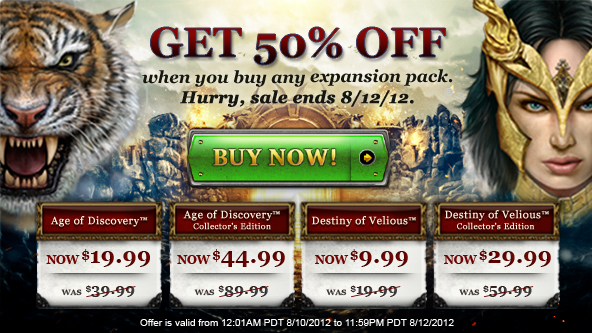
Two months ago, Sony Online Entertainment incited a backlash from the community by removing the ability to purchase subscriptions with Station Cash without notice. In learning from their past PR mistake, Sony has offered players prior notice before their next change. Beginning Monday August 27th, it will no longer be possible to purchase expansion packs on Everquest I & II or DLC packs on DC Universe with Station Cash. For the next day or so (until early morning August 13th), players will be able to purchase expansion packs at 50% off.

Unfortunately, the cause of this change in marketing is due to the substantial cost in content development clashing with Sony’s desire to continue running double and triple Station Cash promotions, as well as free Station Cash for subscribers. The two deals combined into an unsustainable, low level of income.

(Source: SOE Announcement)