I have a feeling that we’re going to be seeing a lot more of Gaikai around here for the foreseeable future. Two weeks ago I talked about Turbine’s plan to bring a limited trial for Lord of the Rings Online and Dungeons and Dragons Online to Gaikai, an online streaming service where players would be able to play a very limited version without having to download a massive client. Following that news, CCP Chief Marketing Officer David Reid has talked to Eurogamer to discuss bringing Eve Online to Gaikai or Onlive in some form.
“We think it’s a really important way to not just play the core Eve Online gameplay – that you do play today principally on the PC and on the Mac – but also to add new sorts of experiences – when you think about Planetary Interaction in Eve Online right?”
It is important to note that whatever happens is still a very long way off, and we may not see anything come of this until 2013. MMO Fallout will be paying close attention for more details.
The moment you have all been waiting for and already knew was coming, has come. Sony Online Entertainment has announced the upcoming free to play transition of Vanguard: Saga of Heroes.
Therefore, I’m happy to announce Vanguard will be the next in line of our AAA games to make this transition. Since we’ve literally just begun on the work, I’m not ready to go into much detail. However, I will say that you can expect something similar to EverQuest®, EverQuest® II and DC Universe™ Online when we roll-out our free-to-play offering this summer. Once we have more information to share, you’ll be the first to know.
In addition, the announcement goes on to reveal that Vanguard will also be receiving regular content updates, and that there are some new and old faces returning to the development team.
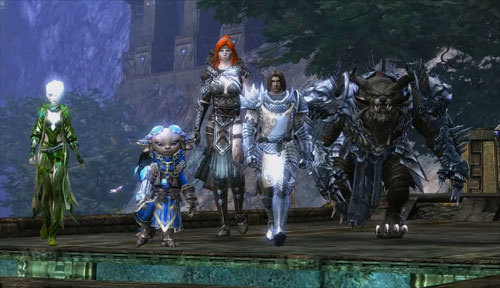
In Guild Wars 2 we have three currencies: gold, karma, and gems. Gold is the common in-game currency. Karma, which players earn in-game but cannot trade, is used for unique rewards. And gems are the currency that’s bought and used to purchase microtransactions.
Mike O’Brien has gone on Arenanet’s blog to post about Guild Wars 2’s upcoming microtransaction system. In the post, Mike notes that while the content in the shop has not been finalized, the framework is in place to support it. Mike went on to state that the policy with Guild Wars 2 will be that any player who buys the game should be able to fully enjoy it without having to continue paying, and that players should never be allowed to pay for an advantage, and that the cash shop will be used to buy cosmetic items, convenience items, and account services.
One addition that might surprise Guild Wars 2 players is the legitimized Real Money Trading system, ala PLEX in Eve Online:
We have a new player-driven market that allows players to trade gold for gems and gems for gold. If you want something, whether it’s an in-game item or a microtransaction, you ultimately have two ways to get it: you can play to earn gold or you can use money to buy gems. We think that’s important, because it lets more players participate on a level playing field, whether they use their free time or their disposable income to do it.
The cash-for-gems system will provide Arenanet with a substantial potential revenue increase, as the system has worked for Eve Online with PLEX and World of Warcraft with the recent pet addition.
We have always taken our responsibility to players seriously with the original Guild Wars, and we will continue to do so with Guild Wars 2. We believe the foundation I’ve described here is the right foundation for us to build upon, and we look forward to sharing more details with you in the future as we nail down our microtransaction content..
Talking to Eurogamer, Producer John Lagrave admitted that the launch of The Old Republic has had an effect on World of Warcraft’s subscription numbers. Lagrave goes on to talk about possibly extending the current World of Warcraft unlimited trial (up to level 20) to level 40, or even level 60, but with a firm reminder that Blizzard has no plans to take the MMO to a free to play model, as Blizzard still feels that the game runs best as a subscription.
“Of course people are trying Star Wars – our development team are trying Star Wars! I’m one of the few people who’s still playing it actually, but yeah we’ve seen a dip in subs. It certainly has to at least be attributable to The Old Republic, but it’s also attributable to people who want to wait and get Mists of Pandaria, so it’s not surprising.”
Blizzard is one of several developers to be very open about their loss of subscribers, and one of the few companies to actually post a base figure of how many are still playing. Up until recently, a major portion of Blizzard’s dropped subscribers have been attributed to losses over in China where the rate of income per user is lower than in the West, in territories including China where users pay for World of Warcraft like a prepaid phone (adding hours). Blizzard also attributes some of the loss to players to a need to release more content at a faster pace, as players complete it. Meanwhile, the expansion of the cash shop has more than made up for the loss of subscribers, leading to higher revenue each quarter.
In the face of 1.7 million subscribers for The Old Republic, Blizzard is looking to entice its previous customers to return and current customers to remain so. Back in October, Blizzard launched the expanded Annual Pass offering a free copy of Diablo 3, a spectral mount, and guaranteed access to the Mists of Pandaria beta (The Diablo 3 promotion ends May 1st, if you were thinking about signing up). Just recently, Blizzard launched the Scroll of Resurrection campaign, offering an upgrade to Cataclysm, a free level 80 character, and free faction/server changes for the recipient.
As part of our ongoing efforts to maintain an active, competitive, and engaging experience in WAR we have decided to open free transfers for players to specific servers. WAR, more than many games, only gets better with more people. These transfers will enable players to experience more action during all hours whether fighting in scenarios or Open RvR.
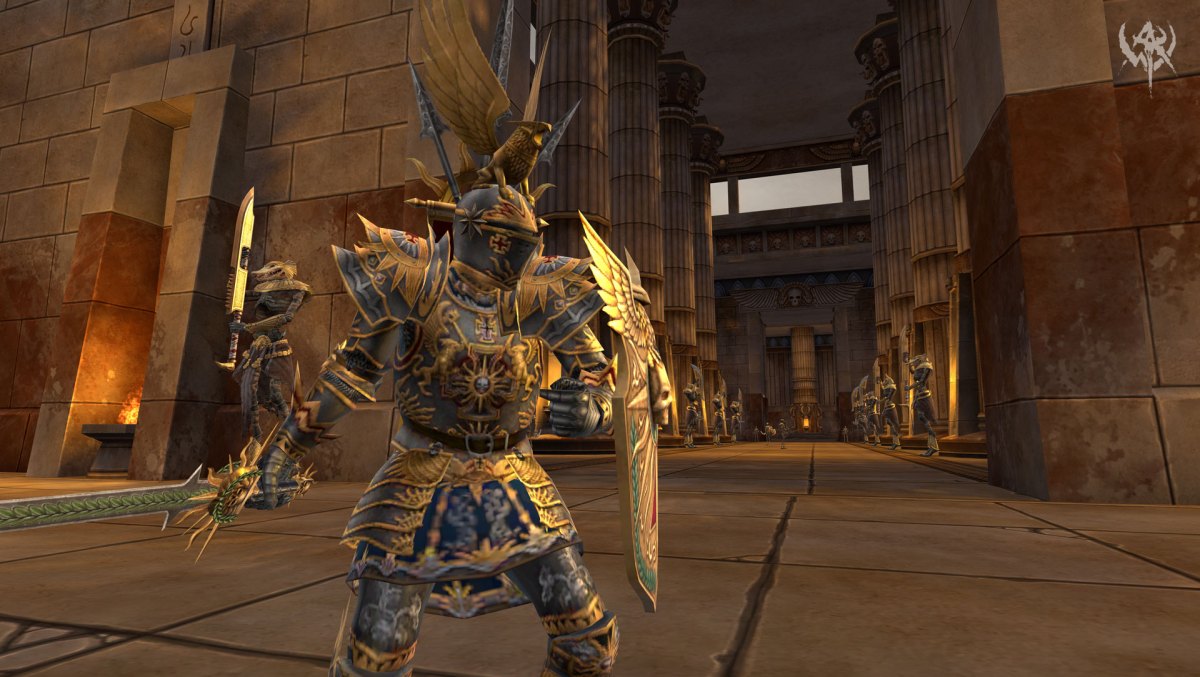
Absolutely true, and if there is one thing that Warhammer Online could use, it is more people. By now, Warhammer players should be well tuned with the process. Starting tomorrow, Drakenwald will be marked as a “legacy server,” disabling the creation of new characters. Existing characters are free to transfer to Badlands or Karak Norn for three weeks until the server is deactivated and you will be forced to transfer anyway.
On the other hand, Warhammer has almost run out of servers to close down.
“From the mediocre game that nobody bought and doesn’t really like that much, comes a big giant version of that game!”
-Todd McFarlane
Todd has a point. Kingdoms of Amalur: Reckoning released one month ago and sales figures place the title at over one third of a million sales. Now that gamers are well versed in the realm of Amalur and the inner working concepts of fate, the team at 38 Studios is instituting phase two of Operation Franchise: Release an MMO. Labeled Project Copernicus, the Kingdom of Amalur MMO is set for release later this year, 2012.
I have my own concerns over Amalur’s prospects for a 2012 release. Assuming the game can hit its 2012 release, the folks at 38 Studios will be competing against The Secret World, TERA, Guild Wars 2, the new World of Warcraft expansion, Neverwinter, and more. Never mind the recent and future free to play transitions of existing MMOs, of course the existing market as it is.
I have high hopes for Amalur Online (my name), but I also recognize the kind of risks that are taken when a developer puts out an MMO for the first time. Crafting an MMO is very different from creating a single player game, and 38 Studios did the smart move by creating a fan base and setting out a base expectation for quality.
More on Amalur Online (not the actual name) as it appears.
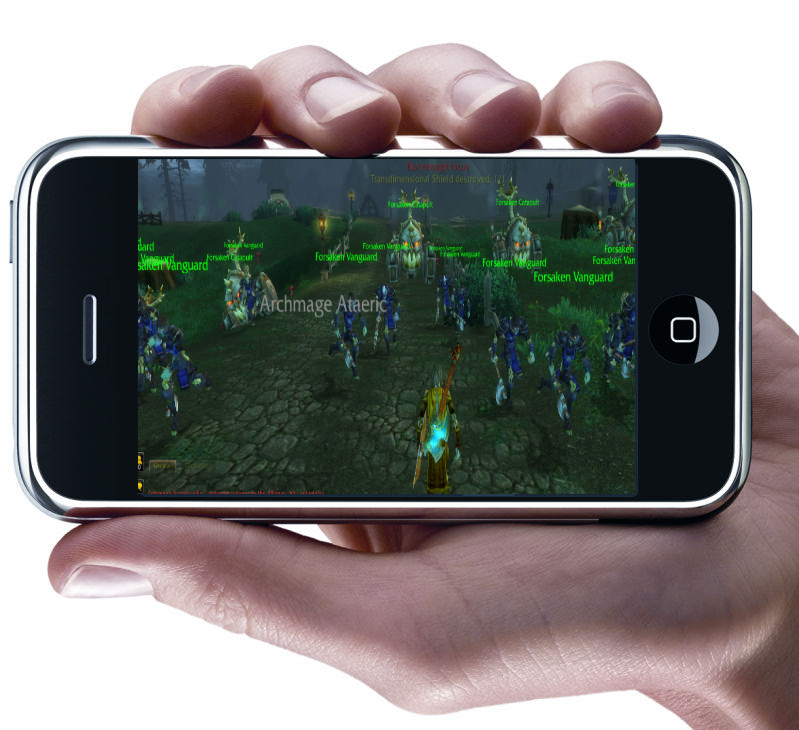
As a reasonable person, I’ve always said that the day that major MMOs like World of Warcraft and Everquest are readily available on mobile platforms will be heralded as the day productivity died. That being said, Blizzard will not accept no for an answer, and is always on the lookout for a way to bring World of Warcraft to the iPhone.
Speaking to Eurogamer, Senior WOW Producer John Lagrave discussed the challenges involved in bringing a massive online game to such a small platform, from UI to controls, to chat and beyond.
“So we certainly look at that, but we just haven’t solved it. What we’ve done with WOW on mobile devices is very simplistic: view the armoury, you check your auctions – not just on mobile but also on web.
So it might be a while before you are explaining to your boss that you were only late from lunch because the Lich King was tanking more damage than usual, but if Blizzard has any say in it that time will be sooner than you think.
As a college student living off of what I can, I am sympathetic to the plight of people who cannot afford to buy a new computer. Unfortunately, the time comes in any game’s life where those who for one reason or another are unable to upgrade, are left behind, and generally developers ensure that this comes at a time when it affects as few customers as possible. After all, no one likes having a game they bought and probably invested in subscriptions or cash shop items stripped away from them.
For Guild Wars, Arenanet has announced that on June 14th, 2012, the game will no longer support Windows 95, 98, 98SE, and Millenium Edition. According to Stephane Lo Presti, this should impact less than .05% off the community.
Since the launch of Guild Wars in 2005 we’ve stayed locked into our original minimum system requirements. Unfortunately, the game has reached a point where this is preventing us from deploying important features.
For Wine users, whether or not Guild Wars will still function is up in the air as it is unsupported.
I love sandbox MMOs and nothing gives me a better feeling than having a good discussion around what the genre needs to evolve. In the past, I’ve used this website to discuss my discontent with the fact that sandbox MMOs could be so much more but often devolve into random death matches with extensive crafting systems implanted. A lot of this stems from the freedom and punishment system, what the developers allow players to do and what players can expect to be “punished” for doing. For the sake of this conversation, I am not referring to bug abuse or exploits, but intentional systems that are purposefully planted to create gameplay.
Here at MMO Fallout, I adhere to the basic process that the community reflects the game, it isn’t a coincidence. So if you have a game where resources can be drained permanently (Wurm Online), you will have players dedicated to draining those resources if only to ensure that no one else can have them. If your game centers around player vs player combat, than you will form a community of gankers and player killers. And, of course, if you create a world that is completely safe you will end up with high-end characters who may have never figured out basic features.
By implementing features in a game and then telling players that they are expected to not engage in such activity, the activity itself simply becomes more appealing to a wider base. Ren and Stimpy fans will know this as the big red button effect.
That being said, sandbox MMOs are all about having a certain level of freedom above and beyond other games, and that level of freedom opens the door for people to act like jerks. Let’s go back to the resource drain conversation: Say you wanted it to be possible for players to deforest an area in order to construct buildings in the new fields. How do you stop a clan of people from griefing and deforesting large portions of the map for little more than “giggles?” The answer I get from developers is “we let the community police itself.”
I can’t say this enough: The community doesn’t police itself. No one is going to stop Tom over there from deforesting the neighborhood, and odds are no one will come to the defense when Tom heads over to the newbie zone in full top-level gear and starts a genocide of new players. I’ve played far too many free for all sandbox MMOs to know that this community policing never happens. In Eve Online, players have a measure of built-in defense in the form of high security space with NPC guards. For MMOs like Mortal Online, you are either in 10.0 (highest security) or 0.0 (lowest), there is no middle ground.
There are many ways to deal with our lumberjack Tom. A system of fatigue can make it prohibitive for a small group to deforest an area. Allowing players to take ownership of land and situate NPC guards to keep out specific players known to grief, having only certain trees able to be uprooted, or making the replanting of trees just as easy as the destruction. This goes back to the original problem, however, of requiring a developer willing to implement systems more complicated than solving all of your problems by stabbing them.
Some MMOs solve this with automated prison systems: Become a notorious criminal and you will eventually be caught and thrown in jail, where you will be forced to do menial repetitive tasks in order to be released. Just recently I talked about the plan in Dominus to allow players to put bounties on gankers, going as far as allowing the player to keep reissuing the bounty as long as he can afford to pay for it, and selectively choosing who is allowed to take on the bounty.
Preventing lumberjack Tom from deforesting an area with his cohort of griefers is a much more difficult task than punishing someone for killing too many newbies, and I’ll admit that my ideas presented above may not be reasonable when experimented in an actual sandbox MMO. But if a developer wants to put in a system by which players can theoretically drive a species to extinction, or deforest a zone, or deplete an area’s resources, they need to have some sort of system in place to compensate for when such an event occurs, because it will happen without a doubt and when players feel that they are unable to do anything about griefing, the number of players griefing will increase and the grieved will simply quit.
And I don’t want to imply that our Tom character is always a jerk, or a bad person. MMOs by nature attract players who strive to do the impossible, often for no reason other than to say that they were able to do it. Everquest created a dragon that could not be killed, players worked tirelessly to try and kill it. World of Warcraft placed its bosses in open world environments, players managed to rope them into major cities.
There is a middle ground between freedom and regulation that sandbox MMOs need in order to survive, which is why more structured titles like Eve Online have gathered more than 350,000 subscribers and on the opposite end we have games like Mortal Online and its inability to profit, and Earthrise bankrupting its developer.
I would love to see Eve Online’s structure translated to a fantasy-themed MMO.




 In Guild Wars 2 we have three currencies: gold, karma, and gems. Gold is the common in-game currency. Karma, which players earn in-game but cannot trade, is used for unique rewards. And gems are the currency that’s bought and used to purchase microtransactions.