Forbes Accidentally Leaks Diablo III On Switch


Whoops!

Blizzard was hoping to WoW the world tomorrow with the announcement that Diablo III would be coming to the Nintendo Switch, a reveal that may go down as one of 2018’s worst kept secrets thanks to a long series of rumors and possible teasers that the game would indeed be coming to the platform. Unfortunately Forbes blew the news a bit too quickly, with coverage of the embargoed news briefly going online before quickly being pulled off.

As they say, the internet never forgets, and intrepid young sleuths were able to get their hands on the announcement and its details. It looks like the game will be sold as the Eternal Collection, including Reaper of Souls and the Rise of the Necromancer expansion, and will also include a number of Nintendo exclusive cosmetics. Cosmetics include the Ganondorf cosmetic armor set (naturally), tri-force portrait frame, and chicken pet and Echoes of the Mask wings.

Diablo III on Switch will also allow up to 4 players on a single system, four players on separate systems wirelessly, and online on Nintendo Switch (launching in September) and will cost $59.99. Forbes’ details were confirmed by Kotaku who also had access to the embargoed news. As Nathan Grayson points out, this is also the first Blizzard game on a Nintendo system in 15 years.

Blizzard is reported to have several Diablo projects in the works, with this presumably being one of them. Most assuredly there are more announcements in the works, however your guess is as good as ours on when Blizzard is ready to have them leaked announced.

IPE Update: Court Issues Ruling On Star Citizen Motion To Dismiss


Here at MMO Fallout we try to avoid saturating our coverage of lawsuits for two reasons: The first being that unless the court is making a judgement or one of the parties introduces some profound claim or evidence, the court filings in between are about as interesting and productive as this. Thankfully we’re finally getting somewhere in the case of Crytek v. Roberts Space Industries and Cloud Imperium Games.

For those of you who need it, a quick summary: In the far flung past of December 2017, Crytek officially launched a lawsuit against CIG and RSI containing accusations of breach of contract over Star Citizen and Squadron 42. The major points of contention in the lawsuit come down to RSI/CIG no longer using the engine, and whether that constituted a breach with regards to royalties, obligations to collaborate, use trademarks in advertising, paid royalties, etc. In my previous coverage, I noted that CIG’s successful dismissal of the case was highly unlikely due to the nature of the allegations.

1. Terms of Contract, or, The Prevailing Document

In its motion to dismiss, Roberts Space Industries motioned to dismiss its part in the lawsuit, claiming that it did not sign the GLA and thus is not a party to the GLA. In its decision, the court noted that the ToC and GLA contain conflicting information, as both attempt to define the term “licensee” with the GLA only involving Cloud Imperium Games and the ToC including both parties. Since the terms of the contract state that any case of conflicts between the documents would lead to the ToC being the prevailing document, the court ruled that Roberts Space Industries is a signatory to the contract.

Motion to dismiss has been denied with the court refusing to consider plaintiff’s other arguments.

On a side note: We actually discussed something similar to this just recently. In regards to prevailing documents, you may recall that this same ruling was handed down against Trion Worlds, as conflicting documents between their End User License Agreement and Terms of Service in regards to where legal disputes could be held led the company to losing its attempt to pull the lawsuit into arbitration, as well as its appeal on the same matter.

2. The Defendant’s Conduct, or, Breach of Contract

The second issue that the courts ruled on this week is the question of the definition of exclusive. I gave a lot of attention to this in my prior coverage because this is an important distinction with the potential to go very, very wrong depending on the understanding of the judge.

In its lawsuit, Crytek made the claim that when it gave CIG/RSI exclusive rights to use the CryEngine on Star Citizen, this meant that both parties were obligated to use the engine and nothing else for Star Citizen. In plain English, this isn’t how the term “exclusive” is used when it comes to contracts like this, and a license is a grant of permission, generally not something used to restrict the licensee. The court agreed with RSI/CIG that the terms of the contract did not legally bind the defendants into using the CryEngine in their product, and as such the motion to dismiss on this count was approved.

The court was less forgiving on the second part of this claim, however. The second part of this claim has to do with the defendants removing Crytek’s logos from their website in breach of contract. As part of their contractual obligations, CIG was required to display Crytek logos on their website and in game. Crytek’s complaint alleges that the defendants had begun removing their logos as of September 2016 when CIG claims that they had moved away from the CryEngine by December 2016.

Due to uncertainty and an obligation by the court to favor the plaintiff’s first amended complaint, this motion was denied.

The third part of this section has to do with whether or not Squadron 42 being spun off into its own property is considered a breach of contract. In the initial lawsuit coverage, we noted that the terms of contract explicitly allowed CIG to use the CryEngine in one game and one game only, that being Star Citizen. However, we also noted that there was some wiggle room for the defendants to fight this claim, as the contract also defines “the game” as including Star Citizen and Squadron 42. HOWEVER, in defining Squadron 42 as part of “the game,” it was merely a feature of Star Citizen and was not being sold as a standalone product.

RSI/CIG may have breached contract by announcing in late 2015 that Squadron 42 would be sold as a standalone title, as it wasn’t until December 2016 that the public was informed of Squadron 42 switching to the Lumberyard engine. As a result, the court has denied the motion to dismiss on this claim.

3. Claim for Damages, or, Torts for Two

This is an interesting one. In their motion to dismiss, CIG pointed to section 6.1.4 of the contract, noting that its language precludes both parties from recovering damages for intentional or grossly negligent conduct. The defendant attempted to cite the clause, claiming that it would only allow for exceptions in claims of tort (common law) over contract (terms between the parties). The court disagreed, threw out the cases that CIG used to support its claim, and summarily denied their motion to dismiss.

4. Copyright Infringement, or, Squadron 42

Squadron 42 has been a big source of contention between Crytek and CIG and could make or break certain parts of this lawsuit. Just to go over the facts again, Crytek’s contract for the CryEngine allowed CIG/RSI to create one game, Star Citizen, with Squadron 42 being just a feature of the main game. The contract expressly does not allow CIG to use the CryEngine to separately market or sell a second game, which they proceeded to do by marketing Squadron 42 as a standalone title.

In their defense, CIG noted that Squadron 42 is being developed with the Amazon Lumberyard engine and thus did not breach the terms of the license. In their lawsuit, Crytek states that the announcement that CIG would be using the Lumberyard engine came in December 2016, while the announcement that Squadron 42 would be its own standalone game came a year prior. Presumably this would imply that Squadron 42 was in development, with the plans to sell it as a standalone product, using CryEngine at some point, thus being a breach of contract.

This allegation will need to be settled in court with discovery to figure out when Squadron 42 was split off into a standalone game and when CIG stopped development on said title using the CryEngine, so the court has denied this motion to dismiss.

5. Prayer for Relief, or, Show Me the Money

This may be a short section.

We already discussed in this piece that CIG’s use of section 6.1.4 to preclude recovery has been denied. In addition, the court ruled that Crytek had sufficiently plead facts that support entitlement to injunctive relief, alleging that defendants released videos containing confidential CryEngine information as well as entering into a partnership with a third party studio and giving them access to confidential Crytek technology in violation of their license. As a result, the court has denied CIG’s motion to dismiss Crytek’s claim for injunctive relief.

In regards to statutory damages and attorney’s fees, defendants argued that the Copyright Act does not allow recover of damages and attorney’s fees because Crytek registered its copyrights after the infringements took place. The court agreed with this interpretation, however the game license states that the prevailing party will be entitled to recover attorney’s fees in the case of litigation. The court notes that Crytek is unlikely to recover any statutory damages, that they are not willing to make a decision at the pleading stage of the lawsuit and has thus denied this motion.

As to Crytek’s demands for punitive damages, the court ruled that California law does not permit punitive damages in cases of a breach of contract, nor does the Copyright Act. As such, the motion to dismiss Crytek’s claim for punitive damages has been granted.

And finally, the court ruled on Crytek’s claims regarding potential conflicts of interest regarding the parties involved in the contract negotiations. While the defendants argued that the claims were not necessary or important to Crytek’s lawsuit, the court disagreed, concluding that the relationship between the parties and their executives may prove relevant, and that the allegations were not derogatory in nature. As such, this motion to dismiss was denied.

6. Conclusion, or, Fire Up That Injunction

Of the six motions to dismiss, the court has granted one in full and one in part. Crytek has been granted a leave to file an amended complaint addressing some of the deficiencies within 21 days, to which the defendants will have 21 days to file a response. After that, we’re going to trial.

(Source: Court Docket)

Jagex Hires Industry Talents In Executive Positions


Jagex today announced the hiring of two industry names into executive positions, bringing on board Nick Beliaeff and Rob Cordero as Senior Vice President of Game Development and Vice President of Technology respectively.

“Jagex continues to introduce senior talent to support our growth plans and our vision to become the home of living games. Both Nick and Rob were attracted to Jagex by that vision and the scale of our ambition. Nick is recognised as a veteran games development leader and brings expertise in MMO games and PC, console and mobile production. Rob is a passionate technical leader, with a great track record in building and delivering vast online technical infrastructures and platforms in online gaming. Together, their experience reflects a similar scope to Jagex’s ambitions of a broader portfolio of living games.”

Beliaeff has 30 years of experience in the industry and has previously worked at Trion Worlds and Sony Online Entertainment, while Cordero has previously worked at companies such as ZeniMax and NCSoft.

(Source: Jagex Press Release)

It’s Choring Time: TERA Releases Checklist For Server Merger (PS4/Xbox)


TERA is merging servers, and if you log in over the next week you can get your hands on five free character slots either in preparation for the move or to preserve more of your alts. In preparation for the movie, En Masse Entertainment has posted the following checklist of instructions to make sure you’re ready for the move. Check out the list below and click the link for more information.

  • Claim your 5 Additional Character Slots between August 13 and August 20.
  • Apply your Additional Character Slots to the server where you have the most characters (to accommodate your characters from other servers of that type) and note the total number of Character Slots you have here.
  • Identify characters on any server that you don’t need, save any important items and gold they might have, then delete them until the total number of active characters remaining on that server type is equal to or less than the total amount of Character Slots you just noted above.
  • Confirm that any Guild you might be a part of has more than two members. (If a guild drops below two members for any reason—such as characters being removed during the merge—the Guild will disband.) Or if you think it might not, remove your valuables from the guild bank.
  • Remove any items you have listed with the Trade Broker.
  • Come up with several backup character names, in case any of your favorite names are already taken on your new server.

(Source: TERA)

Chaturday: MoviePass In Bankruptcy Hell


I’d like to talk about MoviePass today, because MoviePass can burn in bankruptcy hell and I’m slightly looking forward to the inevitable criminal trials and convictions surrounding this sham of a business.

If you’ve somehow managed to avoid the last year of coverage regarding MoviePass, I’ll give a brief summary: MoviePass has been around for years, but they really gained public attention back in 2017. MoviePass is essentially a subscription-based debit card for watching movies. You pay $9.95 per month, and you can watch one movie per day every day of the month at virtually any theater, you simply pay with the card.

And I know what you’re thinking: A business that charges $10 per month that stands to lose, let’s check the calculator and round up our figures, upwards of $320 per month per member (I’m low-balling depending on your local ticket prices) sounds like a horrible idea.

You’d be right. As an investor, you’d only see slightly less of a return taking $100,000 and making it rain at a strip club. I say slightly less because $100,000 in MoviePass stocks bought in October would now be worth $1.85. I’m not exaggerating, that’s not a joke.

And I’m not going to dive into whether or not the folks at New York State investment bank Maxim Group, who continued to advise buying MoviePass stocks despite knowing their business plan, and despite its dropping value, performed any criminal acts. They made tons of money by advising people to buy stocks in a failing business. I’m just saying if you are an investor, take a moment to consider the judgement of a broker who sets a price target of $20 for a stock that closed at nearly half that before you take their advice on investments.

According to Business Insider, Maxim also helped Helios unload hundreds of millions of shares, pulling in lots of money and reaffirming their buy rating with a target price of triple the actual stock’s value. Maxim has never given MoviePass a sell rating, despite its value now being worth pennies.

And MoviePass wasn’t always run by the criminally incompetent, and ignoring the first five years of this product’s existence would be doing a disservice to the two people who founded it: Stacy Spikes and Hamet Watt. During the first few years MoviePass had a mostly sustainable program that experimented with plans, including one in which you paid $40-50 per month for unlimited movies (1 per day) and the service reportedly had 20,000 subscribers at the end of 2016.

And then it was sold to an analytics firm, Helios and Matheson, who proceed to push the flight sticks all the way forward and crash the company within months. For those keeping track, Helios is the owner that introduced the horribly unsustainable $10 unlimited cost, with the goal of offsetting the losses by bringing in a massive amount of people and then collecting data from them to sell on the open data market. In short, Helios seriously overestimated the value of the data and underestimated the drive of the consumer to make the most of their money.

Like an elementary school class president who campaigns on the promise of soda machines in every hallway that dispense free Coca Cola, MoviePass faced the harsh reality of rolling back its perks and making a lot of people angry, or going bankrupt and making everyone angry.

MoviePass no longer allows you to see the same film multiple times, likely to cut down on card sharing. The company initially planned to increase prices to $15/month, which it reversed course on, and introduced peak pricing which was also reversed. It is limiting pass holders to three films per month, still a deal, but began removing some of the more popular films completely. This weekend began altering its available films to either be low-rated schlock (Slenderman) or inconvenient film times.

For three times over the past three weeks, MoviePass has actually run out of money and briefly gone dark. I have no idea where they are getting the cash infusions to keep the service going another week at this point, I can only assume that their list of investors overlaps with that of the Juicero, the $800 Capri-Sun juice presser.

Thankfully, the death of MoviePass can at least be attributed to one productive model: AMC has introduced its own pass which costs $20 per month and allows its viewers to see up to three films per week as opposed to MoviePass’ three films per month. It also, unlike MoviePass, allows subscribers to see IMAX and 3D films and offers concession discounts.

Oh and AMC isn’t constantly on the verge of bankruptcy, unlike MoviePass. MoviePass’ new subscription plan ($9.95 for 3 movies) goes fully into effect on September 15, and according to CEO Mitch Lowe there are still investors willing to stick around and they have confidence that the service will be able to pull itself up under this new subscription plan.

Other than that, I have no opinion on the matter.
Perfect World Announces the Torchlight MMO, Finally


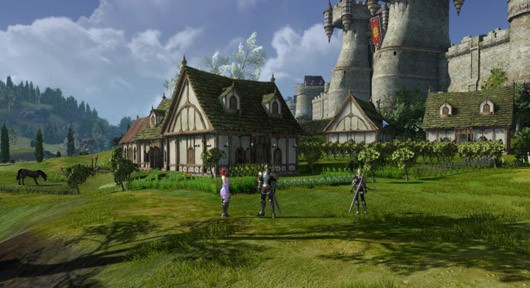
The folks at Runic Games have been talking about a Torchlight MMO since day one, meaning today’s announcement has been more than a decade in the making. Perfect World Entertainment and their new studio Echtra Games today announced that Torchlight Frontiers is in development, an MMOaRPG from the minds that brought us the two Torchlight games that many gamers still hold in high regard.

“Evolving the Torchlight universe into a shared world has always been a goal for the franchise, and I’m excited that we’re finally able to make it a reality,” said Max Schaefer, CEO of Echtra Games. “Torchlight Frontiers will be a living, breathing universe that will still feel uniquely Torchlight, while we add our own creative spin to the game. The team is building something truly special, and we can’t wait for fans to play it for the first time at Gamescom and PAX West.”

Perfect World has described Frontiers as a shared, persistent, dynamically generated world, meaning we may be seeing more of an instanced, hub-like MMO as opposed to one that is 100% open world, ala World of Warcraft. More information can be found on the official website. Frontiers will release on PC, Xbox, and Playstation

(Source: Perfect World Press Release)

[Not Massive] Germany Allows Swastikas In Games/Depictions of Hitler


Depicting Nazi imagery in video games has been illegal in Germany for quite some time now. The law has come under a fair amount of criticism over the years as while it has a “social adequacy” rule that has allowed films and TV series to get by (Inglorious Bastards for example), video games have not been subject to the same treatment. Developers responded to these rules often going down humorous routes such as Soldier of Fortune 2’s storyline being rewritten to replace Nazis with robots that take over the world and then start imitating human life (a prequel to Job Simulator to be sure), and The Last Crusade showing a world where Adolph Hitler leads the Black Square regime

Well it looks like the times they are a’changing, and Germany will be allowing on a case-by-case review the approval and age-rating of games depicting Nazi imagery such as the Swastika and Iron Cross, as well as the character of Adolph Hitler. According to Games Wirtschaft, the catalyst for this change was the 2017 release of Wolfenstein 2, where in order to skirt German regulations, developer MachineGames removing Hitler’s mustache and having him referenced in the game as the Chancellor.

It should be noted that this is not a blanket approval of Nazi imagery, and that games will still have to be approved to ensure that they are within existing German law.

(Source: Games Wirtschaft)

H1Z1 Launches On Playstation 4


The day is here: H1Z1 has finally launched as free to play on Playstation 4. Launch day brings with it a new content drop, introducing two new weapons (an RPG and a sniper rifle), a new vehicle (the five-man ARV) and new launch bundles as well. H1Z1 on Playstation 4 was built from the ground up for consoles, streamlining the interface, control scheme, and inventory for faster paced games that feel at home on the console’s controller.

“Everyone here at Daybreak Games is thrilled with the overwhelmingly positive response to H1Z1’s debut on PS4,” said H1Z1 Producer Terrence Yee. “Ten million new players in our first month in Open Beta is an incredible milestone, and our entire development team has worked tirelessly to build on that early success. We’re beyond excited to officially launch H1Z1 on PS4—this is our fully realized vision for battle royale on console.”

Today also marks the launch of the first season battle pass. Playstation gamers can unlock up to 30 rewards from three tiers (free, premium, PS+) for completing missions and leveling up. The battle pass sells for $5.49 USD.

(Source: H1Z1 Press Release)


RuneScape Classic Officially Shuts Down


The earliest commercial version of RuneScape has shut down today after seventeen years of service. RuneScape Classic, previously known just as RuneScape, launched in 2001 with a handful of servers and an even smaller handful of developers, going on to amass far more interest than creator Andrew Gower could have ever anticipated. In 2004, RuneScape launched a major update to its engine, introducing RuneScape 2 and relegating the initial version to the now unsupported “Classic” title.

Jagex has kept the Old School servers online for fourteen years despite not officially supporting the product, and eventually shut down the ability for new accounts to even access the servers due to the sheer number of bot accounts and Jagex’s inability to provide updates due to the game no longer being supported. Account registration was periodically opened up over the years, and in May it was finally announced that the servers would be brought down for good due to accumulating bugs and Jagex’s inability to keep the game properly supported.

Players gathered to watch the servers come down for one last time today, with the event permanently etched in digital stone via the Twitch link below.

Diaries From RuneScape: Old School Mobile Beta


I went into Old School RuneScape’s mobile beta with two questions in mind: How well this game would run on my Google Pixel (original, non XL), how well it would perform in my office which is a lead-wrapped dead zone, and how many seconds it would take my Pixel to be drained of its battery. Sorry, make that three questions.

The answer is surprisingly well on all accounts. I didn’t have much reason to doubt that my Pixel could run RuneScape at a good framerate, although I will never underestimate the ability for phones to mess up running the kind of software that computers of 10 years ago could pull off without a hitch. The game equally performed well in an area where Youtube videos regularly have trouble loading (thank you Cricket), and ultimately it drained by battery only slightly less quickly than I assumed it would.

Mobile Old School answers the demand for when you still want to play RuneScape uninhibited by having to go to work, school, or other obligations. It’s honestly the perfect game to port over to mobile, considering 80% of the leveling in the game is best played while having something else do to and not looking at the screen. Jagex designed the user interface from the ground up, and it makes intuitive use of the touch screen controls in order to present a game that is not horrible to play over a long period of time.

I was afraid that the awkward finger tapping controls of your average phone game would compound the already slightly awkward controls of RuneScape, but Jagex has managed to pull off a rather smooth system. Many actions in the game are notably slower than their PC counterpart, especially anything that would require you to right click (hold your finger on screen), but OSRS compensates making it rather easy to right click NPCs even when they are moving. Clicking anything while your character is running can be a chore, but then again I find it equally a chore to do so in the full version.

The only parts of Old School RuneScape Mobile that I didn’t like were factors that ultimately have nothing to do with the phone itself. Tapping the screen with my fingers is responsive, but everyone’s fingers become fat sausage links when you’re dealing with a game that tiles its buttons on what feels like a 10×10 pixel radius. There’s also the matter of battery, which RuneScape just ate a percentage of in the time it took me to write this previous sentence. I’m sure most of you are familiar with the fact that cell phone batteries these days just suck, and if you’re the kind of person that wants to game on their phone or do anything more taxing than idling, and doesn’t carry around a battery pack, I unfortunately can’t help you.

Thankfully Old School RuneScape Mobile uses the same accounts, same characters, same servers as its desktop version, so when you get home and you’re ready to play on the big screen, you’ll be able to transition without a hitch.