No rest for NCSoft. Coming on the heels of Guild Wars 2’s success, and with the recent release of Blade & Soul over in Korea, and the upcoming releases of Wildstar and Lineage Eternal, you might fall under the pretense that the Korean publisher is up to their necks with work. You would be wrong, as NCSoft has inked a partnership with Epic Games to develop two new MMOs under the Unreal 4 Engine.
There are no confirmed titles in the works, and the two games are separate from NCSoft’s existing library. Rumors suggest that one or both may be either the long-delayed and thought to be cancelled Lineage III, and possibly Aion 2. Aion had recently stated a committal to existing IP.
Regardless, we won’t be seeing anything from these games for a long time. According to an NCSoft rep, not until after Lineage Eternal.
Talk about springing back. Strong sales in Lineage, Guild Wars 2, Blade & Soul, as well as mobile games, NCSoft has recorded historical high quarterly revenues for the fourth quarter of 2012. In the latest report, NCSoft marked a 56% increase in quarterly sales, a 208% increase in quarterly operating profit, 110% increase in pre-tax income, as well as a 116% quarterly increase in net income. The fourth quarter saw moderate to high increases in sales for Lineage, Lineage II, with the sales from Guild Wars 2 nearly tripling during the same period. Aion, as well as NCsoft’s latest title, Blade & Soul, saw marginal decreases over the same time period. Lineage II managed to reverse, at least for this quarter, a downward trend in sales that began in Q4 2011 while the original Lineage continues on an unpredictable, yet averaging upward, trend in sales despite its age.
Guild Wars 2 has already proven itself as NCSoft’s most successful product to date, breaking the record set by Aion during its peak sales by a long shot. NCsoft’s parent-company reports are, sadly, not as inspiring. While sales went up 15% quarterly, quarterly operating profit went down 1% with pre-tax income and net income both falling hard and ending up in the red for Q4.
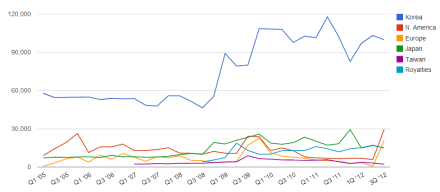
And to wrap this up, we’ll look at everyone’s favorite part of NCSoft’s quarterly reports: Demographics. As expected from the launch of Guild Wars 2 and Blade & Soul, sales in Korea shot up with North America and Europe also taking a dramatic shift upward. Sales in Japan and Taiwan mostly remained the same while sales from royalties were boosted slightly.
Gold farming in Aion is a pretty major problem. Similar to NCSoft’s other big name title, Lineage II, Aion players have become accustomed over the years to logging in and going through the ritual of reporting and blocking the new set of bots spamming the multiple chat groups and sending them whispers of cheap gold, fast delivery, and poor English (as opposed to MMO Fallout’s gold farming service which carries high prices, no delivery, and a staff of folks who understand English very well, especially the more vulgar parts of it). NCSoft has put forward various efforts to improving the process, like automatically clearing ignore lists of banned accounts, all the way back to launch when NCSoft sent GM’s in-game to blow up gold spammers.
And now, NCSoft declared all-out war on gold farming by firing the first shot: Banning IPs. NCSoft will be blocking Chinese IPs from creating accounts on Aion, due to high RMT traffic coming from the country. As for proxies, they will be blocked too if they become a problem:
Please note that proxies have become an integral tool for illicit behavior in MMOs, and as a result we do target them when we undertake anti-RMT efforts. However, legitimate latency reduction services are recognized, and a proxy will not be banned unless it is confirmed to be part of unsanctioned behavior.
And what happens if the gold farmers leave China? NCSoft is willing to follow them. The post makes note that should the gold farming become a problem from another country, NCSoft may begin knocking out access from other countries on a case-by-case basis. This only applies to newly created accounts, it does not stop current accounts from using their game.
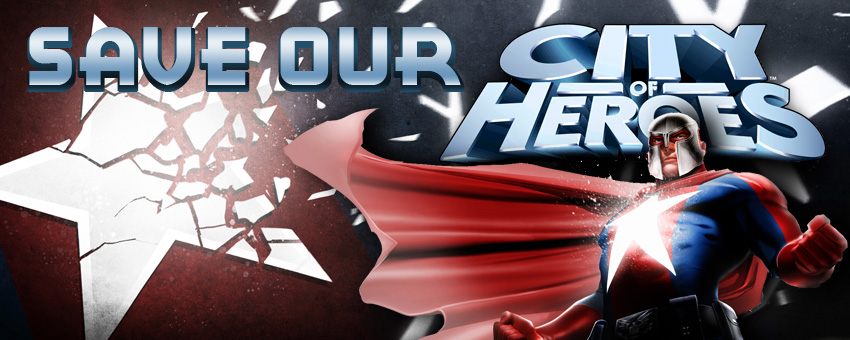
City of Heroes is undoubtedly the most surprising shut down of the year, not to mention the show of support for the game by its community during its last days.
You didn’t think that the drama surrounding City of Heroes was over just because the servers had shut down, did you? Well think again. MMORPG.com has posted an article today detailing exchanges between NCSoft and a former Paragon Studios employee over the fate of City of Heroes, and as usual the two pieces of information directly clash with one another. According to the source from Paragon Studios, City of Heroes had been profitable even before the transition to free to play, bringing in twelve million annually compared to four million in operating costs. NCSoft apparently wanted $80 million to sell City of Heroes to another developer, however they valued the game at $3 million for tax purposes. Ultimately, however, the game was shut down as while the game was profitable, the profits were not “what they needed to be,” and Paragon wound up the weak link in NCSoft’s restructuring.
MMORPG.com asked for a comment from NCSoft, and received the following note from Lincoln Davis, Director of Corporate Communications:
“It is disappointing that such inaccurate information was provided to MMORPG by an anonymous source and is being reported on as news. The operating cost, annual revenue figures and other financial information shared by this anonymous source are simply wrong. The studio was unprofitable before the shutdown. Both NCSOFT and Paragon Studios were incredibly proud of the transition of City of Heroes to a Free to Play business model, but unfortunately it wasn’t enough to support the studio’s needs. We made the difficult decision to close Paragon Studios and sunset City of Heroes because the franchise no longer aligned with the long term profitability goals for the company.
“While we looked to sell the franchise multiple times, we were unsuccessful in finding a suitable partner that we thought would support City of Heroes’ fans in a manner they were accustomed to for years to come. Closing a studio and sun setting a beloved franchise is never an easy thing to do for the publisher, the developer or the fans. This was not an easy decision to make. The Heroes and Villains have taken to the skies of City of Heroes for the last time, but the game and community will remain in our memories. We truly thank our fans for their years of support and we hope they understand the difficult position we were in when making the final decision.”
I’d like to look at one particular node: Paragon Studios. Now, the anonymous source claims that Paragon Studios had another game in the works, a Lost meets Minecraft game, which means that Paragon was eating far more money than simply keeping City of Heroes optional. Lincoln Davis doesn’t say that City of Heroes was unprofitable, and one can only imagine that such a game wouldn’t consume three million dollars a quarter in upkeep alone. Rather, Lincoln Davis specifically states that “the studio” was not profitable, referring to Paragon Studios itself. It is entirely possible that while City of Heroes was profitable, the second project that Paragon Studios was consuming the rest of its revenue and then some, leaving the studio as a whole as a burden on NCSoft’s finances.
I should point out that the source was anonymous by request, meaning MMORPG.com presumably knows who they are talking to and that person is a credible source in the company. It is also important to note that this is the first time someone from NCSoft has commented directly that Paragon Studios was not making a profit, a comment that should have been made several months ago when Paragon Studios was first shut down. Despite the comment by Lincoln Davis, the latest entry into the City of Heroes saga once again leaves us with more questions than answers.
Was City of Heroes itself profitable? How much was this second project by Paragon Studios costing them to develop? Why didn’t Paragon just shut down the project since it was apparently breaking the bank? What was going on with this second game Paragon Studios was making? If the cost that NCSoft was asking for City of Heroes was not $80 million, as Lincoln Davis claims the figures were “simply wrong,” then how much were they asking for? If Paragon Studios was unprofitable due to these other projects, what kind of money were they losing every quarter? Who decided that shutting the game down now would be better than putting it into maintenance mode and simply ceasing development (like Microsoft recently did with Age of Empires Online)?
We will probably never get a complete answer on exactly what was going on at NCSoft and Paragon Studios that lead up to the shut down, but the statement by Lincoln Davis paints a pretty clear picture that the performance of Paragon as a studio and its other projects, regardless of how City of Heroes itself had been running, played a major part in the studio being shut down. There is an answer somewhere, and it is likely much more complicated than any of us will be able to figure out.
City of Heroes is undoubtedly the most surprising shut down of the year, not to mention the show of support for the game by its community during its last days.
You didn’t think that the drama surrounding City of Heroes was over just because the servers had shut down, did you? Well think again. MMORPG.com has posted an article today detailing exchanges between NCSoft and a former Paragon Studios employee over the fate of City of Heroes, and as usual the two pieces of information directly clash with one another. According to the source from Paragon Studios, City of Heroes had been profitable even before the transition to free to play, bringing in twelve million annually compared to four million in operating costs. NCSoft apparently wanted $80 million to sell City of Heroes to another developer, however they valued the game at $3 million for tax purposes. Ultimately, however, the game was shut down as while the game was profitable, the profits were not “what they needed to be,” and Paragon wound up the weak link in NCSoft’s restructuring.
MMORPG.com asked for a comment from NCSoft, and received the following note from Lincoln Davis, Director of Corporate Communications:
“It is disappointing that such inaccurate information was provided to MMORPG by an anonymous source and is being reported on as news. The operating cost, annual revenue figures and other financial information shared by this anonymous source are simply wrong. The studio was unprofitable before the shutdown. Both NCSOFT and Paragon Studios were incredibly proud of the transition of City of Heroes to a Free to Play business model, but unfortunately it wasn’t enough to support the studio’s needs. We made the difficult decision to close Paragon Studios and sunset City of Heroes because the franchise no longer aligned with the long term profitability goals for the company.
“While we looked to sell the franchise multiple times, we were unsuccessful in finding a suitable partner that we thought would support City of Heroes’ fans in a manner they were accustomed to for years to come. Closing a studio and sun setting a beloved franchise is never an easy thing to do for the publisher, the developer or the fans. This was not an easy decision to make. The Heroes and Villains have taken to the skies of City of Heroes for the last time, but the game and community will remain in our memories. We truly thank our fans for their years of support and we hope they understand the difficult position we were in when making the final decision.”
I’d like to look at one particular node: Paragon Studios. Now, the anonymous source claims that Paragon Studios had another game in the works, a Lost meets Minecraft game, which means that Paragon was eating far more money than simply keeping City of Heroes optional. Lincoln Davis doesn’t say that City of Heroes was unprofitable, and one can only imagine that such a game wouldn’t consume three million dollars a quarter in upkeep alone. Rather, Lincoln Davis specifically states that “the studio” was not profitable, referring to Paragon Studios itself. It is entirely possible that while City of Heroes was profitable, the second project that Paragon Studios was consuming the rest of its revenue and then some, leaving the studio as a whole as a burden on NCSoft’s finances.
I should point out that the source was anonymous by request, meaning MMORPG.com presumably knows who they are talking to and that person is a credible source in the company. It is also important to note that this is the first time someone from NCSoft has commented directly that Paragon Studios was not making a profit, a comment that should have been made several months ago when Paragon Studios was first shut down. Despite the comment by Lincoln Davis, the latest entry into the City of Heroes saga once again leaves us with more questions than answers.
Was City of Heroes itself profitable? How much was this second project by Paragon Studios costing them to develop? Why didn’t Paragon just shut down the project since it was apparently breaking the bank? What was going on with this second game Paragon Studios was making? If the cost that NCSoft was asking for City of Heroes was not $80 million, as Lincoln Davis claims the figures were “simply wrong,” then how much were they asking for? If Paragon Studios was unprofitable due to these other projects, what kind of money were they losing every quarter? Who decided that shutting the game down now would be better than putting it into maintenance mode and simply ceasing development (like Microsoft recently did with Age of Empires Online)?
We will probably never get a complete answer on exactly what was going on at NCSoft and Paragon Studios that lead up to the shut down, but the statement by Lincoln Davis paints a pretty clear picture that the performance of Paragon as a studio and its other projects, regardless of how City of Heroes itself had been running, played a major part in the studio being shut down. There is an answer somewhere, and it is likely much more complicated than any of us will be able to figure out.
Things are afoot over at NCSoft. According to Reuters today, the Korean publisher has announced that it will be selling off NC Interactive Inc, its online gaming branch. Is NCSoft going away in the west? Absolutely not. A follow up article on Reuters states that NCSoft has announced a wholly owned subsidiary that will handle business in the United States and Europe. The transaction will be taken care of on December 24th, to the cost of $50 million KRW. It appears that this is a simple business move by NCSoft to avoid paying some taxes in the US and Europe. Note I said avoid, not evade. One is legal, the other is not.
Otherwise, nothing major is set to come out of this, apart from a little rebranding. It occurs often in business, and as I pointed out, it is a tax trick.
Layoffs right before Christmas? That is cold, NCSoft. After an anonymous source tipped off PC Gamer, the news has come forward that the Seattle offices of NCSoft are undergoing realignment, meaning several positions are no longer in existence. NCSoft’s Public Relations Manager Lincoln Davis said to PC Gamer:
“NCsoft is realigning internal publishing resources to better suit the needs of our game development studios. As a result of the realignment, several employees and contract positions were affected. This was a very tough decision to make and wish the best for all NCsoft employees in their next ventures.”
Reportedly there has been no impact on development at ArenaNet (Guild Wars) or Carbine Studios (Wildstar), or for that matter just how many were laid off.
City of Heroes shuts down in two days from the time of this writing. Despite the astounding campaign from the City of Heroes community, which gained the support of celebrities including Neil Gaiman, Mercedes Lackey, and John C. Wright among others, NCSoft stands by their earlier statement that all attempts at selling the IP were unsuccessful. In their continuing efforts, the Save City of Heroes campaign delivered a package to Disney HQ, filled with information about City of Heroes, the campaign, and explaining why Disney should add the title to their ever growing portfolio. The information was written by NY Times Best Selling Author Mercedes Lackey along with several others, who wrote:
“We believe that acquiring City of Heroes will provide Disney Interactive with the logical extension of their games for kids and teens, offering a game that literally the whole family can play.”
Will Disney step up and rescue City of Heroes? That will need to be seen.
It’s been nine years since Lineage II launched (In Korea), and NCSoft continues to update the game on a regular basis. The publisher just released this video, an eleven minute trailer for what the game might become one day. If you haven’t played Lineage II in a while, or at all, the video doesn’t really offer much exposition as to what the future holds. Guys fight each other, people die and get stabbed in the face (not necessarily in that order), and some dialogue that makes me think NCSoft needs to brush up on their zingers.
I don’t know about you but I’m still waiting on Lineage Eternal news.
The folks at Arenanet and Team Bloodlust must be breaking open the champagne today, as NCSoft’s financial statements for the third quarter of 2012 reveal that Guild Wars 2 and Blade & Soul aren’t just bringing home the bacon, they are weaving it and frying it to perfection. Guild Wars 2 launched strong in the United States and Europe, while Blade & Soul ripped up the carpeting in Korea. Both games contributed to a massive 50% year over year gain in profits for NCSoft, pulling the developer up from its operating loss from last quarter that saw heavy corporate restructuring and the cancellation of City of Heroes. Both titles should receive a bump in revenue, as Guild Wars 2’s sales do not include Asia, and Blade & Soul has not launched in the West.
On the other hand, every rose has its thorn. As you have likely noticed, both Guild Wars and City of Heroes are no longer listed. Aion continued its free fall in sales while Lineage II continues its considerably slower downturn. The bump that Lineage received in the second quarter is clearly over and done with, as sales fell to below the fourth quarter sales trough in 2011.





 MMO Fallout