
Promises to do better.
Tag: bot
Lost Ark Pulls Some Gold Rewards
Twitch Is Suing Hate Raid Organizers
World of Warcraft Will Ban Multi-Boxing
The Culling Origins: Who Are The Bots?
I dox bots for a game nobody is playing right here.
Blizzard Is Suing Bossland Cheat Maker…Again

Blizzard has filed suit against World of Warcraft bot maker and Diablo gold farmer Bossland GmbH at a federal court in California. In addition to its antics in World of Warcraft and Diablo, German-based Bossland also sells cheats for other Blizzard titles including Heroes of the Storm.
The lawsuit is quite standard for companies going up against cheat developers, utilizing copyright infringement, unfair competition, and DMCA allegations of tampering with the game’s DRM. The lawsuit also alleges that the cheat makers are causing damage to Blizzard’s business by harming their goodwill and reputation with customers forced to deal with cheaters.
“Defendants not only know that their conduct is unlawful, but they engage in that conduct with the deliberate intent to harm Blizzard and its business. Blizzard is entitled to monetary damages, injunctive and other equitable relief, and punitive damages against Defendants.”
Blizzard is claiming jurisdiction in the United States as Bossland does business in the country. The game developer previously sued Bossland in German court over Diablo III gold farming and was forced to withdraw their case.
(Source: Complaint)
In Plain English: Epic Sues Paragon Cheat Maker

Epic Games has launched a lawsuit against German gamer Robin Kreibich under allegations that the defendant violated copyright by selling cheat software for their upcoming MOBA game, Paragon. The program, known as SystemCheats, claims to be the most powerful hack for Paragon and sells as a monthly subscription for approximately $10/month.
The hack promises to give players perfect aiming with “smooth aim” to make their movement seem more natural and presumably less likely for manual detection. According to the creator, the hack is “fully undetected” and can be used with no risk for being banned. Evidently that immunity hasn’t protected Kreibich from court, but the more intrepid viewers might be wondering why a German citizen is being sued in a US district court in California by a game developer based in Maryland. The answer involves some legal wrangling.
Epic Games issued a takedown of Kreibich’s Youtube videos demonstrating how the hack works. When a person files a counter-notice to a Digital Millennium Copyright Act takedown, by Youtube’s own terms of service they consent that any legal matters will be taken care of in Youtube’s judicial district.
It also helps Epic Games that the lawsuit be held in California’s northern district court. Back in 2013, Blizzard won its lawsuit against Ceiling Fan Software simply under the breach of contract charge. The courts agreed that the cheat software was sold with the knowledge that it would breach the contract between World of Warcraft and its users, and the court awarded $7 million in damages and an injunction against Ceiling Fan Software from selling, developing, licensing, or allowing others to use their bot software.
Epic Games is demanding a trial by jury, as well as unspecified damages including reimbursement of their own legal fees.
More coverage to come.
(Source: Scribd)
Cheat Makers Are Still Shady, Black Desert Online Botters Figure Out

Here at MMO Fallout, I’ve made several attempts to warn people of the dangers of downloading bot software and doing business with gold farmers in online games. Not only do you risk the safety of your accounts, but you also take a chance of having your computer compromised and your identity stolen. Gold farmers, it may surprise you, have a heavy hand in actual crime, and I’m not talking about selling gold to teenagers/adults who feel inadequate in their electronic wealth. I’m talking about people who deal in actual stolen credit cards and often steal from their own customers.
Such is the case, once again, as botters in Black Desert Online recently found out that a popular program was bugged with a keylogger. Users are logging into their accounts to find their characters wiped and items stolen. Hopefully this will serve as a lesson for players looking to get ahead through illegitimate means, but given past history it is only a matter of time before the next incident.
(Source: Reddit)
Trion Worlds Promises Bans For Cheaters, Even Tenured Players
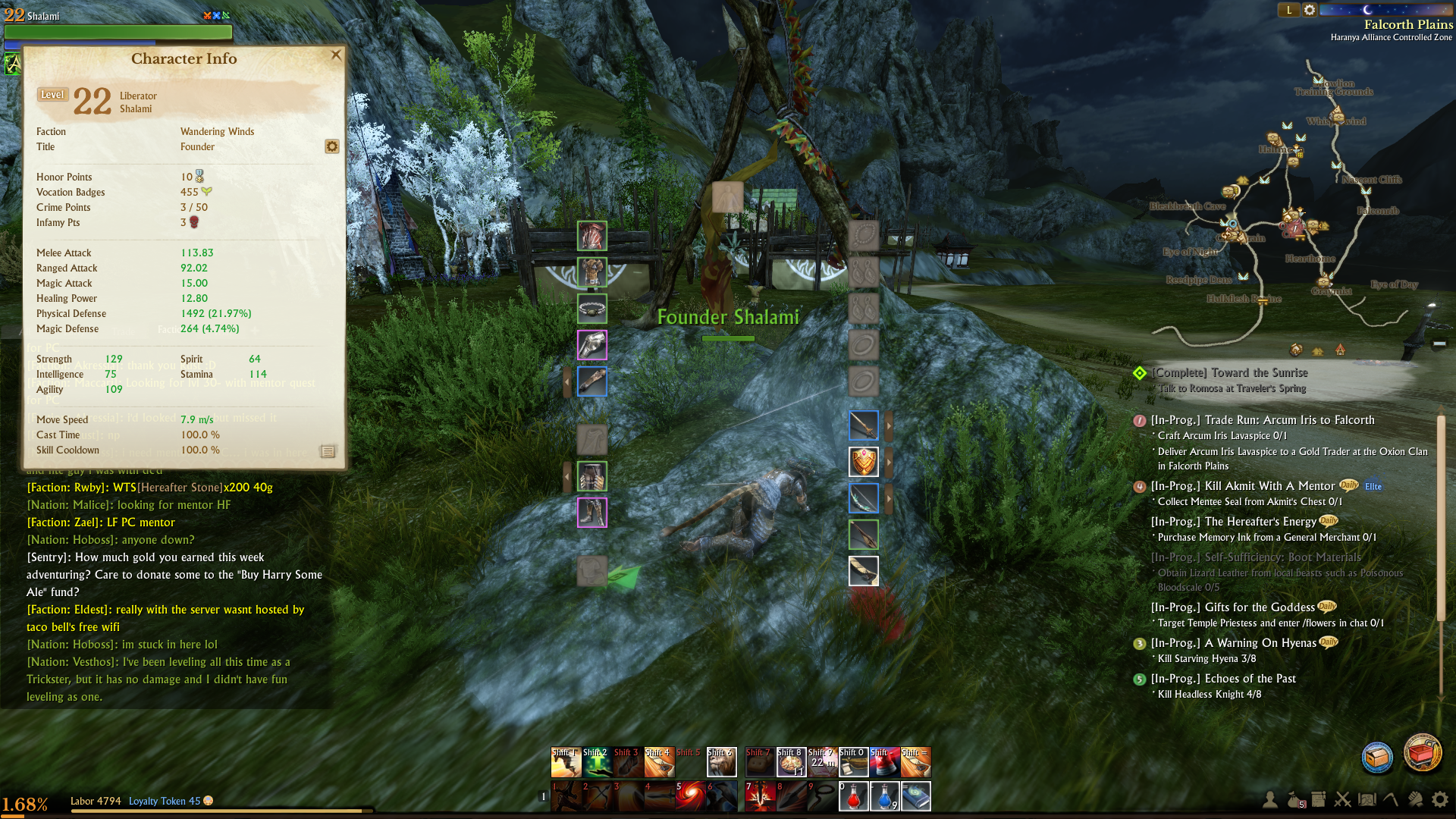
(Editor’s Note: Trion World’s PR reps got in touch to clarify a few points to the story which have been noted below. A total of 983 accounts have been banned right away. In addition, they have stated that while money spent is taken into account to discern real players from throwaway/bot accounts, that it is only one factor and that time invested into the account also goes a long way to proving that the player is invested in the game. We thank them for getting in touch to clarify these points.)
ArcheAge’s new bot detection program has been enabled for a few weeks, with 983 accounts banned right off the bat and a number of other accounts put on notice. Trion Worlds has taken to the forums once again to claim that it will not tolerate anyone who cheats in ArcheAge…providing you don’t stop after this last warning. In addition, Trion Worlds will no longer take tenure (how much time and money has been invested) into account when banning for bots and hacks:
After this warning, anyone who continues to run the detected hack or bot programs will be subject to a permanent ban, regardless of their tenure in ArcheAge. Please note that we can also see when alternate accounts are associated with other main accounts, so making use of these tools on a throwaway account will lead to disciplinary action on your main.
Users who are casual botters will receive a warning by email.
Those players who appear to be mostly legitimate community members will receive an email warning them about this policy and informing them to stop immediately.
Trion’s previously light stance on casual bot usage stands in stark contrast to the company’s heavy handed punishment just a month ago when the company banned an entire raid of 53 accounts for using a glitch to defeat a world boss. It also contradicts the numerous times that the company has claimed to be taking a zero tolerance policy on botting in ArcheAge.
The good news is that the new software aims to increase the rate at which cheaters are caught and banned while simultaneously reducing the number of false positives.
(Source: ArcheAge)
In Plain English: The Curious Case Of Jagex V John Doe

Those of you who play RuneScape or World of Warcraft are likely well acquainted with a popular phishing technique that made its rounds over the past few years, or at least you would be if you took a gander through your spam filter. The email warns players that they’ve been caught either botting or engaging in real money trading, and that further cheating will add them to a list of John Does in a pending lawsuit. While the email links to a fake login page designed to steal your account information, you might be surprised to know that the body of the email itself is indeed legitimate, or I should say was originally written by a legitimate source.
Jagex once filed lawsuit against cheaters, and it didn’t end in their favor.
No, seriously. I reported on this way back when it initially happened, getting confirmation from Jagex and from the central district court of California where the lawsuit was filed. The email cites both a valid case file and specific laws under which Jagex planned to file suit. The email threatened users that they could be hit with a fine ranging anywhere from $200 to $2500 per act of botting, past, present, and future. Recipients were informed that their accounts were on watch, and that they would be granted a one-time leniency. Cheat again, and be sued.
A bold move, certainly, but one that you wouldn’t really need a law degree to know is total bunk. While bot makers have been successfully sued in the past, cheating in a video game is not in itself a crime and there isn’t legal precedent in the United States to take a contrary position. For that matter, there isn’t a law specifically prohibiting making cheats either. In the past, developers like Jagex and Blizzard have gone down various avenues to shut down bot makers. Accusations include everything from DMCA violations by bypassing anti-bot software, copyright violations for using the game’s logo/trademark/assets without permission, receiving and then violating injunctions against maintaining the software, and raising costs/damaging revenue due to increased customer service and lost business from disgruntled customers.
But as far as players go, while there isn’t any precedent in the successful prosecution of cheaters, there is in their defense. In the case of Blizzard V Glider, the 9th circuit court of appeals ruled that the Glider bot did not violate Blizzard’s copyright because it didn’t modify the software. As a result, using the bot software was not illegal, noting that Blizzard cannot claim copyright infringement just because their terms of service prohibit such activity.
The court notes:
Were we to hold otherwise, Blizzard — or any software copyright holder — could designate any disfavored conduct during software use as copyright infringement, by purporting to condition the license on the player’s abstention from the disfavored conduct. The rationale would be that because the conduct occurs while the player’s computer is copying the software code into RAM in order for it to run, the violation is copyright infringement. This would allow software copyright owners far greater rights than Congress has generally conferred on copyright owners.
While we will likely never know how many people Jagex targeted with these emails, we do know that the lawsuit specifically mentions ten John Doe defendants. In July 2011, the court approved a motion for Jagex to serve Paypal in order to obtain information on the defendants, with the addition that in the event that Paypal is unable to provide sufficient information, Jagex could go after the ISP of each John Doe to get more data.
The lawsuit references four attorneys representing Jagex, two of whom had to be approved by a judge to appear “pro hac vice,” allowing the lawyers to practice in jurisdictions that they are not licensed. Following the court dockets, Judge Cormac J. Carney approved both applications on July 6th and 7th. At this point, the lawsuit goes dark for a while.
Fast forward five months and on December 1, 2011, Jagex files an ex parte application for a hearing telephonic status conference. A telephonic status conference is essentially where the plaintiff gets in touch, by telephone, with the judge’s clerk to let them know how the case is proceeding, to ensure that requirements set out by the court are being kept, and to resolve any other issues before a trial. It’s pretty standard, but in John Doe cases the courts have a tendency to lose their patience when the investigation phase drags on.
On December 9th, Judge Carney rejected the application with no documented opinion. The following month, January 20th 2012, Jagex filed a notice of voluntary dismissal, dropping all charges. There are no official opinions noted either by Judge Carney or by Jagex in their dismissal, but the answer should be obvious. They didn’t have a case, the court likely recognized it as a waste of time or the judge requested that they show up in person and they never did, and everyone went home with nothing accomplished.
I should make a note here that I reached out to Jagex’s press relations in the hopes of at least giving them a chance to comment, and I received no response. It’s hard to imagine that Jagex intended this to be any more than a scare tactic to hopefully convince some teenagers and the occasional person using bots to make money, to change their ways. It took about forty minutes of searching court dockets to find precedent against cheaters being sued, in an appeal case ruled one year prior.
The original copyright ruling against Glider cited a court ruling from 1993 that stated a technician operating a computer for the purposes of repair constituted a copyright violation, in that the technician creates an unauthorized copy when the program is started and loaded into RAM. That provision of the case was overruled with an addition to title 17 of the United States Code dealing with maintenance or repair, however since the defendant had unauthorized copies of the software on their computer, they were still found guilty.
So now you know the story of when Jagex filed lawsuit against ten unnamed bot users. If I do get a response from Jagex, I’ll put it up at the top.
If you have any thoughts, drop us a comment in the box below.
 MMO Fallout