Into The MMO Fallout Archives #2


It’s spring cleaning time again here at MMO Fallout, and I still have over 130 never-been-published drafts to go through.

  • Jagex Doesn’t Understand Economics. (2010)

The economy of Runescape is delicate like a flower. No, a better analogy would be a kitten perched on a clothesline above a pot of boiling water that happens to be sporting a grease-fire. Everyone wants to pet the kitten, but all it takes is one careless player, one clan with greedy intentions, or one developer with no foresight or training in economics, and suddenly we find ourselves wondering if kitty was fried before he was boiled, or the other way around.

For those that haven’t figured out, I canned this article for being a little too aggressive. I still stand by the point of the article, and may bring it back in a more fact-oriented manner, but the essential information of the article was so: Jagex’s economy can be fixed by removing the high-alchemy spell from the magic book. High-alchemy is a spell that generates massive amounts of wealth out of garbage that couldn’t be sold in such high quantity, at a price higher than selling to an NPC vendor.

  • Cheating For The Fun Of It: RuneScape Style

I’m going to infuriate a lot of people when I say this, but I’m very tempted to start botting in Runescape. I would do it on an alternate account, of course, whose membership I would pay for with a game time card just in case Jagex tried to link my two accounts to each other. I wouldn’t sully my actual account by cheating on it, as my ethics tell me not to cheat to gain a competitive advantage, and I wouldn’t use it to get easy high levels. In fact, I’m aiming to get very low levels.

The word count for this article, I kid you not: Exactly 666. Now this article was based off of reports at the time that players were being rolled back for botting without having certain items taken away while equipped. So it was possible to bot one’s way to 99 in a skill, obtain the skill cape, be reset to level 10 and still be wearing the cape. Now, I referred to this as making a penalty for cheating into a symbol of status, and I cut it (to the best of my memory) because it came off as far less satire and far more “material that would get me blacklisted by any self-respecting developer.”

  • Manage Your Lives: A Public Service Announcement (2010)

Everyone has frustration and anxiety, and take it from me when I say you should go to everyone who advises you to bottle it up, and explain to them exactly where they can shove their wisdom. Venting your frustrations, even if you have no audience, is healthy. The last thing you want to do is hold it in and ignore it, and hope that everything will just get better over time, because it doesn’t. Things don’t just get better because you hope they do, you have to take action, and possibly kick a few asses in the process (not literally).

This article I wrote out in its entirety and then scrapped, because it wasn’t as much for my audience as it was for me. I wrote this during an extremely stressful point in my life, and upon reflection it revealed a lot of personal details that I would rather not share.

  • There’s a Name For MMOs Without Grind (2010)

I often see people complaining about grind in MMOs, generally that they want less grind, or in some instances no grind at all. Now, there is a name for MMOs with no grind: Dead. Offline, shut down, bankrupt, kaput, I could go on all day. Despite what you may be lead to believe, grind is an integral part to keeping an MMO alive in the long run, and it is a feature that isn’t going anywhere for the time being.

This one never made it to publication because it was beating a dead horse. The idea of complaining over grind in an MMO is absurd, because those same people given their wish will complain that the game is a “race to end-game,” and quit just as fast.

  • The Term MMO Has Been Diluted (2011)

Among my feedback, I get a lot of requests to de-list games like Crimecraft, Neverwinter, and Global Agenda that are technically not MMOs, and the more this website evolves and “real” MMOs are being added in, the harder the list is becoming to maintain, and the less excuses I can come up with to keep the games listed. Given recent announcements, I have decided to de-list Call of Duty Online, but I wanted to expand upon the idea of MMOs from concept to implementation.

This article was the most disappointing to me, partially because I set out to form a line that ultimately came down to “because they said so.” I want to revisit this article at some point in the future.

Final Fantasy XIV Mergers: March 27th.


On February 9th, Square Enix announced that the Final Fantasy XIV server mergers would take place on March 27th, reducing eighteen servers down to ten. Later on, the company redacted their announcement on the promise that the system needed to be reevaluated before anything could go ahead. Yesterday, the Final Fantasy Lodestone was updated with the new plan.

The merger, to take place on March 27th, is not much different than the previous plan. Eighteen servers, as before, will merge to ten. Starting March 1st and concluding March 19th, players will be able to enter an application period where they can choose their destination server.

As before, name/retainer rules follow a guideline of active account followed by first created. Linkshells will be carried over with the merge, and in case of duplicates the name will be handed over to the linkshell with more active members. Any players, including the master, who transfer to different worlds will be automatically removed from the linkshell roster. Friends/ignore lists will also be kept.

(Source: Lodestone)

Falling Out #14: Tribes Ascend Beta Key Giveaway


That is correct. Below you will see four beta keys, each with numbers replaced by question marks. By using the clues provided, simply replace the missing numbers and activate your key here (you will need to register a Hi-Rez account if you don’t already have one).

  1. The first Myst game released this year.
  2. The Gameboy launches in North America and Japan.
  3. Super Mario 64 releases in Japan and North America.
  4. The mark of the devil.
T119B-0D221-23324-F78BA-B9E??
T1434-37521-54B64-F7DB2-8B8??
T1012-F0F??-6DF04-D15AB-F05E4
FR658E30F695054206B8E1???

Star Vault Reports 50% Increase In Sales


Star Vault could use some good news going for it. After the web hearing just a few days ago where Henrik announced that only five permanent employees remain with the rest filled in by contractors. In an announcement on Aktie Torget, Star Vault has reported an increased interest in Mortal Online. Sales of licenses have increased 50%, and CEO Henrik Nystrom has made the following statement:

“We have the last month, noted a number of interesting positive trends regarding nyköp, gambling activity and to some extent, extensions of subscriptions. Game Activity – players that typically have been logged on Mortal Online per day – has increased significantly by about 83 percent and is an indication that players enjoy the game. The increased activity also makes the game more fun, more vibrant and there are naturally pleased with the increased number nyköp and – albeit marginally – increased subscription renewals.

The positive trend can be explained with our upgrade of the so-called Territory Control, which I think many players have been curious to try while waiting for our next expansion, “The Awakening”. It’s been a good start to 2012 and now we are working on with our future expansion, “The Awakening” that we expect to add further appeal to Mortal Online. “

You can find the entire (short) announcement below.

(Source: Aktie Torget Exchange)

NCSoft Q4 Finances: Sales/Profit Down


NCSoft has posted their fourth quarter finances. Sales were hit with a 6% loss since the last quarter, with operating profit reportedly taking a 51% hit and net income down 42% since last quarter. NCSoft attributes the decline in sales and profits due to scaled back in-game item sales.

Year over year sales from 2011 compared to 2010 saw a similar drop in revenue by 7%, operating income by 24%, and income by 21%, due to what NCSoft refers to as a weakened user base, and an expansion in research and development. Labor costs increased 9%, marketing increased 25%, and variable expenses grew 7%.

You can see from the chart above that Lineage has continued its dip in sales, which NCSoft attributes to a lack of item sales in-game. Lineage II’s sales opened up somewhat, attributed in the release to “roust sales in Japan.” Aion saw a dip in sales of about 8%, as did Guild Wars (22%), and City of Heroes has shown a 22% increase in sales over Q3.

In terms of regional breakdown, Korea’s stake in NCSoft dived from 69% in Q3 to 60% in Q4. North America rose from 4% to 5% while Europe dipped from 3% to 2%. Japan almost doubled its share, from 12% to 21%, while Taiwan lowered its share from 3% down to 2%. Royalties increased to 10% from 8%.

City of Heroes and Lineage II went free to play recently, with Aion moving free to play in Europe.

(Source: NCSoft Finances)

Guild Wars 2 Opens Door For Non-Cosmetic Cash Shop


By now, I hope that I don’t have to lecture any of you on how important wording is in this industry. When Realtime Worlds said that they had no intention of shutting down All Points Bulletin, they didn’t factor in the results of their ongoing chapter 11 bankruptcy forcing the game to shut down. When Turbine stated that they had no intention of selling equipment with stats at the time, they technically spoke the truth. When Sony answered the free to play question by saying they would not alter existing player’s game, and launching a separate product, they were telling the truth.

Guild Wars Guru has noticed an alteration made to the Guild Wars wiki by user JohnSmith, who is a confirmed Arenanet employee. Previously, the article read:

Yes, micro-transactions will exist. These will be cosmetic additions which will not affect balance or gameplay, similar to the transactions offered by Guild Wars.

Now the article reads:

Yes, micro-transactions will exist. Be assured goods and items bought for cash in GW2 do not offer any advantage over those available in the game through the investment of time.

So the wording changes from only cosmetic items to not being more powerful than existing items. Now, this could simply be referring to Arenanet’s plan to include mission packs and transmutation stones in the cash shop, or the possibility of boosters, or it could open the door for selling equipment that is only as powerful as equipment found in-game. Martin Kerstein of Arenanet weighs in later in the thread.

As usual, everybody just needs to calm down a bit. This change was done to actually make the wording easier to understand – seems like that was not the case.

But the statement in it is still the same: Nothing you will be able to buy in the in-game store will give you an advantage over people who are not buying anything. That is the baseline.

So the outcome is that Arenanet, for now at least, is being vague on a familiar level to companies of the past. For now we’ll simply have to wait for clarification by Arenanet on an exact list of what will be sold in the Guild Wars 2 cash shop.

Perpetuum Online Extends Active Accounts, DDOS Attacks


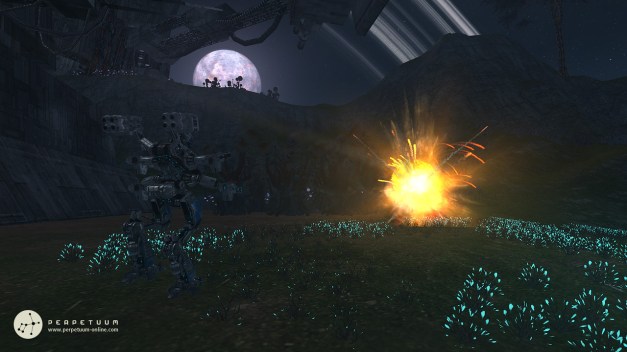
Back in January I talked about the issue surrounding a certain someone launching a distributed denial of service attack on indie MMO Perpetuum Online. The attacks began in January and caused the server to become unstable for many players. For now, however, the developer believes that the attacks are over. Players are being compensated with three extra days added to their subscription.

Probably most of you are aware of the recent DDOS-attacks against the Perpetuum servers. They seem to have stopped now, but we have and still are taking steps to strengthen our defenses against these kinds of attacks in the future.

To compensate for lost game time, we have decided to extend all active accounts (including trial accounts) by 3 days, effective after today’s patch.

We’d like to say a big thank you to all our players for their continued support through these times, even when they couldn’t even log in and play.

Hopefully this is the end of the story, and the developers can move on to more important issues.

(Source: Perpetuum Forums)

Everquest Mac Accidentally Diagnosed As Dead


How much does John Smedley love you? Enough that, earlier tonight, he posted this on Twitter:

Ok EQ Mac Players. You are a wonderful group of players. We will leave it running with no changes or subscription fees. Details soon.

Sony announced with sorrow last month that Everquest Mac would come to an end on March 29th. Players mourned the loss of what many play for the experience of a “near classic” Everquest, what with EQMac still being based in the Planes of Power (4th expansion, 2002).

Additional details will no doubt come this week or next, but it is reassuring to see the game being run with no changes or subscription fees.

(Source: John Smedley Twitter)

Why Aren’t You Playing: Drakensang Online


[Addendum: I mistakenly stated that Drakensang Online was built on the Unity Platform. This was incorrect, it is built off of Bigpoint’s Nebula3 engine.]

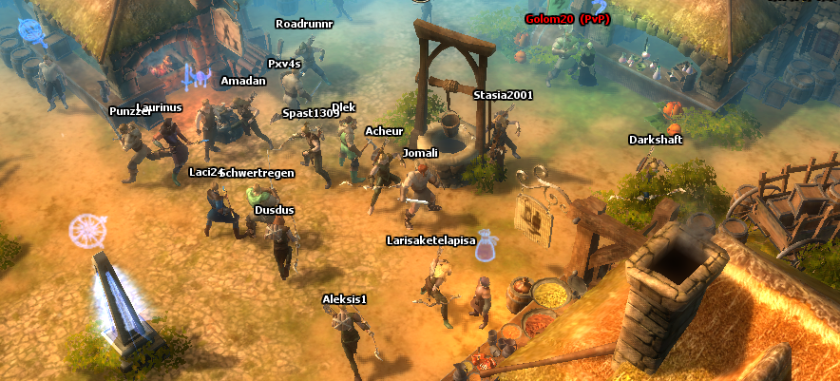
Drakensang Online is a straight up isometric dungeon crawler, ala Diablo, and for me that is enough of a reason to at least pick the game up and give it a play through. For fans of dungeon crawlers, Drakensang does not disappoint. Otherwise, the game doesn’t have much to offer outside of the wholesale slaughter of minions and collecting of gear with incrementally higher stats.

The first thing you’ll notice about Drakensang is that the game looks and sounds great. Not great as in comparable to your full client games, but the Nebula3 engine does an excellent job of cramming as much visual quality as it can into the tiny browser package.

Combat handles fluidly with very minor targeting issues. Most of your game time will consist of walking around city hubs with other players, upgrading your equipment, selling your vast quantity of loot, and taking on quests. The quests are the usual fashion of “kill ten rats,” “kill rats until they drop ten buckets” and “use items on nodes.” PvP takes place either through consensual open world or through team battlegrounds.

Following the lead of Diablo3, Drakensang employs a mechanic of health orbs that drop during battle that can be picked up to restore health. Bosses drop these at regular intervals as their health is whittled away, and they replace the necessity of carrying and sucking down large quantities of potions. In addition, while your list of abilities is rather small in comparison to most MMOs, you’re likely to find a proper use for each ability granted to you.

The cash shop in Drakensang is powered by Andermant, a currency that can be slowly obtained through normal gameplay via quest rewards and random drops, or via real money at a base rate of $2 for 1,600 up to 246,700 (odd number) for $200 (a 35% saving!). Andermant can be used to purchase temporary buffs in experience and strength/defense. To expand your inventory to its maximum storage (49 extra spaces) would cost you over $200, or 249,600 Andermant.

For what it is worth, I manage to accumulate at least forty Andermant in each play period (around an hour, sometimes less), most of which I put into upgrading my weapons and armor. You’ll come across chests in dungeons that require keys that can only be purchased with Andermant, to which I can only say give them a pass. I haven’t had a single chest open that was worth the hundreds of Andermant that the keys cost.

If you were one of those people who passed up on Torchlight because it didn’t have any multiplayer (and thus no PvP) and played Diablo and Diablo II primarily for the PvP, you will likely be put off by the presence of the pay-for-advantage system. Otherwise, I can’t see PvE focused players getting angry that somewhere, someone is killing bosses in one or two less hits. And even if you get bored with Drakensang, you can always return. It isn’t going anywhere, not with Bigpoint’s profit margins.

Drakensang Online isn’t exactly a deep game, but then again fans of the genre are likely here for the same reason people enjoy Serious Sam, for the hacking, slashing, spell flinging, and masses of limbs and entrails flying every which way. It is popular, open world PvP is consensual, and the cash shop is generous (to an extent) if you’d rather not throw real money in. Everyone of the same class looks virtually the same, but that factor quickly moves aside to the actual meat of the game: Gremlin genocide.

Why Aren't You Playing: Drakensang Online


[Addendum: I mistakenly stated that Drakensang Online was built on the Unity Platform. This was incorrect, it is built off of Bigpoint’s Nebula3 engine.]

Drakensang Online is a straight up isometric dungeon crawler, ala Diablo, and for me that is enough of a reason to at least pick the game up and give it a play through. For fans of dungeon crawlers, Drakensang does not disappoint. Otherwise, the game doesn’t have much to offer outside of the wholesale slaughter of minions and collecting of gear with incrementally higher stats.

The first thing you’ll notice about Drakensang is that the game looks and sounds great. Not great as in comparable to your full client games, but the Nebula3 engine does an excellent job of cramming as much visual quality as it can into the tiny browser package.

Combat handles fluidly with very minor targeting issues. Most of your game time will consist of walking around city hubs with other players, upgrading your equipment, selling your vast quantity of loot, and taking on quests. The quests are the usual fashion of “kill ten rats,” “kill rats until they drop ten buckets” and “use items on nodes.” PvP takes place either through consensual open world or through team battlegrounds.

Following the lead of Diablo3, Drakensang employs a mechanic of health orbs that drop during battle that can be picked up to restore health. Bosses drop these at regular intervals as their health is whittled away, and they replace the necessity of carrying and sucking down large quantities of potions. In addition, while your list of abilities is rather small in comparison to most MMOs, you’re likely to find a proper use for each ability granted to you.

The cash shop in Drakensang is powered by Andermant, a currency that can be slowly obtained through normal gameplay via quest rewards and random drops, or via real money at a base rate of $2 for 1,600 up to 246,700 (odd number) for $200 (a 35% saving!). Andermant can be used to purchase temporary buffs in experience and strength/defense. To expand your inventory to its maximum storage (49 extra spaces) would cost you over $200, or 249,600 Andermant.

For what it is worth, I manage to accumulate at least forty Andermant in each play period (around an hour, sometimes less), most of which I put into upgrading my weapons and armor. You’ll come across chests in dungeons that require keys that can only be purchased with Andermant, to which I can only say give them a pass. I haven’t had a single chest open that was worth the hundreds of Andermant that the keys cost.

If you were one of those people who passed up on Torchlight because it didn’t have any multiplayer (and thus no PvP) and played Diablo and Diablo II primarily for the PvP, you will likely be put off by the presence of the pay-for-advantage system. Otherwise, I can’t see PvE focused players getting angry that somewhere, someone is killing bosses in one or two less hits. And even if you get bored with Drakensang, you can always return. It isn’t going anywhere, not with Bigpoint’s profit margins.

Drakensang Online isn’t exactly a deep game, but then again fans of the genre are likely here for the same reason people enjoy Serious Sam, for the hacking, slashing, spell flinging, and masses of limbs and entrails flying every which way. It is popular, open world PvP is consensual, and the cash shop is generous (to an extent) if you’d rather not throw real money in. Everyone of the same class looks virtually the same, but that factor quickly moves aside to the actual meat of the game: Gremlin genocide.